How to Make Scrambled Eggs Without Milk in 7 Easy Steps
To make scrambled eggs without milk, start by choosing a nonstick pan and using dairy-free fat like olive oil.
Whisk your eggs thoroughly to add air for fluffiness, then heat your pan on medium-low before pouring in the eggs.
Let them sit briefly without stirring, then gently fold continuously for soft curds.
Remove from heat while slightly runny to keep them moist, season immediately, and serve right away for the best texture.
Keep going to discover tips for perfect, tender eggs every time.
Pick the Best Pan and Fat for Scrambled Eggs Without Milk

When you’re making scrambled eggs without milk, choosing the right pan and fat is key to getting the texture just right. Start with a nonstick skillet or a well-seasoned cast iron pan to prevent sticking and ensure even cooking. A heavy-bottomed pan distributes heat evenly, so your eggs won’t develop hot spots or burn.
For fat, opt for dairy-free options like olive oil, vegan butter, or coconut oil to add moisture and flavor without milk. Keep your heat on low or medium-low throughout cooking; this gentle temperature prevents overcooking and helps achieve tender, fluffy eggs.
Using the right pan and fat combination along with low heat allows you to control the cooking process perfectly for creamy, delicious scrambled eggs without milk.
Whisk Eggs Thoroughly to Add Air and Fluffiness

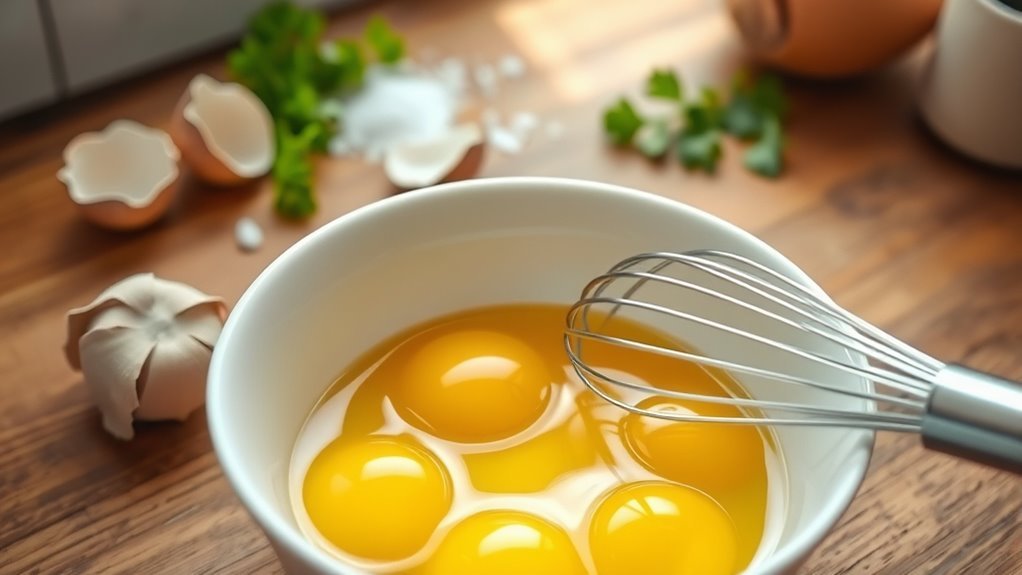
You’ll want to whisk your eggs vigorously for about 40 seconds to trap air and create a frothy mixture. This step is key because the air bubbles help make your scrambled eggs light and fluffy.
Taking the time to beat the eggs thoroughly guarantees an even texture without streaks of whites or yolks.
Importance Of Vigorous Whisking
Although it might seem simple, vigorous whisking plays a crucial role in making scrambled eggs fluffy and light. When you whisk the eggs thoroughly, you introduce air incorporation that creates tiny bubbles throughout the mixture. These bubbles expand during cooking, giving you that soft, airy texture everyone loves.
To get the best results, whisk your eggs for about 40 seconds using a wire whisk instead of a fork. This method breaks down the yolks and whites evenly, preventing clumps and ensuring consistent cooking.
Proper whisking is key to achieving tender, fluffy eggs without milk, so don’t rush the process. Remember, the more air you incorporate, the better your scrambled eggs will turn out—light, delicate, and delicious every time.
Air Incorporation Benefits
Since whisking eggs thoroughly incorporates air, it directly impacts the fluffiness of your scrambled eggs. When you whisk vigorously for about 40 seconds, you introduce tiny air bubbles that increase the volume and tenderness of your eggs. Using a wire whisk instead of a fork enhances air incorporation, making your eggs lighter and fluffier.
You’ll know you’ve whisked enough when the mixture looks frothy and uniform in color with visible bubbles. This step is essential because properly aerated eggs create fluffy eggs without needing milk. Remember, whisking not only blends the eggs but also traps air, which transforms the texture.
Achieving Fluffy Egg Texture
Whisking your eggs thoroughly not only blends them but also traps air, which is key to achieving a fluffy texture. To get those perfect fluffy scrambled eggs without milk, follow these steps:
- Whisk vigorously for at least 40 seconds using a wire whisk or fork, breaking down yolks and whites to create a uniform, frothy mixture full of air bubbles.
- Whisk rapidly in a circular motion to incorporate more air, making the eggs light and voluminous before cooking.
- Let the beaten eggs rest for 5-10 minutes to allow proteins to relax and better trap air bubbles, resulting in tender, fluffy scrambled eggs.
Heat Your Pan on Medium-Low Before Adding Eggs

Before you add your eggs, heat your pan on medium-low to guarantee even cooking and prevent sticking. Using medium-low heat allows the pan temperature to rise gradually, ensuring gentle cooking without burning your eggs.
This slow warming helps your non-stick or seasoned cast iron pan reach the perfect temperature, so your eggs cook evenly. To check if the pan is ready, sprinkle a few drops of water—if they dance or sizzle softly, you’re good to go.
Heating the pan properly also means you won’t need much oil or butter, resulting in a healthier scramble. Starting with medium-low heat gives you better control over cooking speed, helping you achieve soft, fluffy scrambled eggs every time.
Pour Eggs and Let Them Rest Briefly Without Stirring
Pour your beaten eggs into the preheated skillet and let them rest undisturbed for about 15 to 30 seconds. This brief pause allows the eggs to begin setting gently, which is key to achieving a tender texture.
Resist the urge to stir immediately—timing here makes all the difference for creamy, fluffy scrambled eggs without milk.
Resting Eggs Before Stirring
Once the eggs hit the hot pan, let them sit undisturbed for 15 to 30 seconds so the edges can start to set. This essential step of resting eggs allows the heat distribution to become even, preventing uneven cooking and promoting a better texture.
During this brief pause, the eggs develop a slight surface firmness, making stirring gentler and more controlled. Here’s why you should rest your eggs before stirring:
- It creates a foundation for tender, fluffy curds.
- It helps avoid overcooking by allowing gradual heat penetration.
- It improves the overall creaminess and cohesiveness of the scramble.
Importance Of Undisturbed Cooking
Although it’s tempting to stir immediately, letting your eggs sit undisturbed for 15 to 30 seconds allows gentle heat to set the proteins evenly. This undisturbed cooking period encourages even heat distribution, which is key to forming tender, small curds and achieving a creamy texture.
If you stir too soon, the eggs break into large curds and risk turning rubbery. By resting the eggs briefly, you ensure a moist, fluffy scramble without overcooking.
| Benefit | Explanation |
|---|---|
| Heat Distribution | Allows gentle, even setting of proteins |
| Texture | Creates tender, small curds |
| Creaminess | Promotes a smooth, creamy texture |
Trust this step for perfect scrambled eggs without milk.
Timing For Best Texture
After letting your eggs sit undisturbed for a short while, it’s important to time the rest period just right to build the best texture. Resting the eggs immediately after pouring lets soft curds form, creating a creamier, fluffier result.
Here’s how to master the timing for best texture:
- Let the eggs rest in the pan for about 15-30 seconds without stirring to allow gentle initial setting.
- Watch for a slight surface opacity before you gently fold the eggs—avoid stirring too soon to prevent rubberiness.
- Use this brief resting time during cooking to keep the eggs tender and moist, ensuring they don’t overcook or dry out.
Perfect timing and resting create scrambled eggs with an ideal texture, even without milk.
Gently Stir and Fold Eggs Continuously for Soft Curds
When you gently stir and fold your eggs with a silicone spatula, you create small, tender curds that make your scramble soft and fluffy. Stirring continuously over low heat spreads warmth evenly, preventing overcooking. Use slow, gentle folding motions to avoid breaking curds into larger, tougher pieces.
As cooking progresses, switch to longer folds to form bigger soft curds while keeping eggs moist.
| Technique | Purpose | Result |
|---|---|---|
| Continuous stirring | Even heat distribution | Tender, moist curds |
| Gentle folding | Prevents tough curds | Creamier texture |
| Slow motions | Controls curd size | Soft, fluffy scramble |
| Final gentle fold | Uses residual heat | Avoids dryness |
Remove Eggs From Heat While Slightly Runny to Avoid Dryness
To keep your scrambled eggs moist and tender, you should take them off the heat while they’re still slightly runny. Eggs continue cooking from the residual heat of the pan for about 30 seconds after removal, so stopping early prevents dryness and rubberiness.
Remove scrambled eggs from heat while slightly runny to keep them moist and tender.
Follow these steps:
- Watch the eggs closely and remove them when they’re just slightly wet and runny.
- Use gentle heat to avoid moisture loss, which causes dryness.
- Let the eggs finish cooking off the heat to achieve fluffy, soft curds.
Season and Serve Scrambled Eggs Without Milk Immediately
Although the eggs are just off the heat, you should season them immediately with salt and pepper to enhance their natural flavor. Doing this while they’re still warm helps the seasoning blend perfectly, bringing out the eggs’ true taste.
Next, serve your scrambled eggs without milk right away—waiting too long can cause them to lose moisture, fluffiness, and flavor. For an extra touch, garnish with fresh herbs or your favorite toppings before serving; this adds both aroma and visual appeal.
Frequently Asked Questions
How to Make Simple Scrambled Eggs Without Milk?
You whisk eggs with salt, heat a non-stick pan with dairy-free butter, pour eggs in, wait 15 seconds, then gently stir until just set but moist.
Remove from heat early to keep them fluffy and soft.
What to Mix With Scrambled Eggs if You Don’t Have Milk?
In the spirit of Renaissance kitchens, you can mix water, broth, or dairy-free milk alternatives like almond or oat milk with your eggs.
Butter or oil alone also works, keeping your scramble tender and fluffy without fuss.
How to Make a Scramble Egg?
You crack eggs into a bowl, whisk them with salt, heat butter in a pan, pour eggs in, then gently stir until soft curds form.
Remove from heat when slightly moist for creamy scrambled eggs.
Can I Make Scrambled Eggs With Water Instead of Milk?
Absolutely, you can make scrambled eggs with water instead of milk. It creates fluffier eggs without the creaminess. Just add a tablespoon or two per two eggs, whisk well, and cook gently for best results.
Conclusion
So, you’ve mastered making scrambled eggs without milk—congratulations, you culinary rebel! Who needs milk anyway? Just pick your pan, whisk like a pro, and resist the urge to turn your eggs into rubber.
Remember, gently folding beats frantically scrambling; your patience pays off with fluffy, soft curds. Remove them before they scream “overcooked!” and season like you actually know what you’re doing.
Now, go impress someone with your milk-free egg wizardry! Making scrambled eggs without milk is easier than you think, and these simple steps ensure your eggs come out perfect every time. Enjoy your delicious, fluffy scrambled eggs without milk!