How Do You Get Egg Off a Car Step by Step
To get egg off your car, start by gently picking up any eggshells to avoid scratching the paint. Removing the shells first is crucial because they can easily cause damage if rubbed into the surface.
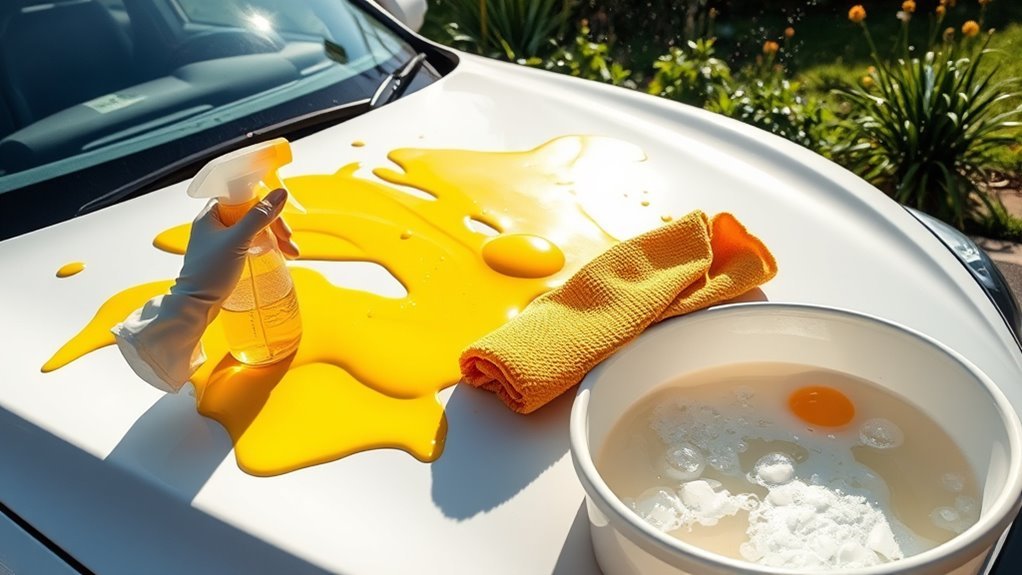
Next, spray the affected area with a mixture of dish soap, warm water, and white vinegar. Let the solution sit for 5-10 minutes to help soften the egg residue, making it easier to clean.
After that, carefully wipe the area with a microfiber cloth. Rinse thoroughly with clean water and dry the surface to prevent water spots.
For tough, baked-on egg spots, repeat the process using cloths soaked in vinegar.
Once the stain is removed, finish by waxing your car to protect the paint and restore its shine.
If you want to know how to handle stubborn stains and prevent damage, keep exploring these cleaning tips.
How to Safely Remove Eggshells Without Scratching

When you need to remove eggshells from your car, start by carefully picking up the large pieces with your fingers or a soft tool to avoid scratching the paint. Avoid scrubbing directly on the eggshells, as tiny shards could embed into the finish.
Next, use a damp microfiber cloth or sponge to gently lift any remaining fragments without applying too much pressure. If some eggshells stubbornly stick, soften them first by lightly spraying vinegar or warm water, which helps loosen the residue without harming your car’s surface.
Always work gradually and gently to minimize the risk of damage. Using these steps ensures you remove eggshells safely and keep your car’s paint intact while preparing it for deeper cleaning.
Mixing a Safe Cleaning Solution to Loosen Egg Residue

After gently removing eggshell fragments, you’ll want to soften the remaining egg residue to make cleaning easier. Start by mixing a safe cleaning solution that helps break down the egg without harming your car’s finish. Combine 1 tablespoon of dish soap with 1 cup of warm water in a spray bottle.
Next, add 1/4 cup of distilled white vinegar, which effectively loosens egg proteins. Shake the bottle well to ensure the soap and vinegar blend thoroughly. Spray this solution liberally over the affected areas, focusing on the egg splatter.
Let it sit for 5 to 10 minutes so it can penetrate and soften the residue. This mixture uses clean egg-safe ingredients, making it ideal for preparing your car’s surface for the next step in the cleaning process.
How to Soften and Wipe Away Egg Residue

Although dried egg residue can be stubborn, you can soften it effectively by spraying distilled white vinegar or applying a vinegar-soaked microfiber cloth directly onto the affected area. Before that, carefully remove any large eggshell pieces with your fingers or a plastic scraper to avoid scratching.
Let the vinegar sit on the egg residue for at least five minutes to break down the proteins and loosen the dried material. Afterward, use a damp microfiber cloth soaked in warm water to gently soften the area further.
Finally, wipe away the softened egg residue by applying light pressure with a clean, damp microfiber cloth. This method helps you safely soften and wipe away egg residue without damaging your car’s surface.
Removing Baked-On or Stubborn Egg
How do you tackle baked-on or stubborn egg residue without harming your car’s paint? First, gently remove any eggshell fragments using a plastic scraper or your fingernails to avoid scratches.
Gently lift eggshell fragments with a plastic scraper or fingernails to protect your car’s paint from scratches.
Next, soften the dried egg by soaking the area with a microfiber cloth dampened in warm white vinegar for 5-10 minutes. Then, apply an automotive egg remover or a dish soap and warm water mix to help loosen the residue.
Finally, carefully scrub with a soft sponge or microfiber cloth using light pressure. To finish, rinse thoroughly with clean water and dry with a microfiber towel to prevent new egg residues from sticking to your paint.
- Use a plastic scraper to gently lift eggshells
- Soak with vinegar-soaked microfiber cloth
- Apply egg remover or soap solution
- Lightly scrub, rinse, and dry paint surface
How Egg Can Damage Your Car’s Paint and Finish
You need to act quickly because egg whites can bond tightly to your car’s paint, making removal tough once dried. The acidic yolk can eat into the clear coat, causing stains and corrosion, while dried shells risk scratching the surface.
Ignoring these risks might leave your car’s finish stained, dull, and damaged over time.
Egg Components Impact
When egg whites dry on your car, their proteins bond tightly with the paint, making removal tough. The egg’s components each play a role in damaging your vehicle’s finish. You need to understand how they affect your car to clean effectively without causing further harm.
- Egg whites contain proteins that cling stubbornly to the clear coat, increasing the risk of staining.
- Egg yolk’s fatty acids can eat through the clear coat, leading to permanent discoloration.
- Shards of eggshell can scratch or gouge your paint if you’re not careful during cleanup.
- In hot weather, egg residue bakes onto the surface, hardening and making removal much harder.
Knowing this helps you act quickly and choose the right cleaning method to protect your car’s paint and finish.
Chemical Paint Damage
Egg’s chemical makeup doesn’t just make removal tricky—it can actively harm your car’s paint and finish. When you don’t remove the egg quickly, proteins in egg whites soften the clear coat, while fatty acids in yolk eat through paint layers.
Acidic residues can etch the surface, causing cracks or bubbles. Dried shells can scratch your car paint if rubbed harshly. To protect your car, clean off egg stains immediately with gentle, automotive-specific products.
| Egg Component | Effect on Car Paint | Result if Not Removed |
|---|---|---|
| Egg Whites | Soften clear coat | Paint weakening |
| Egg Yolk | Fatty acids eat layers | Staining, discoloration |
| Residues | Acidic etching | Cracking, bubbling |
Physical Surface Risks
Although eggs might seem harmless at first glance, their physical components can seriously damage your car’s paint and finish. You need to act fast because dried egg residues become abrasive and tough to remove without causing paint damage. The sharp eggshell fragments pose a real risk too.
Here’s what you should watch out for:
- Eggshell shards can cause scratches or penetrate the clear coat, leading to lasting blemishes.
- High-velocity impact from eggshells can create microcracks in your paint.
- Protein bonds in egg whites can etch the surface chemically but also make physical removal tricky.
- Using abrasive cloths or scrubbing baked-on eggs increases the chance of scratches and further paint damage.
Handle the cleanup gently to protect your car’s finish from these physical surface risks.
How to Clean Egg Off Your Windshield Without Damage
To safely remove egg from your windshield, start by spraying a vinegar and water solution to loosen the residue. Let it sit for about 10 minutes, then gently wipe with a soft microfiber cloth to avoid scratches.
Using gentle techniques guarantees you clean effectively without damaging the glass.
Vinegar Solution Application
When you spray distilled white vinegar onto your windshield, it helps loosen dried egg residues without causing damage. To effectively apply this method, follow these steps:
- Soak a clean microfiber cloth in warm water, then wring it out to avoid excess moisture.
- Apply vinegar directly onto the egg-stained area or onto the damp cloth.
- Gently press the vinegar-soaked cloth against the affected spots and let it sit for 5 to 10 minutes to soften the dried egg.
- Carefully wipe the windshield with the cloth, working from the edges inward to remove loosened egg without scratching.
Afterward, rinse the area with plain water and dry it with a soft cloth to eliminate any vinegar residue and keep your windshield clear.
Gentle Wiping Techniques
Since dried egg can be abrasive, you’ll want to remove it carefully to avoid scratching your windshield. After softening the egg with your vinegar solution, take a microfiber cloth soaked in warm, soapy water. Use gentle wiping, applying light pressure in circular motions to lift the softened egg without damaging the glass.
Avoid scrubbing hard, as this can cause scratches. If any large eggshell fragments remain, gently pick them off with your fingers or a plastic scraper before wiping. Once the egg residue is gone, rinse the windshield thoroughly with clean water.
Finally, dry the surface using a fresh microfiber cloth to prevent streaks or leftover residue. This careful approach guarantees your windshield stays clean and scratch-free.
Waxing and Sealing Your Car’s Paint After Egg Removal
Although you’ve already removed the egg residue, you shouldn’t skip waxing and sealing your car’s paint. After a thorough car wash to remove dried egg and other contaminants, waxing provides essential protection and shine.
Here’s how to do it right:
- Wash the affected area with car soap and water to ensure all egg remnants are gone.
- Apply a high-quality wax or sealant using a microfiber applicator in circular motions.
- Let the wax cure for 10-15 minutes, as per the product instructions.
- Buff off the wax with a clean, dry microfiber cloth to reveal a glossy finish.
Regular waxing every 3-4 months helps maintain your car’s paint, keeping it shielded from future damage and looking fresh.
When to Seek Professional Help for Egg Damage
If egg residue has baked onto your car’s paint for several hours or longer, you might need professional detailing or even repainting to restore the finish. When egg causes serious damage like bubbling, chipping, or clear coat peeling, it’s time to seek professional help. DIY cleaning might not remove stubborn residue and can worsen the damage.
If you notice chemical etching or the egg has penetrated the clear coat, a skilled technician can properly polish or repaint to prevent further deterioration. For large, baked-on stains—especially on delicate or vintage paint—professional help ensures safe removal without risking additional harm. Don’t hesitate to consult experts if your efforts fail or the damage looks severe; timely intervention can save your car’s finish.
Frequently Asked Questions
What Is the Best Way to Clean an Egg off a Car?
The best way to clean egg off your car is to gently remove shells, use a vinegar-soaked microfiber cloth to loosen residue, then wipe with a damp cloth.
Finish by rinsing and drying to avoid damage and streaks.
What to Do When Your Car Gets Egged?
When your car gets egged, don’t panic like it’s a breakfast disaster.
Grab vinegar, water, and a soft cloth—attack that yolky mess gently but swiftly before it bakes on, saving your paint and your sanity.
Is Egg Hard to Clean off a Car?
Yes, egg can be hard to clean off your car, especially if it’s dried or baked on.
You’ll need to act quickly and use gentle methods to avoid damaging the paint while effectively removing the residue.
Are Eggs Hard to Get off a Car?
Yes, eggs can be tough to get off your car, especially if they’ve dried or baked on. You’ll need to act quickly and use gentle cleaning methods to avoid damaging the paint while removing the residue effectively.
Conclusion
Now that you know how to safely remove egg from your car without causing damage, you can tackle this mess like a true knight of the road. Remember, acting quickly and gently is key—think of it as wielding Excalibur against stubborn residue.
If the egg’s baked on or the damage seems serious, don’t hesitate to call in the pros. With proper care and a little patience, your car will shine as bright as a Renaissance masterpiece once again.
By following these steps to get egg off a car, you ensure your vehicle stays clean and protected from any lasting harm.