How Long Do Duck Eggs Last in the Fridge: A Complete Guide
You can keep fresh duck eggs in your fridge for up to four months if you store them properly. Ideally, maintain a temperature of 35-40°F and keep them in their original carton or an airtight container. Proper storage helps maintain their freshness and quality for a longer time.
Avoid washing the duck eggs before storing them. This preserves the natural protective coating that slows spoilage.
Store the eggs with the pointy end down and check them regularly for any cracks or unusual odors.
If you want to learn the best ways to store duck eggs, how to tell their freshness, and even how to freeze them, keep exploring these helpful tips.
How Long Do Duck Eggs Last in the Fridge?

How long can you keep duck eggs in the fridge before they go bad? When stored properly, fresh duck eggs can last between 2 to 4 months in the refrigerator. Their shelf life markedly extends compared to room temperature, where unwashed eggs remain safe for about 2 months.
Once you wash duck eggs, you should refrigerate them and aim to use them within 2 to 3 weeks for the best freshness. To maximize their shelf life, keep them in airtight containers and maintain a consistent cold temperature.
Always check for signs of spoilage like a foul odor, slimy shells, or discoloration, and discard eggs if you notice any. Following these guidelines helps you enjoy duck eggs safely and fresh over time.
Best Practices for Storing Duck Eggs in the Refrigerator

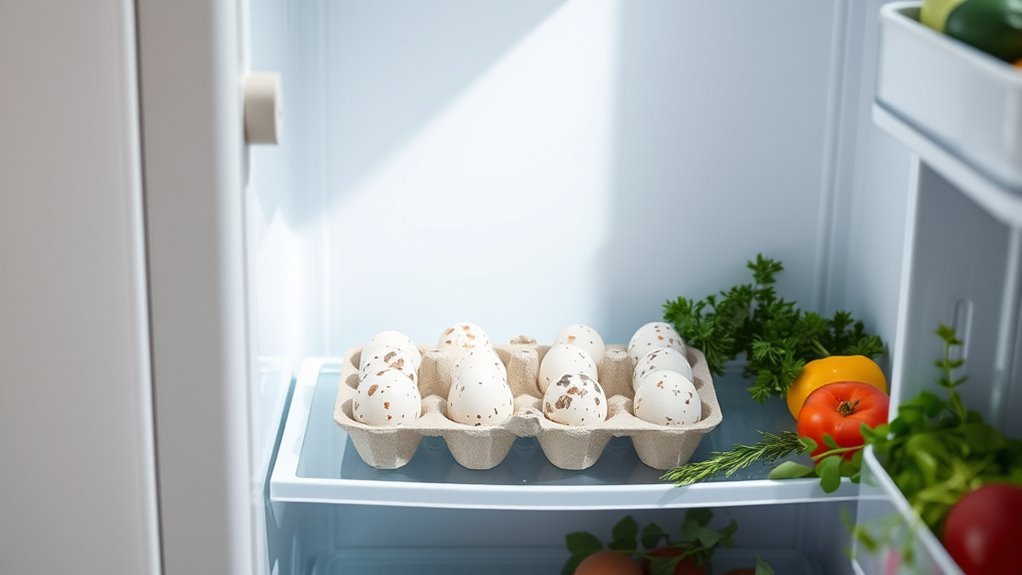
To keep your duck eggs fresh, store them in the main body of the fridge at 35-40°F, avoiding the door where temperatures fluctuate. Use an airtight container or the original carton to protect the shells and prevent odors from seeping in.
Labeling your eggs with the date helps you track freshness and use them within two months.
Ideal Temperature Range
Although storing duck eggs might seem straightforward, maintaining the ideal refrigerator temperature between 35°F and 40°F (1.7°C to 4.4°C) is crucial to keep them fresh for up to two months. This temperature range slows bacterial growth and preserves freshness effectively.
To ensure you’re storing your duck eggs properly, follow these tips:
- Set your refrigerator to the ideal temperature, between 35°F and 40°F.
- Use a refrigerator thermometer to monitor temperature consistently.
- Avoid opening the fridge frequently to prevent temperature fluctuations.
- Keep eggs away from warmer spots inside the refrigerator, like the door.
Packaging And Container Tips
Since duck eggs have delicate shells, storing them in their original carton or a dedicated egg container protects them from damage and contamination. Always place eggs pointy end down to maintain the air cell’s position, which helps keep them fresh longer.
Avoid placing eggs near the fridge door; instead, use the middle shelf for a stable temperature. If you remove eggs from their packaging, use an airtight container or wrap them tightly with plastic to prevent spoilage. Label your container with the date of storage to track freshness easily.
| Packaging Type | Benefit |
|---|---|
| Original Carton | Protects shells from damage |
| Dedicated Container | Maintains stable positioning |
| Airtight Container | Prevents contamination |
| Plastic Wrap Cover | Keeps eggs fresh and clean |
Avoiding Odor Absorption
Keeping duck eggs in the right container helps protect their shells, but you also need to guard against unwanted odors seeping in. Odor absorption can spoil the taste and quality of your duck eggs. To prevent this, follow these best practices:
- Store duck eggs in airtight containers or sealed cartons to block strong fridge odors.
- Keep them on a shelf away from the refrigerator door to avoid temperature changes and exposure to scents.
- Avoid placing eggs near pungent foods like onions, garlic, or fish, as their odors can penetrate the porous shells.
- Make sure eggs are clean and dry before storing to reduce moisture that increases odor absorption risks.
Regularly check your duck eggs for any unusual smells and discard any that seem off to maintain freshness.
Does Washing Duck Eggs Reduce Their Shelf Life?

When you wash duck eggs, you remove their natural protective bloom that shields them from bacteria and moisture loss. Without this coating, the eggs spoil faster and need refrigeration right away.
Keeping the bloom intact helps your eggs last much longer on the shelf.
Protective Bloom Importance
Although washing duck eggs might seem like a good way to clean them, it actually strips away their natural protective bloom. This protective bloom acts as a barrier that helps keep bacteria out and preserves the egg’s freshness. When eggs are washed, this layer is removed, making them more vulnerable to contamination.
Here’s what you should know:
- The protective bloom seals the eggshell pores, preventing bacterial infiltration.
- Washed eggs lose this defense and spoil faster if not refrigerated immediately.
- Unwashed eggs can last up to 2 months at room temperature thanks to the bloom.
- If you must wash eggs, reapply mineral oil to mimic the protective bloom and reduce risks.
Avoid washing duck eggs unless necessary to maintain their natural protection.
Impact On Longevity
Removing the protective bloom from duck eggs by washing them directly affects how long they stay fresh. That natural coating acts as a barrier against bacteria, so when you remove it, the eggs become more vulnerable to contamination. Washed eggs need immediate refrigeration to slow spoilage, considerably reducing their shelf life compared to unwashed eggs.
In fact, unwashed eggs can last up to two months at room temperature thanks to their intact bloom. If you wash duck eggs repeatedly or scrub them harshly, you risk further damaging this protective layer, shortening their freshness even more. For ideal eggs storage, it’s best to clean them gently—dry wiping or a quick rinse with warm water is enough—preserving the bloom and extending how long your duck eggs last in the fridge.
How to Tell When Duck Eggs Are No Longer Fresh
If you want to make sure your duck eggs are still good to eat, start by checking their appearance and performing a simple float test. Knowing how duck eggs stay fresh helps you avoid using spoiled ones.
- Inspect the shell – it should be clean, uncracked, and smooth; chalky or porous shells mean the egg’s old.
- Do the float test – fresh eggs sink and lie flat; eggs that stand up or float have likely gone bad.
- Crack the egg open – a foul smell or discolored, slimy whites and yolks signal spoilage.
- Watch for mold or unusual greenish tints inside the egg, which indicate it’s no longer fresh.
Use these tips to ensure your duck eggs stay safe and tasty!
How Long Do Hard-Boiled Duck Eggs Last?
Once you’ve confirmed your duck eggs are fresh, it’s important to know how long hard-boiled ones will stay good. Hard-boiled duck eggs typically last 7 to 10 days in the refrigerator. If peeled, try to consume them within a week for best taste and safety.
Storing them promptly in airtight containers after cooling extends their shelf life. Unpeeled eggs with shells intact can sometimes last up to two weeks refrigerated. Always check for spoilage signs like off odors, slimy shells, or discoloration before eating.
| Condition | Refrigerator Shelf Life |
|---|---|
| Peeled hard-boiled | Up to 7 days |
| Unpeeled hard-boiled | Up to 14 days |
| Storage tip | Airtight container |
| Spoilage signs | Odor, sliminess, color |
Can You Freeze Duck Eggs to Extend Shelf Life?
Although freezing duck eggs can alter their texture, you can extend their shelf life by lightly beating them and storing the mixture in ice trays or freezer-safe containers for up to six months. Keep in mind, freezing may cause the whites to become rubbery and yolks crumbly, affecting their use in some recipes.
Freezing duck eggs changes texture but extends shelf life when lightly beaten and stored properly for up to six months.
To make the most of freezing, follow these tips:
- Beat eggs gently before freezing to prevent texture issues.
- Label containers with the date and egg count for easy tracking.
- Thaw frozen eggs slowly in the refrigerator to maintain quality.
- Use frozen eggs primarily for cooking or baking, as fresh eggs offer better flavor and texture.
Freezing is a practical method to extend shelf life but isn’t ideal for all culinary purposes.
Tips to Keep Duck Eggs Fresh and Avoid Waste
To keep your duck eggs fresh and avoid waste, store them unwashed in a cool, dry place or the refrigerator, where they can stay fresh for up to two months. The natural bloom on duck eggs helps protect them, so avoid washing unless necessary. Always place your eggs pointy end down and use airtight containers to prevent odor absorption and contamination.
Label the eggs with collection or storage dates and follow best practices by using the oldest eggs first to reduce waste. Regularly check for cracks, unusual odors, or discoloration, and discard any eggs showing spoilage.
Frequently Asked Questions
How Long Can Duck Eggs Last in the Fridge?
You can keep duck eggs in the fridge for up to two months if you store them properly in their shells.
Just make sure to check for any off smells or slimy shells before using them.
Can I Eat Eggs After 2 Months in the Fridge?
You can eat duck eggs after 2 months, but it’s risky since spoilage chances rise considerably. Check for off-odor or slimy shells, and if anything seems off, don’t eat them to stay safe and healthy.
How to Tell When Duck Eggs Go Bad?
You can tell duck eggs go bad if they smell sour, have slimy or discolored shells, or show greenish tint in the yolk or white.
Also, if they float in water, it’s time to toss them.
How to Clean Farm Fresh Duck Eggs?
You know what they say, “Cleanliness is next to godliness.” You gently wipe farm-fresh duck eggs with a dry or damp cloth, avoid soaking, and only wash with mild soap if really dirty.
Then dry thoroughly before refrigerating.
Conclusion
So, you’ve learned duck eggs last quite a while in the fridge—longer than you probably expected. Just don’t forget them in the back where they turn into science experiments!
Washing them might seem like a good idea, but it can actually shorten their life, so maybe just admire their natural bloom instead.
Remember, whether raw, hard-boiled, or even frozen, treating your duck eggs right means fewer surprises and more tasty breakfasts—no mysterious smells required! Proper storage and handling are key to making sure your duck eggs last in the fridge as long as possible.