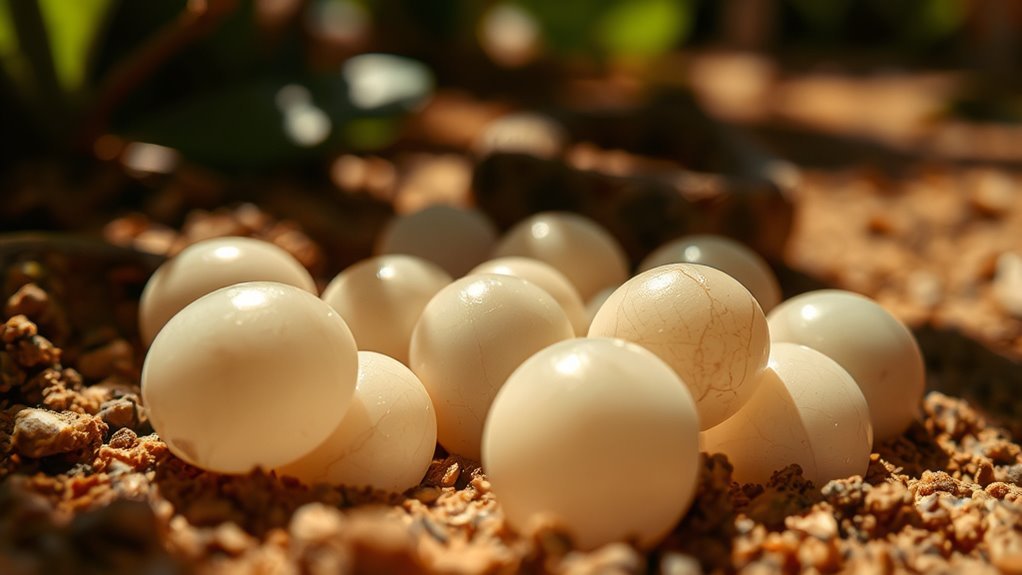
How Long Does It Take for a Snake Egg to Hatch?
You can expect most snake eggs to hatch within 45 to 70 days, depending on the species and incubation conditions. Understanding how long it takes for a snake egg to hatch is crucial for proper care.
Temperature and humidity play a big role—warmer temps speed things up, while cooler slows them down.
You’ll notice signs like pipping and egg softening when hatch time approaches. Proper egg handling helps avoid delays, and if a hatchling takes too long, you might need to assist carefully.
Keep these in mind to better understand the hatching process.
How Long Do Snake Eggs Usually Take to Hatch?

While the exact time varies by species and environment, snake eggs usually take between 45 and 70 days to hatch. During this incubation period, temperature plays a pivotal role—warmer conditions speed up development, shortening the time until hatching, while cooler temperatures slow things down.
You’ll notice most snake eggs hatch closely together, often within 24 to 48 hours after the first baby snake starts pipting the shell. The hatching itself is a slow process, with hatchlings using a specialized egg tooth to carefully cut through the leathery shell, which can take several hours.
Factors like humidity and egg health also affect incubation, but generally, if you’re monitoring snake eggs, expect them to hatch within this typical 45 to 70-day window.
What Factors Influence Snake Egg Incubation Time?

Because snake egg incubation depends heavily on environmental factors, you’ll find that temperature, humidity, and species differences play key roles in how long the eggs take to hatch. Incubation time can vary markedly, influenced by how well these factors are managed.
| Factor | Effect on Incubation Time | Notes |
|---|---|---|
| Temperature | Higher temps speed development | Avoid extremes for health |
| Humidity | Ideal moisture ensures steady growth | Too dry or wet harms eggs |
| Species | Different species have varied times | Range: 45 to 70 days |
| Handling & Setup | Poor conditions prolong or harm | Consistency is key |
Adjusting these elements carefully helps you achieve predictable incubation time and healthy hatching outcomes.
How Temperature Affects Snake Egg Development

If you want your snake eggs to hatch on schedule, you need to carefully control the incubation temperature. Higher incubation temperatures speed up embryo development, shortening the time until hatching, while cooler temperatures slow growth and extend incubation beyond the typical 45 to 70 days.
However, pushing the temperature above the preferred range can cause developmental abnormalities or even embryo death, so it’s vital to maintain a balanced environment. For species with temperature-dependent sex determination, the incubation temperature not only affects how long the eggs take to hatch but also influences whether hatchlings become males or females.
Why Humidity Matters for Snake Egg Hatching Success
Controlling temperature isn’t the only factor that affects your snake eggs’ development; humidity plays a major role as well. Proper humidity (around 90%) prevents eggs from drying out or becoming too moist, which could cause mold or suffocation of the embryo within the egg.
When eggs are laid, maintaining ideal humidity supports gas exchange and moisture retention critical for healthy growth. Insufficient humidity dries the shell, making it hard for hatchlings to use their egg tooth to pip. Excess moisture risks fungal growth, harming your clutch of eggs.
Several factors, including decaying vegetation and pre-lay shed, influence humidity during weeks of incubation.
| Humidity Level | Effect on Eggs |
|---|---|
| Too Low (<80%) | Shell dehydration, pip difficulty |
| Ideal (~90%) | Healthy embryo, proper incubation times |
| Too High (>95%) | Mold, bacterial infection |
How Proper Egg Handling and Positioning Impact Hatch Time
While maintaining stable incubation conditions is essential, how you handle and position snake eggs plays an equally important role in determining hatch time. Proper handling means minimizing movement and marking the top of each egg to keep its original orientation. This careful approach reduces stress and hatch time variability.
When positioning eggs in the substrate, placing them with the marked top up ensures consistent development and boosts hatching success. Avoid unnecessary disturbance—excessive candling or shifting can damage the egg and prolong incubation. Eggs laid with the right moisture and correct positioning tend to hatch predictably within the expected timeframe.
How to Monitor Temperature, Humidity, and Egg Progress
Proper egg handling and positioning set the stage, but maintaining the right environment throughout incubation shapes your snake eggs’ development. You need to consistently monitor temperature, keeping it steady between 82-88°F, and maintain humidity around 90%. Use multiple thermometers and hygrometers placed at egg level to catch any fluctuations early.
About 2-3 weeks after laying, candle the eggs to observe blood vessels and embryo development, helping you assess fertility. Keep an eye on the eggshells—if they look dry or moldy, increase humidity by adding water or moist substrate.
Also, guarantee proper ventilation by periodically opening vents or the incubator lid to prevent carbon dioxide buildup and supply fresh oxygen. Staying vigilant with these factors will support healthy embryo growth and improve hatching success.
What Signs Show Snake Eggs Are Ready to Hatch?
You’ll notice physical changes in the eggs, like darkening spots and small cracks appearing on the shell. Hatchlings will start to pip, using their egg tooth to break through, which shows they’re ready to emerge.
Watching for these signs helps you know when the eggs are close to hatching.
Physical Changes In Eggs
As snake eggs approach hatching, you’ll notice several physical changes that signal the time is near. After egg laying, the shell softens and becomes more pliable, helping the hatchling break through. You might even see subtle movements inside or a small crack, called a pip, at the egg’s top.
The egg may shrink slightly as the embryo uses up the yolk. These signs tell you that hatching is imminent.
| Change Type | Description | What It Indicates |
|---|---|---|
| Shell Softening | Shell becomes more flexible | Hatchling ready to pip |
| Embryo Movement | Detectable through candling | Active embryo inside |
| Pipping | Small crack on egg surface | Hatchling begins emerging |
| Egg Shrinkage | Noticeable size reduction | Yolk absorption nearly done |
Hatchling Behavior Indicators
When snake eggs are ready to hatch, you can often spot distinct behavioral signs inside the shell. One key indicator is the young snake beginning to pip, using its egg tooth to create a small crack at the top of the egg. This pip mark signals that hatching is imminent.
You might also notice the egg becoming less firm or slightly shriveled as the embryo absorbs the remaining yolk. Additionally, increased movement within the egg shows the young snake is actively preparing to emerge. If you observe these signs—pipping, shell cracks, and gentle motion—you’ll know the hatchling is close to breaking free.
Recognizing these behaviors helps you anticipate when the young snake will finally hatch.
How the Snake Hatching Process Works and How Long It Takes
You’ll find that snake eggs usually take between 45 to 70 days to incubate, depending on the species and temperature. When it’s time to hatch, the baby snakes use an egg tooth to break through the shell, a process that can last a few days.
After they pip, they often stay inside the shell for up to 72 hours to absorb the yolk before fully emerging.
Egg Incubation Duration
Although incubation times vary among species, snake eggs typically take between 45 and 70 days to hatch. You should know that the duration depends heavily on environmental factors and species-specific traits.
Here are the key influences on incubation length:
- Temperature: Warmer conditions speed up embryo development, shortening incubation time within the species’ range.
- Humidity and Egg Quality: Proper moisture levels and healthy eggs guarantee steady growth and successful hatching.
- Genetics: Some species naturally have longer or shorter incubation periods, sometimes lasting several months if conditions aren’t ideal.
Hatchling Emergence Timing
Since snake eggs usually hatch between 45 and 70 days, you’ll notice hatchlings start breaking through the shell, or pipping, about 24 to 48 hours before fully emerging. They use a tiny egg tooth to crack the shell, signaling the beginning of the hatching process.
From that first pip, it typically takes 2 to 3 days for the hatchling to completely emerge. After breaking free, they often stay inside the egg for another 48 to 72 hours, absorbing the remaining yolk sac for essential nourishment.
Keep in mind that incubation temperature and humidity affect how quickly and successfully hatchlings emerge. By monitoring these conditions, you can better predict and support the timing of your snake’s hatching process.
When and How to Help a Snake Hatchling That’s Delayed
If a snake egg hasn’t hatched within the expected 45-70 day period, you might wonder when to step in. Delays often stem from temperature changes or incubation issues. Usually, hatchlings pip the shell within 24-48 hours, so patience is key.
If no progress occurs after 48 hours, consider gentle help by following these steps:
- Consult a vet or experienced breeder before intervening to avoid harm.
- Carefully slit the eggshell at the top or side, steering clear of membranes and the embryo.
- Use minimal force to assist the hatchling out, ensuring not to injure it.
Frequently Asked Questions
How Long Do Snakes Stay With Their Eggs?
You’ll find most snakes leave their eggs soon after laying, except species like pythons that stay and brood them for several weeks.
After hatching, the young usually become independent quickly, so mothers don’t stick around long.
Should You Destroy Snake Eggs?
You should destroy snake eggs if they’re dead, moldy, or rotten to prevent contamination. Removing them quickly helps protect healthy eggs.
Always dispose of them properly by burying or sealing, following local waste rules.
What Time of Year Do Baby Snakes Hatch?
Baby snakes usually hatch between late summer and early fall, around August to October.
You’ll notice hatching times vary with species and climate, so in tropical areas, snakes might hatch throughout the year instead.
Why Do Breeders Cut Open Snake Eggs?
When a hatchling’s stuck like a ship in a bottle, breeders cut open snake eggs to free it.
They do this carefully to prevent dehydration or suffocation, saving fragile lives when natural pipping fails.
Conclusion
Now that you know how temperature, humidity, and careful handling affect snake egg hatching, you’re ready to give those eggs the best chance possible.
Remember, patience is key—waiting for a snake to hatch can feel like watching paint dry on a thousand-year-old wall! Keep monitoring conditions closely, watch for signs of hatching, and be ready to assist if needed.
With your care, those eggs will soon reveal their slithery new arrivals. Proper temperature and humidity control are essential for successful snake egg incubation and hatching.