How Long Does It Take for Roach Eggs to Hatch?
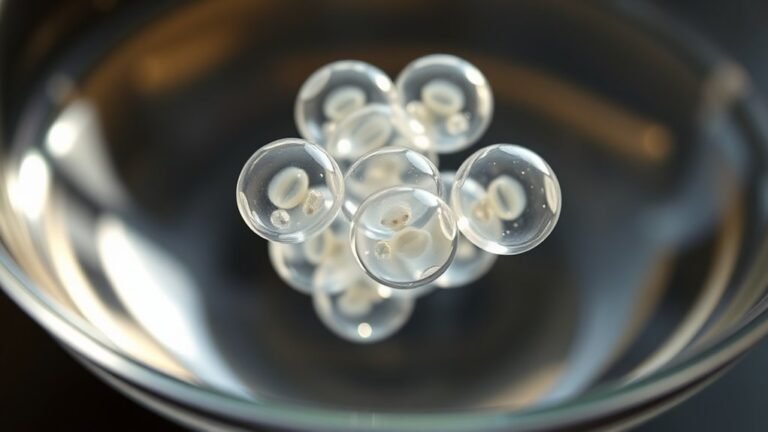
Roach eggs usually take between 28 and 60 days to hatch, depending on the species and environment. Warmer temperatures around 75-85°F and higher humidity speed up the process, while cooler, drier conditions slow it down.
You’ll often find eggs in dark, hidden spots like cracks or behind appliances.
Knowing how long eggs take to hatch helps you time your pest control efforts effectively.
Keep following for tips on spotting eggs and stopping them before they hatch.
How Long Do Cockroach Eggs Take to Hatch?

Although the exact time varies by species, cockroach eggs generally take between 28 and 60 days to hatch. You’ll find that the incubation period depends heavily on the species and environmental conditions. For example, German cockroach eggs hatch in about 28 days under ideal temperatures, making their hatch time relatively short.
In contrast, the Oriental cockroach’s ootheca can take up to 60 days to hatch, especially in cooler environments. This variation in hatch time reflects how different cockroach eggs adapt to their surroundings. Understanding the species-specific incubation period helps you anticipate when to expect hatchlings.
Cockroach Species’ Egg Incubation Times

When you consider cockroach species, their egg incubation times can vary considerably, usually ranging from 28 to 60 days. Understanding the hatch period of different cockroach eggs helps you predict when to expect nymphs.
Here’s a quick overview of common species and their incubation times:
- German cockroach eggs hatch in about 28 days, the shortest hatch period.
- American cockroach eggs take roughly 44 days, depending on temperature.
- Brown-banded cockroach eggs require around 50 days to hatch.
- Oriental cockroach eggs can take up to 60 days, influenced by humidity and temperature.
Knowing these incubation times lets you better time control measures against infestations based on the species present in your environment.
Which Environmental Factors Make Eggs Hatch Faster?

Understanding the incubation times of various cockroach species sets the stage for recognizing how environmental factors influence egg hatch rates. When you’re managing roach eggs, temperature and humidity play vital roles.
Warmer temperatures between 75-85°F combined with high humidity around 60-80% create ideal conditions that speed up incubation. Microclimates with consistent moisture, like under sinks, also boost egg development by maintaining stable environments.
Here’s a quick overview:
| Environmental Factor | Ideal Range | Effect on Incubation |
|---|---|---|
| Temperature | 75-85°F | Speeds up egg development |
| Humidity | 60-80% | Prevents desiccation |
| Microclimates | Moist, stable areas | Supports faster hatching |
How Temperature and Humidity Affect Egg Development
Because temperature and humidity directly influence roach egg development, maintaining the right conditions is key to controlling hatch times. You’ll notice that temperature effects play a major role in egg incubation speed. Warm environments between 75-85°F shorten egg hatching time to 28-50 days, while cooler temps below 70°F slow development, sometimes past two months.
Humidity levels also matter; 60-80% humidity supports healthy egg viability, but dryness under 40% can desiccate eggs, delaying or preventing hatching. These environmental conditions together drive how fast roach populations grow.
- Higher temperatures speed up egg incubation
- Cooler temps extend hatching time
- Ideal humidity (60-80%) promotes egg viability
- Low moisture delays or stops egg hatching
Understanding these factors helps you manage roach population growth.
Where to Find Cockroach Eggs in Your Home
You’ll usually find cockroach eggs tucked away in dark, hidden spots like cracks, behind appliances, or inside cabinets. Different species prefer different locations, from kitchens and bathrooms to basements and crawl spaces.
Knowing where to look can help you spot these hidden egg cases before they hatch.
Common Egg Case Locations
When searching for cockroach eggs in your home, focus on dark, hidden spots where these pests feel safest. Different cockroach species prefer specific egg case locations, affecting egg incubation and egg hatching time.
Knowing where to look helps you spot egg capsules early and act fast.
Common egg case locations include:
- Cracks and crevices near food for German cockroach eggs
- Warm, moist areas like basements and drains for Oriental cockroach eggs
- High, hidden spots such as ceiling corners or drawers for Brown-banded cockroach egg capsules
- Secluded spaces like wall voids and crawl spaces near water for American cockroach eggs
Hidden Egg Deposits
Although cockroach eggs are well hidden, knowing where to look can help you uncover their deposits before they hatch. Cockroaches often lay egg deposits in dark secluded spots like cracks, crevices, or behind appliances. You’ll also find egg casings inside cabinets, drawers, and concealed areas such as wall voids or under sinks.
German cockroaches carry their egg casings until just before egg hatching, making these egg locations harder to spot. Oriental and brown-banded roaches prefer cluttered storage spaces, electrical outlets, and behind baseboards for hiding spots.
Focus your search near water sources, food storage, and humid environments, as these conditions favor egg survival. By targeting these specific concealed areas, you can catch egg deposits early and prevent a roach infestation from growing.
How to Identify Cockroach Eggs vs. Other Debris
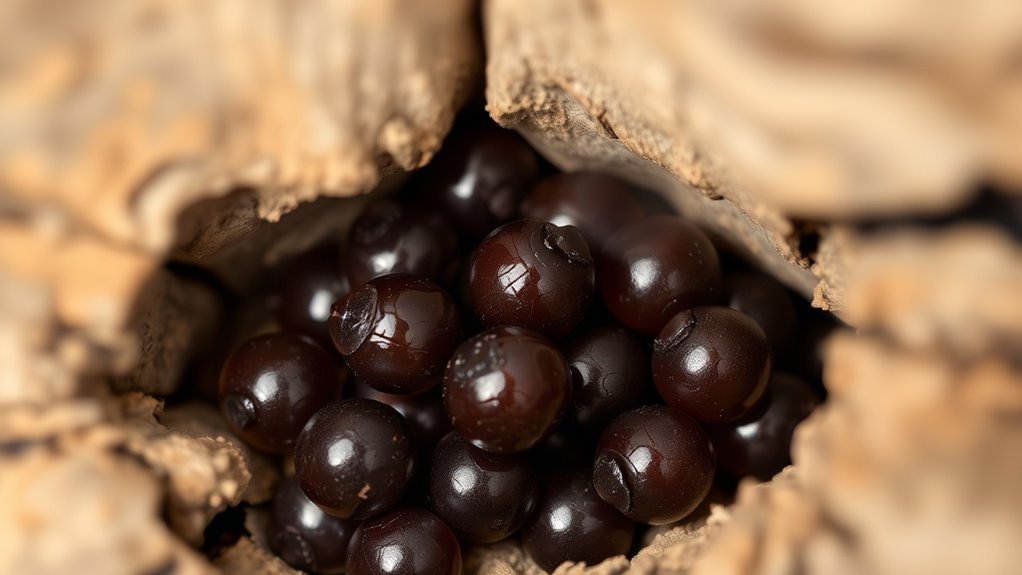
Since cockroach eggs come in distinct capsule-shaped cases called oothecae, you can often tell them apart from other household debris by their size, shape, and location. These egg cases vary by species, influencing hatch time and appearance. For accurate identification, focus on these features:
- Size between 5 and 14 mm, depending on species
- Shape varies: German cockroach oothecae are small and purse-shaped, American ones are longer and mahogany-colored
- Color shifts from white or cream when freshly laid to darker browns as they mature
- Usually glued to surfaces in hidden spots like cracks, crevices, or behind appliances
Spotting these traits helps you distinguish cockroach eggs from ordinary debris, aiding timely pest control efforts.
Warning Signs Cockroach Eggs Are About to Hatch
You’ll notice the egg cases darken and harden as hatching time nears. If you spot more roach activity, especially during the day, that’s a clear warning sign.
Keep an eye out for tiny nymphs moving around—that means the eggs are about to hatch or already have.
Egg Case Color Changes
When you notice the cockroach egg case shifting from a light shade to darker tones like brown or reddish-brown, it signals that hatching is near. This egg case color change, known as ootheca darkening, is a key hatching sign. It reflects the egg maturation and advanced nymph development inside.
Environmental conditions affect how quickly this color shift happens—usually within days to a week before hatching. For example, German cockroach oothecae darken about 3 to 7 days prior, while American cockroach eggs take longer, around 10 to 14 days.
Key points to watch for:
- Gradual darkening of the ootheca
- Transition to brown cockroach eggs
- Timing varies by species and environment
- Indicates embryos are fully developed and ready to hatch
Increased Roach Activity
Although roaches usually hide during the day, you might notice more of them scurrying about as their eggs near hatching. This increased activity is a key warning sign that cockroach eggs, or ootheca, are close to their hatch time. You’ll often see more movement near cracks, crevices, or behind appliances where oothecae are typically hidden.
A sudden spike in daytime roach sightings often means nymphs have recently emerged, signaling the end of the incubation period. Since hatch time varies between species—from about 28 days for German cockroaches to over 600 days for Oriental ones—watching for increased activity can help you identify an infestation early, allowing you to act before the nymphs spread further.
Visible Nymph Movements
Once cockroach eggs hatch, you’ll start noticing tiny nymphs moving quickly in cracks and hidden spots near where the eggs were laid. These small signs of hatching are often your first indication that the eggs are no longer dormant. You may see nymphs darting around surfaces or in crevices, especially in dark areas.
This movement signals increased activity and confirms that hatching has occurred.
Watch for these warning signs of nymph movement:
- Small nymphs emerging and crawling near egg sites
- Fast, erratic movement that looks like tiny specks
- Activity visible during daytime or in well-hidden locations
- Clusters of nymphs indicating recent hatching and colony growth
Spotting this activity means the eggs have hatched, and your cockroach problem is escalating.
Why Knowing Egg Hatch Times Helps You Control Roaches
Because roach eggs can take anywhere from 28 to 60 days to hatch depending on the species, knowing their incubation periods helps you time your pest control efforts effectively. Understanding cockroach eggs’ hatch times allows you to target treatment timing precisely, applying pest control measures before nymphs emerge from the egg case.
This early intervention during the egg incubation window can drastically reduce new roach populations, saving you time and money. Since hatch times are species-specific, being aware of which roaches you’re dealing with helps schedule re-treatments strategically.
Tracking egg hatch times also ensures your pest control program runs long enough to eliminate all hatchlings, preventing reinfestation. In short, knowing when roach eggs hatch lets you outsmart these pests and maintain a roach-free home.
Best Practices to Prevent Cockroach Eggs From Hatching
To prevent cockroach eggs from hatching, you need to act proactively by targeting both the eggs and the environments where roaches thrive. Managing egg incubation conditions and reducing egg viability are key steps to prevent hatching. Here’s what you should do:
- Regularly clean cracks, crevices, and behind appliances to remove cockroach eggs before they hatch.
- Use insect growth regulators like hydroprene or pyriproxyfen to disrupt development and stop eggs from maturing.
- Seal entry points with caulk and steel wool to block roaches from laying new eggs inside.
- Maintain humidity levels below 40% and indoor temperatures between 70-75°F to slow egg incubation and reduce hatch times.
Frequently Asked Questions
What Kills Roaches and Eggs Instantly?
You can kill roaches and eggs instantly by applying residual insecticide powders or liquids directly to cracks and crevices.
Sprays with cyfluthrin or deltamethrin kill roaches on contact but might not affect eggs immediately.
Does Seeing Baby Roaches Mean Infestation?
Congrats, you’re hosting a roach family reunion! Yes, seeing baby roaches means an infestation’s thriving.
You’ve got an established colony, so it’s time to act fast before they throw a full-blown party in your home.
How Many Roaches Are in an Egg?
You’ll find 10 to 50 roaches in an egg case, depending on the species.
German cockroaches pack about 30-40 eggs, while American cockroaches have around 15-16 eggs per ootheca.
How Quickly Do Roaches Multiply?
Roaches multiply quickly; you’ll see their population double or triple within months. Warm temperatures speed up their growth, and since females lay multiple egg cases, you’ll have a full infestation before you know it.
Conclusion
Now that you know cockroach eggs can hatch anywhere from a few weeks to over a month depending on species and conditions, you might wonder if simply waiting can solve your roach problem. The truth is, it won’t. Roaches reproduce quickly, and eggs hatch faster in warm, humid environments common in homes.
Taking action early—by controlling temperature, humidity, and cleanliness—is your best bet to stop these pests before they multiply. Don’t wait; act now. Effective roach control requires understanding how long it takes for roach eggs to hatch and implementing timely measures to prevent infestation.