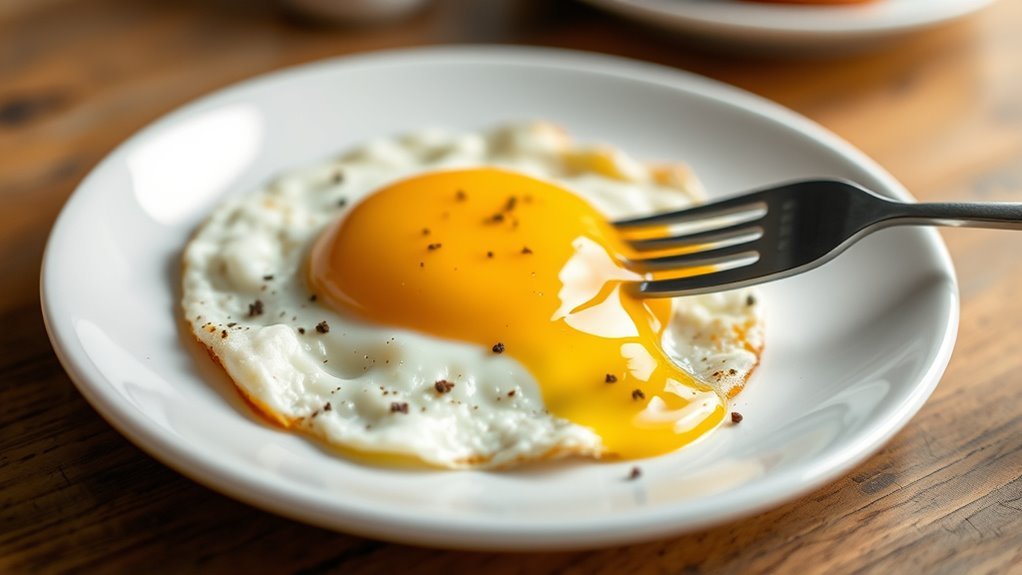
How Many Calories Are in an Egg Over Easy?
You’ll find an over easy egg contains about 74 to 90 calories, depending on its size and cooking method. Over easy eggs are a popular breakfast choice and provide a good balance of nutrients.
If you use minimal oil or butter, the calorie count stays low.
Keep in mind larger eggs have more calories, and adding toppings like cheese raises the total.
Over easy eggs provide high-quality protein and healthy fats, fitting well into low-carb or keto diets.
Stick around to uncover more about how ingredients and cooking methods influence their nutrition.
How Many Calories Are in an Egg Over Easy?

Wondering how many calories an egg over easy contains? Typically, one egg over easy has about 90 calories, but this can vary depending on how they’re cooked. Eggs contain roughly 17 calories in the white and 55 in the yolk, making them a great source of protein with numerous health benefits.
When you eat two eggs, you’re getting a solid portion of your Daily Value for protein, which supports weight loss and muscle repair. Fried eggs like these are low in calories if cooked with minimal fat, so you can enjoy them without worrying about excess calories.
Just keep in mind that the calorie content increases when more oil or butter is used, but the eggs themselves remain a nutritious, low-calorie option.
What Ingredients and Cooking Methods Add Calories to Over Easy Eggs

While eggs over easy are naturally low in calories, the ingredients and cooking methods you choose can quickly increase their calorie content. Adding butter or oil for frying is common, but keep in mind a tablespoon of butter adds about 102 calories.
Using a nonstick pan without extra fat helps keep calories low. Toppings like cheese or bacon also boost calories, unlike seasonings such as salt and pepper, which don’t add any.
| Ingredient/Method | Calorie Impact |
|---|---|
| Butter (1 tbsp) | +102 calories |
| Cooking oil (varies) | Depends on amount used |
| Cheese or bacon topping | Adds extra calories |
Choose your ingredients and cooking style wisely to control calorie intake.
How Egg Size Changes Calorie Count for Over Easy Eggs

You’ll notice that the size of your egg directly affects its calorie count when cooked over easy. Smaller eggs pack fewer calories, while larger ones add more, with each extra 10 grams contributing roughly 8-10 additional calories.
Understanding these variations helps you better estimate your meal’s energy intake.
Egg Size Impact
Because egg size varies, the calorie content of an over easy egg changes accordingly. If you choose a small egg, expect around 55-65 calories, while a medium egg offers roughly 60-70 calories. A large egg, which weighs about 50 grams, typically contains 70-80 calories when cooked over easy.
Opting for an extra-large egg increases that to approximately 80-90 calories. If you go even bigger with a jumbo egg, which weighs about 63 grams, you’ll consume close to 90-100 calories. So, the bigger the egg you pick, the more calories it packs.
When counting calories, paying attention to egg size helps you better estimate your intake, especially if you eat over easy eggs regularly.
Calorie Variation Factors
Understanding how egg size impacts calorie content helps you grasp the key factors that cause calorie variation in over easy eggs. When you cook an egg over easy, the calorie count depends mainly on its size, with larger eggs naturally containing more calories.
For instance, a large egg has about 70 calories, while an extra-large or jumbo can reach 90 to 100 calories.
Here are key calorie variation factors to keep in mind:
- Egg weight: Each additional 10 grams adds roughly 14 calories.
- Egg size categories: Small (55 cal), medium (63 cal), large (70 cal), extra-large (90 cal), jumbo (100 cal).
- Cooking additions: Butter or oil used in preparation increase total calories beyond the egg’s base value.
Knowing these helps you make smarter choices when enjoying over easy eggs.
Comparing Calories: Over Easy Eggs vs. Other Egg Preparations
Although an over easy egg contains about 74 calories, similar to boiled or poached eggs, the cooking method can markedly affect the calorie count. When frying, added butter or oil increases calories, while scrambled eggs often have even more due to milk, butter, or cheese.
You’ll find egg whites much lower in calories, around 17 per 60g, compared to whole eggs.
| Preparation | Approximate Calories | Notes |
|---|---|---|
| Over Easy | 74 | Minimal added fat |
| Boiled/Poached | 74 | No added fat |
| Scrambled | 90-110 | Added milk, butter, or cheese |
| Egg White Only | 17 | Lower calorie, fat-free |
Understanding these differences helps you manage calorie intake better.
What Nutrients Are in Over Easy Eggs
Beyond calories, over easy eggs offer a range of nutrients that support your health. When you enjoy this simple preparation, you’re not just getting about 74 calories but also a powerful nutrient profile that benefits your body in multiple ways.
You’ll find high-quality protein (around 6.3 grams) that helps repair and build muscles. Essential vitamins like D, B12, and folate in the yolk support bone health, energy production, and cell function. Healthy fats including omega-3 fatty acids, plus minerals such as selenium, phosphorus, and magnesium, contribute to heart health and overall bodily functions.
Eating over easy eggs is a convenient way to fuel your body with important nutrients in a delicious package.
Fitting Over Easy Eggs Into Low-Carb and Keto Diets
You’ll find that over easy eggs fit well into low-carb and keto diets thanks to their minimal carb content. They provide plenty of protein and fat, which keep you full and help maintain ketosis.
Carb Content Compatibility
Since an egg over easy contains only about 0.6 grams of carbohydrates, it fits easily into low-carb and keto diets. You can enjoy it without worrying about exceeding your daily carb limit, which is typically around 30 grams. Its low carb content helps you stay in ketosis while providing essential nutrients.
To keep your egg over easy carb-compatible, keep these tips in mind:
- Watch portion sizes to avoid adding hidden carbs.
- Pair eggs with low-carb vegetables or healthy fats.
- Avoid carb-heavy sides like toast or sugary sauces.
Protein and Fat Benefits
Although an over easy egg contains only about 70 calories, it packs around 13 grams of high-quality protein and healthy fats that fit perfectly into low-carb and keto diets. You’ll benefit from essential amino acids like leucine that aid muscle repair and recovery.
The healthy fats, including omega-3s and monounsaturated fats, support heart health while keeping you satiated. With just 1.2 grams of carbs, eggs won’t disrupt your carb limits, making them ideal for weight control and muscle maintenance.
| Nutrient | Benefit | Keto/Low-Carb Impact |
|---|---|---|
| Protein (13g) | Muscle repair & satiety | Supports lean mass |
| Healthy fats | Cardiovascular health | Fits fat macros |
| Low carbs (1.2g) | Minimal blood sugar impact | Keeps you in ketosis |
Cooking Tips to Reduce Calories in Over Easy Eggs
When aiming to reduce calories in over easy eggs, cooking them without added fats like butter or oil is a simple yet effective strategy. You can keep your eggs light and healthy by making a few mindful choices in the kitchen. Here are some tips to help you cut down on extra calories:
- Use a nonstick pan to cook eggs without butter or oil, or try steaming or poaching for even fewer calories.
- If you prefer frying, measure a small amount of heart-healthy oil or butter carefully and drain any excess with paper towels.
- Skip high-calorie toppings like cheese and creamy sauces to keep your meal lean and nutritious.
Frequently Asked Questions
How Many Calories Are in 2 Eggs Over Easy?
Two eggs over easy have about 170 calories total. You’ll get roughly 85 calories per egg, but keep in mind added butter or oil might increase that.
It’s a balanced, protein-rich breakfast choice for you.
What Do 400 Calories of Scrambled Eggs Look Like?
You’ll get about 4 to 5 large scrambled eggs with 400 calories, especially if you add butter or milk. Without extras, it’s closer to 5 eggs.
Adding cheese or cream boosts calories faster.
Is Fried Egg Ok for Weight Loss?
Yes, fried eggs can fit into your weight loss plan if you control portions and use minimal healthy oils. Their protein keeps you full, so just balance them within your daily calorie goals for best results.
How Many Calories Are in 2 Eggs Cooked?
You’re holding a little powerhouse—two cooked eggs pack about 140-150 calories.
Keep in mind, adding butter or oil can tip the scale. So, choose wisely to keep your meal light and bright!
Conclusion
Now that you know the calorie count of an over easy egg, you can savor each bite without guilt weighing you down. Like a gentle sunrise, these eggs brighten your plate with nourishing fuel, perfect for any diet.
By mindfully choosing your ingredients and cooking methods, you hold the power to keep your meals light and satisfying. So go ahead—flip that egg with confidence, and let every meal be a delicious step toward your wellness journey.
Understanding how many calories are in an egg over easy helps you make informed choices. Enjoy the balance of taste and nutrition as you incorporate eggs into your healthy eating plan.