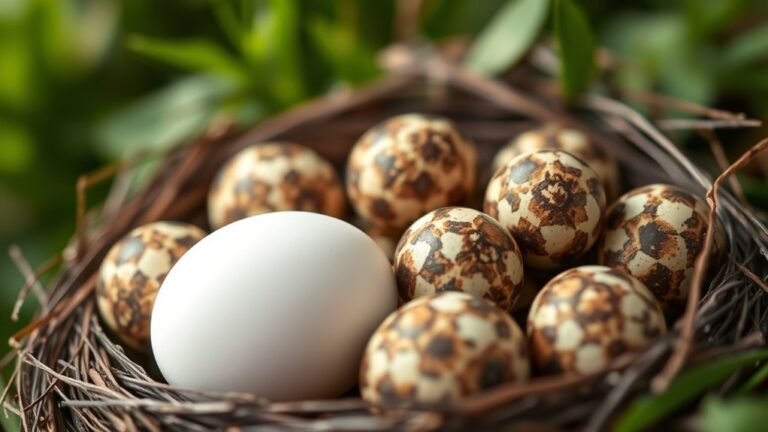
How Many Eggs Do Chickens Lay on Average?
You can expect a healthy chicken to lay about one egg every 24 to 26 hours, averaging around 5 to 6 eggs per week. Understanding how many eggs chickens lay on average helps in managing your flock effectively.
Keep in mind, factors like breed, age, molting, and environment affect this cycle, so hens may skip days occasionally. Older hens produce fewer eggs, and shorter daylight hours can slow laying too.
With the right care, you can support consistent egg production and understand how to plan your flock size accordingly.
How Many Eggs Does a Chicken Lay Per Day?

Although it’s rare for a hen to lay more than one egg in 24 hours, most healthy chickens produce about one egg every 24 to 26 hours. When you observe a hen’s egg-laying frequency, you’ll notice that the production generally averages to roughly one egg per day.
This happens because after a hen lays an egg, her body typically needs around a day to form the next one. Keep in mind that the number of eggs a hen lays each day can vary based on factors like breed, age, and environmental conditions.
Also, natural changes such as molting or stress might cause hens to skip days, so not every hen lays eggs daily. Understanding these patterns helps you set realistic expectations for egg production frequency.
What Is the Typical Egg-Laying Cycle of a Hen?

You’ll find that a hen’s egg-laying cycle usually takes about 24 to 26 hours from ovulation to laying the egg. Once she lays an egg, her body immediately starts forming the next one, but she may skip a day now and then.
Understanding this natural rhythm helps explain how hens produce eggs in series, often resting briefly after 8 to 12 eggs before starting again.
Egg Formation Timeline
When a hen starts laying an egg, you can expect the entire process to take about 24 to 26 hours. Egg formation begins with ovulation, where the yolk is released from the ovary. It then travels through the oviduct, where layers of albumen are added.
The egg reaches the shell gland, where shell formation occurs over roughly 20 hours, using calcium from the hen’s diet. After the shell fully develops, the hen completes egg laying.
| Stage | Location | Duration |
|---|---|---|
| Ovulation | Ovary | Minutes |
| Albumen added | Oviduct | 3-4 hours |
| Shell formation | Shell gland | ~20 hours |
| Egg laying | Vent | Minutes |
Ovulation And Laying
Understanding the timeline of egg formation gives you a clear picture of the hen’s egg-laying cycle, which typically spans 24 to 26 hours from ovulation to laying. The process begins when the hen’s body releases an ovum during ovulation. This yolk then travels through the oviduct, where egg formation occurs as layers of egg white and shell develop around it.
This entire cycle takes about a day, with shell hardening lasting nearly 20 hours. Most hens maintain a laying frequency of roughly one egg every two days, averaging 5 to 6 eggs weekly during peak production. Keep in mind, factors like breed, age, and environment can influence the length and regularity of the hen’s egg-laying cycle, affecting how consistently eggs are produced.
Natural Laying Rhythm
Although hens follow a roughly 24- to 26-hour cycle between laying eggs, you’ll notice they don’t lay precisely one egg every day. This natural laying rhythm is driven by the hen’s body as it completes the egg formation process, starting with ovulation and moving through the oviduct to develop the shell.
Because the laying cycle lasts about a day, egg production typically results in one egg per day. However, intermittent laying occurs, meaning hens sometimes skip days due to factors like age, health, or environmental conditions.
Understanding this laying rhythm helps you anticipate when a hen will lay next and explains why egg production isn’t always perfectly regular. The hen’s laying cycle is a finely tuned biological process, but it naturally varies.
Which Chicken Breeds Lay the Most Eggs?

If you want the most eggs from your flock, choosing the right breed is key. Breeds like Leghorns, Rhode Island Reds, and ISA Browns are known for their impressive egg production.
Let’s look at how many eggs these top layers can give you each year.
Top Laying Breeds
When you’re looking for chickens that lay the most eggs, certain breeds consistently stand out for their productivity. High-yield layers like Leghorns top the list, producing over 300 annual eggs under ideal conditions. ISA Browns and Australorps also shine, each offering around 250-300 eggs yearly, reflecting strong laying performance.
Rhode Island Reds and Sussex breeds don’t lag far behind, maintaining steady egg production near 250 eggs per year. When you compare these breeds, you’ll notice that selecting high-producing chickens depends on factors like consistent laying and excellent care. Focusing on these top laying breeds ensures you maximize your flock’s egg production, making your efforts more rewarding and efficient.
Breed Egg Production
To maximize your egg harvest, you need to know which chicken breeds lay the most eggs. Leghorn hens lead in egg production, laying over 300 eggs per year—about six eggs weekly. ISA Browns, a popular hybrid breed, consistently lay between 250 and 300 eggs annually, making them a reliable choice.
Rhode Island Reds typically produce around 250 eggs each year, though factors like age and environment can affect their output. Australorp chickens also average about 250 eggs yearly, especially when kept in ideal conditions. While bantam breeds are smaller and generally lay fewer eggs, some can still produce up to 200 eggs per year.
Understanding these breed differences helps you select hens that’ll maximize your egg production throughout the year.
How Do Age and Molting Affect Egg Production?
Although hens usually lay eggs consistently during their peak years, you’ll notice their production declines by about 20% each year as they age. This natural decline in egg production means older hens lay fewer eggs compared to their younger counterparts.
Additionally, molting plays a considerable role in this cycle. Each autumn, hens undergo molting, shedding and regrowing feathers, which temporarily halts their laying. During this period, egg production may stop entirely or drop considerably.
Once molting ends, hens resume laying, but their output often remains lower than during peak periods. Understanding how age and molting affect egg production helps you manage your flock’s expectations and care, since both factors cause irregular or skipped laying days naturally.
How Does Lighting Affect Egg Production?
Since chickens rely heavily on light to regulate their laying cycles, providing 14 to 16 hours of light each day is essential for consistent egg production. When hens don’t get enough hours of light per day, like during winter, they may stop laying or lay fewer eggs.
You can use artificial lighting to supplement natural light, extending the light per day and keeping hens on schedule. This lighting affects egg production by stimulating their internal clock, which triggers their reproductive cycle. However, it’s important to increase light gradually to avoid stressing your hens.
Proper lighting management helps you maintain steady egg production, ensuring your chickens continue to lay eggs regularly even when natural daylight is limited.
How Nutrition Affects Your Hen’s Egg Laying
Lighting plays a big role in keeping your hens on a regular laying schedule, but what they eat directly impacts the quality and quantity of the eggs they produce. Proper nutrition is essential for maintaining steady egg production and ensuring your layer hens stay healthy.
Focus on a hen’s diet that includes adequate calcium to strengthen eggshells and prevent breakage. Balanced protein levels are important to support consistent laying. Essential vitamins and minerals boost overall health.
Supplemental calcium sources like oyster shells or crushed limestone can be added to their diet. Avoiding nutritional deficiencies is key, as they can reduce egg production.
Why Do Some Hens Skip Days Laying Eggs?
When you notice your hens skipping days without laying eggs, it’s usually part of their natural cycle or a response to changing conditions. Hens have a laying cycle that often leads to skipping days naturally, as many don’t lay eggs daily. Molting is another key reason; during this feather-renewal phase, hens pause egg production to conserve energy.
Changes in light hours, especially shorter days in winter, can disrupt their laying cycle, causing skipped days. Stress also plays a big role—environmental changes, predator threats, or flock disruptions can stress hens and halt laying temporarily.
How to Support Consistent Egg Production
Understanding why hens skip days laying eggs helps you take steps to keep their production steady. To support consistent egg production, focus on the key factors that influence your hens’ health and environment. Hens need ideal conditions to lay their best, often yielding several eggs per week when cared for properly.
Here’s how to keep your hens productive:
- Provide 14-16 hours of light per day, especially in winter, to stimulate laying.
- Offer a balanced diet rich in calcium, protein, and essential nutrients.
- Maintain a clean, safe, and low-stress environment.
- Ensure fresh water and quality bedding are always available.
- Recognize natural laying cycles and allow rest periods without worry.
Following these tips helps you maximize your flock’s egg output efficiently.
How Many Hens Do You Need for Weekly Eggs?
Although hens vary in how many eggs they lay, you can generally expect one hen to produce about 5 to 6 eggs weekly.
To maintain a steady egg supply from your backyard chickens, consider the number of hens needed for your weekly eggs goal. Since some hens may molt or be less productive, having extra hens ensures consistent egg production.
| Weekly Eggs Needed | Number of Hens Recommended |
|---|---|
| 6 | 1 |
| 12 | 2-3 |
| 18 | 3-4 |
| 24+ | 4+ |
For reliable weekly eggs, aim for at least 3 to 4 hens per household. This accounts for natural variability and keeps your egg supply steady.
Frequently Asked Questions
How Many Eggs Will 1 Chicken Lay a Day?
You’ll get about one egg per day from a healthy chicken, sometimes less.
Chickens rarely lay more than one egg every 24 hours because their bodies need time to form each egg properly.
What Is a $3,000 Egg?
A $3,000 egg is a rare, highly valuable collectible egg, often from unique breeds or artistically crafted.
You don’t just buy an egg—you invest in history, rarity, or extraordinary craftsmanship that makes it priceless.
What Is the 90/10 Rule for Chickens?
The 90/10 rule means you can expect about 90% of your hens to lay eggs daily, while 10% won’t.
This helps you plan flock size and manage egg supply despite natural fluctuations.
What Chicken Lays 364 Eggs a Year?
Imagine a bright red hen proudly laying egg after egg—this is “Big Red,” the legendary chicken that lays 364 eggs a year.
You’ll see exceptional genetics and care make her a record-breaking egg machine.
Conclusion
Picture gathering fresh eggs each morning, their warmth still lingering in your hands. Knowing how many eggs your hens lay helps you plan and care for them better, ensuring a steady supply.
By understanding their cycles, breeds, and needs—from lighting to nutrition—you can support their health and keep those egg baskets full.
With a little attention, your flock will reward you daily, turning your coop into a lively, productive haven. Learning how many eggs chickens lay on average is key to maintaining a happy and efficient flock.