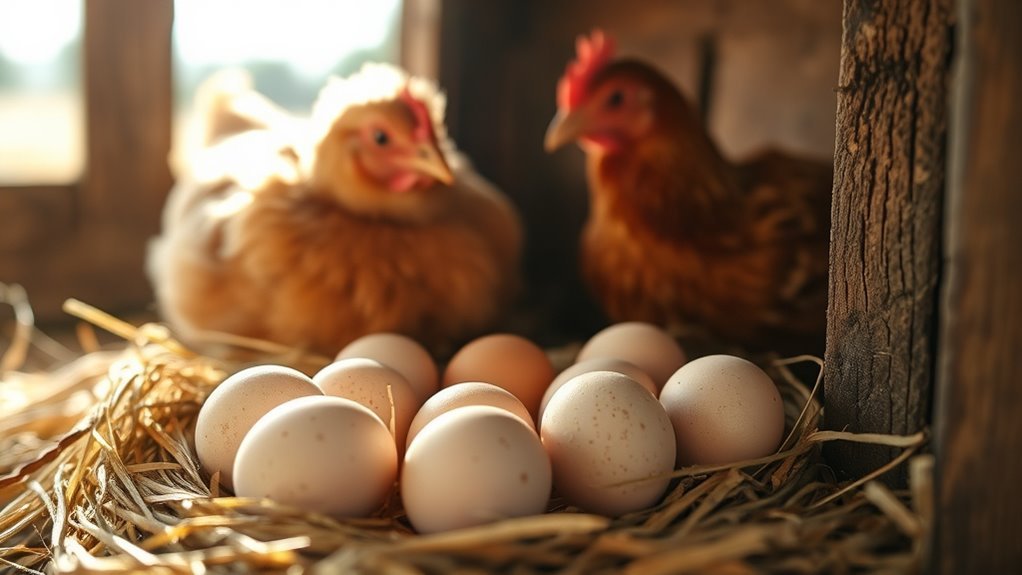
How Many Eggs Will a Chicken Lay in a Week?
You can expect a healthy chicken to lay between three and six eggs per week, depending on her breed, age, and environment. Factors such as breed type, hen’s age, and environmental conditions play a significant role in egg production.
Younger hens and high-producing breeds like White Leghorns tend to lay more often.
Older hens naturally slow down their laying frequency. Seasonal changes also impact egg laying, with variations in daylight hours affecting production.
Additionally, factors like lighting, nutrition, and stress influence how many eggs you’ll get from your flock.
If you want to understand all the details behind these numbers and how to optimize your flock’s output, there’s plenty more to explore. Proper care and management can help maximize egg production.
How Many Eggs Does One Chicken Lay in a Week?

Wondering how many eggs a single chicken lays in a week? Typically, a hen lays about 4 to 6 eggs per week, but this varies based on several factors. During peak laying periods, especially with highly productive breeds like White Leghorns, a hen lays nearly one egg every two days, averaging around 5 eggs per week.
Some hens even lay almost daily when conditions are ideal. Keep in mind, how many eggs one chicken lays depends on diet, daylight, stress levels, and overall health. These factors directly influence her laying frequency.
How Do Chicken Breed and Age Affect Weekly Egg Production?

You’ll notice that different chicken breeds lay eggs at varying rates, with some producing more consistently than others. Age plays a big role too—hens peak in their first couple of years and then gradually produce fewer eggs.
Understanding these factors helps you predict and manage your flock’s weekly egg output effectively.
Breed Differences In Laying
Although environmental factors play a role, your chicken’s breed and age primarily determine how many eggs she’ll lay each week. Breed differences strongly influence egg production. For example, White Leghorns are commercial layers, often delivering 5-6 eggs per week, making them ideal if you want a steady supply.
Heritage breeds, on the other hand, tend to lay fewer eggs weekly but offer other benefits like hardiness and temperament.
Visualize these breed differences:
- White Leghorns bustling with consistent, high egg output
- Heritage breeds with modest but reliable laying patterns
- Varied shell colors and sizes reflecting breed genetics
Understanding these distinctions helps you choose breeds that fit your egg production goals perfectly.
Age Impact On Production
Breed plays a major role in how many eggs a hen lays, but her age also shapes her weekly production. Younger laying hens, especially in their first year, tend to produce about 5-6 eggs per week.
As they age, egg production naturally declines, dropping roughly 20% each year after their peak in the first 1-2 years. You’ll notice that older hens, around 3-4 years or more, often lay as few as 2-3 eggs weekly.
The breed you choose also affects how age impacts production—breeds like White Leghorns and ISA Browns maintain higher egg outputs longer due to genetics. So, when managing your flock, consider both age and breed to predict weekly egg production accurately.
Peak Versus Decline
When hens reach their first or second year, they hit peak egg production, often laying up to six eggs per week depending on their breed. You’ll notice breeds like White Leghorns and ISA Browns excel in weekly egg output during this time.
However, as hens age past two years, their weekly egg output starts to decline, dropping about 20% annually. By the time they reach four or five years, production markedly slows. Your choice of breed and the hen’s age together shape how many eggs you’ll get each week.
- A vibrant ISA Brown laying eggs consistently at peak
- A two-year-old hen slowing her output gradually
- An older hen producing fewer eggs, signaling decline
What Factors Influence Weekly Egg Production in Hens?

Since various factors affect how many eggs a hen lays in a week, you’ll want to take into account breed, age, diet, lighting, and stress levels. Different breeds vary in egg production; some lay 5 to 6 eggs weekly at peak, while others produce less. Age plays a role too—egg production typically drops about 20% after a hen’s first year.
Lighting influences laying, as hens need consistent light exposure to maintain output. Providing 14-16 hours of light daily encourages steady egg laying. Diet quality also matters; hens require balanced nutrition to sustain production. Stress from predators, noise, or poor conditions can reduce egg output noticeably.
How Do Seasonal Changes Affect Your Hens’ Egg Laying?
Although hens can lay eggs year-round, seasonal changes markedly impact their weekly production. As daylight hours shorten in fall and winter, your hens’ egg production can drop by 30-50%. This natural shift triggers molting and hormonal changes that pause laying.
You’ll notice reduced egg output especially during colder months when stress can add to the decline. To help your flock maintain steady egg production, consider supplementing with artificial light to mimic 14-16 hours of daylight daily.
Visualize these seasonal effects on your hens:
- Shorter days causing less activity in the coop
- Molting feathers signaling a natural break in laying
- Warm, well-lit spaces encouraging hens to keep laying
How Nutrition and Environment Impact Weekly Egg Production
Seasonal shifts don’t just influence daylight—they also affect your hens’ nutrition and environment, which play a big role in their egg production each week. Proper nutrition, including enough calcium and protein, supports strong shells and steady laying.
Meanwhile, environment factors like consistent light (14-16 hours daily) and stable temperatures keep hens comfortable and productive. Stress from overcrowding or predators can cut egg production, as hens may stop laying or molt.
| Factor | Impact on Egg Production | How to Optimize |
|---|---|---|
| Nutrition | Essential for laying | Provide high-quality layer feed |
| Light | Stimulates laying | Use supplemental lighting |
| Temperature | Affects comfort | Maintain stable coop temperature |
| Stress | Reduces egg output | Prevent overcrowding, predators |
Focus on balanced nutrition and a stable environment to maximize weekly egg production.
How to Estimate Total Weekly Egg Output From Your Flock
You can estimate your flock’s total weekly egg output by multiplying the number of hens by their average eggs laid per week.
Keep in mind that factors like breed, age, and health can influence egg production, so adjust your calculations accordingly.
Tracking your flock’s actual output over time helps you make more accurate predictions.
Calculating Weekly Egg Production
How do you figure out how many eggs your flock will produce each week? Start by knowing that most hens lay about 5-6 eggs weekly, though this depends on their breed and age. To calculate total egg production, multiply the number of hens by their average weekly eggs.
For example, 10 hens laying 5 eggs each means around 50 eggs per week. Keep track regularly to adjust your estimates based on actual output.
Imagine your flock:
- A diverse breed mix with varying egg-laying rates
- Hens settling in their nesting boxes daily
- Weekly egg baskets filling up steadily
Using this method, you’ll get a clear picture of your flock’s weekly egg production, helping you plan better for your needs.
Factors Influencing Egg Output
Although many factors influence egg production, understanding them helps you estimate your flock’s total weekly output more accurately. The age of hens is vital—young hens lay more eggs, peaking in the first 1-2 years. Lighting also plays a key role; hens need about 14-16 hours of light daily for ideal laying.
Health impacts output considerably—illness or stress lowers egg counts. Environmental factors, like extreme weather or molting, further affect production. To estimate weekly eggs, multiply the average eggs per hen by your flock size, then adjust for these variables.
| Factor | Impact on Egg Production |
|---|---|
| Age of Hens | Peak production in first 1-2 years |
| Lighting | 14-16 hours boosts laying |
| Health | Illness reduces output |
| Environment | Stress/weather affects laying |
How Many Hens Do You Need to Meet Your Weekly Egg Goals?
Wondering how many hens you’ll need to meet your weekly egg goals? Typically, one hen lays 3 to 5 eggs per week, but this varies with breed and health. To calculate your flock size, divide your desired weekly eggs by 3 for a minimum count, then add extra hens to cover fluctuations in egg production.
Calculate hens needed by dividing desired weekly eggs by 3, then add extras for production variations.
For example, if you want 20 eggs weekly, at least 4 hens are necessary.
Keep these in mind when planning your flock size:
- Seasonal changes can lower egg output
- Younger hens may produce fewer eggs initially
- Healthier hens tend to lay more consistently
Frequently Asked Questions
How Many Eggs Will 4 Chickens Lay in a Week?
You can expect about 24 to 28 eggs from four hens in a week if they’re healthy and productive.
Keep in mind, factors like breed, age, and season might cause slight variations in their output.
What Is the 90/10 Rule for Chickens?
The 90/10 rule says you’ll get about 90% of your flock’s eggs from just 10% of the hens.
Focus on those top producers to maximize your egg yield and keep their environment healthy.
Can You Eat Eggs Right After They Are Laid?
Yes, you can eat eggs right after they’re laid if you collect them in clean conditions and store them properly.
Just avoid washing them immediately to keep the protective bloom intact and reduce bacterial risk.
What Do Chickens Do Right Before They Lay an Egg?
Right before they lay an egg, you’ll notice chickens nesting, squatting, and vocalizing more. They’ll seek a quiet spot, their vent softens, and they might become restless, pacing or scratching around.
These behaviors help them prepare for laying and find a comfortable place to do so. Watching for these signs can help you know when an egg is about to be laid.
Conclusion
You might think all hens lay eggs daily, but the truth is more nuanced. Depending on breed, age, and environment, a hen usually lays about 4 to 6 eggs a week—not seven. Seasonal changes and nutrition also play big roles in how often your chickens lay.
By understanding these factors, you can better estimate your flock’s weekly output and plan how many hens you need to meet your egg goals. Knowing how many eggs a chicken will lay in a week helps you manage your flock efficiently and ensures a steady supply of fresh eggs.