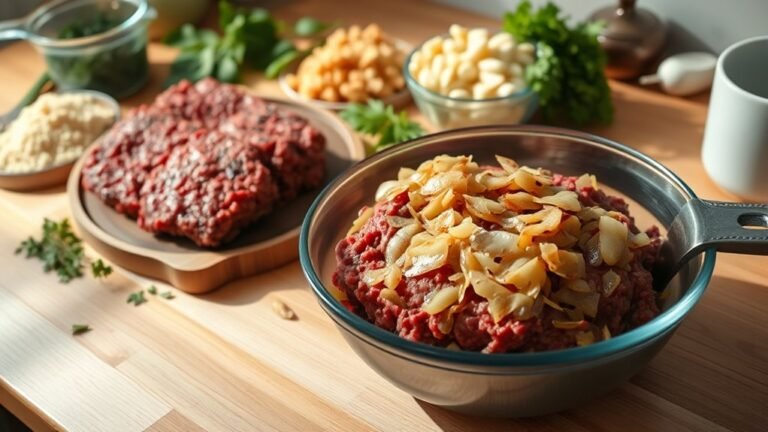
How Much Ground Beef Should I Feed My Dog?
You should feed your dog ground beef based on their weight, activity level, and age. When determining how much ground beef to feed your dog, a good rule of thumb is to offer about 1/3 lb per 20 pounds of body weight daily. For example, a 40-pound dog would get around 2/3 lb of ground beef each day.
Split this amount into two meals to make digestion easier for your dog. Adjust the portion size if your dog is less active or older, as their nutritional needs may vary.
Always use lean beef that is cooked without any spices or seasoning.
Keeping these basics in mind guarantees your dog’s safety and health. There’s more to learn about feeding ground beef properly to ensure your pet gets the right nutrition.
How Much Ground Beef to Feed Based on Your Dog’s Weight

When deciding how much ground beef to feed your dog, you should aim for about 1/3 pound per 20 pounds of their weight each day. For example, a 40-pound dog needs roughly 2/3 pound of ground beef daily, while a 60-pound dog should get about 1 pound. These feeding guidelines help you determine the right portion size based on your dog’s weight.
Remember to adjust the amount depending on your dog’s activity level and overall health. Keep in mind that ground beef shouldn’t be the only food; you need to balance it with other nutrients for a complete diet. By following these portion size recommendations, you’ll provide your dog with a healthy amount of ground beef that suits their weight and nutritional needs.
How Often to Feed Ground Beef and Meal Sizes

Although the total daily amount of ground beef depends on your dog’s weight, feeding it in two smaller meals rather than one large portion helps improve digestion and keeps your dog’s energy steady throughout the day.
Splitting ground beef into consistent meal sizes supports your dog diet by avoiding overeating and maintaining feeding frequency. Adjust portions based on activity level for best results.
| Dog Weight (lbs) | Daily Ground Beef (lbs) |
|---|---|
| 20 | 1/3 |
| 40 | 2/3 |
| 60 | 1 |
| 80 | 1 1/3 |
| 100 | 1 2/3 |
Divide these amounts into two meals to optimize digestion and energy balance throughout the day.
When to Feed Less Ground Beef: Health Risks to Watch For

If your dog shows signs of vomiting, diarrhea, or lethargy after eating ground beef, you should cut back on the portion size immediately. These symptoms often signal health risks linked to overfeeding. Ground beef is high in fat, and feeding too much can cause pancreatitis or gastrointestinal upset.
Portion control is essential to prevent weight gain, obesity, and elevated cholesterol, all of which impact your dog’s overall health. Also, feeding frequency matters—too many ground beef meals without balanced nutrients can lead to deficiencies. Monitor your dog’s reactions closely and adjust both portion size and feeding frequency to keep them healthy.
Preparing Ground Beef Safely for Your Dog
Managing how much ground beef you feed your dog is important, but so is preparing it safely to prevent health issues. Whether you choose raw ground beef or cooked ground beef, safety should come first. Here are key tips for feeding your dog:
Proper portioning and safe preparation of ground beef are essential to keep your dog healthy and happy.
- Cook ground beef thoroughly by boiling or pan-frying without oil or seasonings to kill harmful bacteria.
- Avoid adding garlic, onion, or spices, as these are toxic to dogs.
- Drain excess fat or rinse cooked ground beef to reduce fat content and aid digestion.
- Choose high-quality, trusted meat sources to minimize risks if feeding raw ground beef.
- Remember, cooked ground beef is generally safer and recommended for feeding your dog.
Following these steps helps make certain your dog enjoys ground beef safely and healthily.
How to Combine Ground Beef With Other Foods for Balanced Nutrition
You’ll want to balance ground beef with carbs like rice or quinoa to give your dog energy and fiber. Adding vegetables and fruits provides essential vitamins and antioxidants, while adjusting portion sizes keeps their diet just right.
Mixing in other protein sources can also help create a complete nutritional profile for your pup.
Balancing Protein And Carbs
While ground beef offers a rich source of protein, balancing it with carbohydrates like rice or quinoa provides your dog with essential fiber and energy. To create a balanced diet, you’ll want to combine ground beef with carbs and other nutrients in the right portion size.
Here’s how to balance protein and carbs effectively:
- Use about 50% ground beef and 50% carbohydrates (like rice or quinoa) to ensure nutritional balance.
- Incorporate fiber-rich carbs to support digestion and sustained energy.
- Adjust portion size based on your dog’s weight, activity level, and health.
- Avoid feeding ground beef alone to prevent nutrient imbalances.
- Rotate protein sources occasionally to promote overall health.
Balancing ground beef with carbohydrates ensures your dog gets a complete, nourishing meal.
Incorporating Fruits And Vegetables
Balancing ground beef with carbohydrates provides a solid foundation, but adding fruits and vegetables takes your dog’s meal to the next level. When feeding your dog, mix ground beef with cooked or raw veggies like carrots, green beans, or spinach to boost fiber and nutrients. You can also include fruits such as blueberries, apples without seeds, or bananas for antioxidants and natural energy.
Incorporating a variety of produce ensures your dog diet delivers essential vitamins and minerals. Chop fruits and vegetables into manageable pieces and introduce them gradually to avoid digestive upset. For even more balance, add small amounts of cooked grains like rice or quinoa alongside ground beef and vegetables. This combination supports a well-rounded, nutritious meal your dog will enjoy.
Adjusting Portion Sizes
When combining ground beef with other ingredients, adjusting portion sizes is essential to avoid overfeeding and maintain your dog’s health. Feeding your dog a balanced diet means mixing ground beef with complementary foods like vegetables, rice, or eggs. To get the portion sizes right, try these tips:
- Use a consistent ratio, such as 50% ground beef and 50% vegetables or grains
- Mix in different protein sources over time for nutrient variety
- Monitor your dog’s weight to tailor the portion sizes accordingly
- Avoid excessive amounts of ground beef to prevent weight gain
- Guarantee the overall meal meets your dog’s nutritional needs
Choosing Ground Beef Fat Content for Your Dog
When choosing ground beef for your dog, pay close attention to the fat percentage since it affects their health and energy. Dogs with sensitive digestion or weight issues do better with lower fat options, while active dogs may need higher fat for extra calories.
Balancing fat intake based on your dog’s needs will help keep them healthy and satisfied.
Fat Percentage Differences
Since ground beef comes with varying fat percentages—from as low as 5% up to 30%—you’ll want to select the right fat content based on your dog’s health and energy needs. Understanding these fat percentage differences helps tailor your dog diet properly.
Here’s what you should keep in mind:
- Ground beef with 5-10% fat suits dogs prone to pancreatitis, obesity, or sensitive digestion.
- Lean beef options reduce saturated fat but may lower fat-soluble vitamins.
- Higher fat content (20-30%) provides extra calories for active or working dogs.
- Adjust fat content depending on activity level and overall health.
- Balancing fat content ensures your dog gets necessary energy without excess fat.
Health Considerations By Fat
Although choosing the right fat content in ground beef might seem straightforward, it substantially influences your dog’s health and energy levels. Lean ground beef with about 85% lean and 15% fat provides a balanced nutrient profile without excess fat, making it a good choice for most dogs.
If your dog is overweight or has digestive issues, opting for low-fat ground beef (5-10% fat) helps avoid added strain. Higher fat content (20-30%) supplies more energy but isn’t ideal for overweight dogs due to the risk of weight gain.
Also, selecting grass-fed beef boosts omega-3 fatty acids, which support your dog’s skin and joint health. Paying attention to fat content ensures you meet your dog’s nutritional needs without compromising their well-being.
Balancing Fat Intake
Choosing the right fat content in ground beef plays a crucial role in your dog’s overall health and energy levels. When feeding your dog ground beef, balancing fat intake ensures a balanced diet tailored to their needs. Here’s what to contemplate:
- Opt for lower fat ground beef (5-10%) if your dog has pancreatitis, obesity, or sensitive digestion.
- Higher fat ground beef (20-30%) offers more energy but suits only active, healthy dogs.
- Fat content affects essential omega-3 and omega-6 fatty acids, supporting skin and joint health.
- Drain or rinse ground beef to reduce excess fat when necessary.
- Always match fat content choices with your dog’s specific health conditions and activity level.
Budget Tips for Feeding Ground Beef Without Overspending
If you want to feed your dog ground beef without breaking the bank, planning your purchases and cooking methods can make a big difference. Ground beef costs about $5 every two days for a 60-pound dog, making it a budget-friendly alternative to commercial dog food, which can exceed $300 monthly.
To stretch your budget, consider mixing ground beef with other affordable proteins like boiled, unseasoned poultry. Buying locally sourced or grass-fed ground beef often provides better nutrition at a reasonable price.
Cooking in bulk and freezing portions helps reduce waste and save time. By balancing quality and cost, you can maintain a nutritious feeding routine that supports your dog’s health without overspending on dog food.
Adjusting Ground Beef Portions for Your Dog’s Activity and Age
Since your dog’s age and activity level directly affect their nutritional needs, modifying ground beef portions is essential to keep them healthy. You’ll find portion sizes vary markedly depending on these factors. For example, active dogs may need up to 3.5% of their body weight in food daily, while less active or senior dogs require less to avoid weight gain.
Here’s how to tailor ground beef servings effectively:
- Increase portion sizes for high activity level to meet energy demands
- Decrease portions for older dogs with lower metabolism
- For a 40-pound dog, serve about 1¾ cups per meal if active
- Monitor your dog’s weight and energy to adjust portions accordingly
- Always consider your dog’s overall health alongside age and activity level
Adjusting portion sizes ensures your dog stays fit and energized.
Frequently Asked Questions
How Much Cooked Meat Should I Feed My Dog per Day?
You should feed your dog about 1/3 to 1 pound of cooked meat daily, depending on their weight. Measure portions carefully, adjust for activity and health, and make certain it fits their overall diet plan.
Keep in mind that individual needs can vary, so consult your veterinarian for personalized advice. Always introduce new foods gradually to avoid digestive upset.
How Much Meat Should My Dog Eat per Day?
You should feed your dog about 1/3 pound of meat per 20 pounds of body weight daily. Adjust portions based on their age, health, and activity, and always balance meat with other nutrients for a healthy diet.
Can I Feed My Dog Ground Beef and Rice Everyday?
You can feed your dog ground beef and rice every day, but don’t put all your eggs in one basket—balance their diet with veggies or supplements, and check with your vet to tailor portions and nutrients properly.
A diet consisting solely of ground beef and rice may lack essential vitamins and minerals needed for your dog’s overall health.
Incorporating a variety of foods ensures they receive a balanced mix of nutrients. Always consult your veterinarian before making significant changes to your dog’s diet.
Can I Feed My Dog 80/20 Ground Beef?
Yes, you can feed your dog 80/20 ground beef, but cook it thoroughly and drain excess fat.
Feed it in moderation, balancing with low-fat foods, and consult your vet to avoid digestive or weight issues.
Conclusion
Feeding your dog ground beef can be a tasty treat, but did you know that 25% of dogs are overweight due to overfeeding? That’s why it’s essential to measure portions based on your dog’s weight, activity, and age.
Stick to lean cuts, balance meals with veggies, and watch for health risks. By doing this, you’ll keep your furry friend happy and healthy without breaking the bank.
Remember, moderation is key! When considering how much ground beef to feed your dog, always prioritize balanced nutrition and portion control to ensure your pet’s well-being.