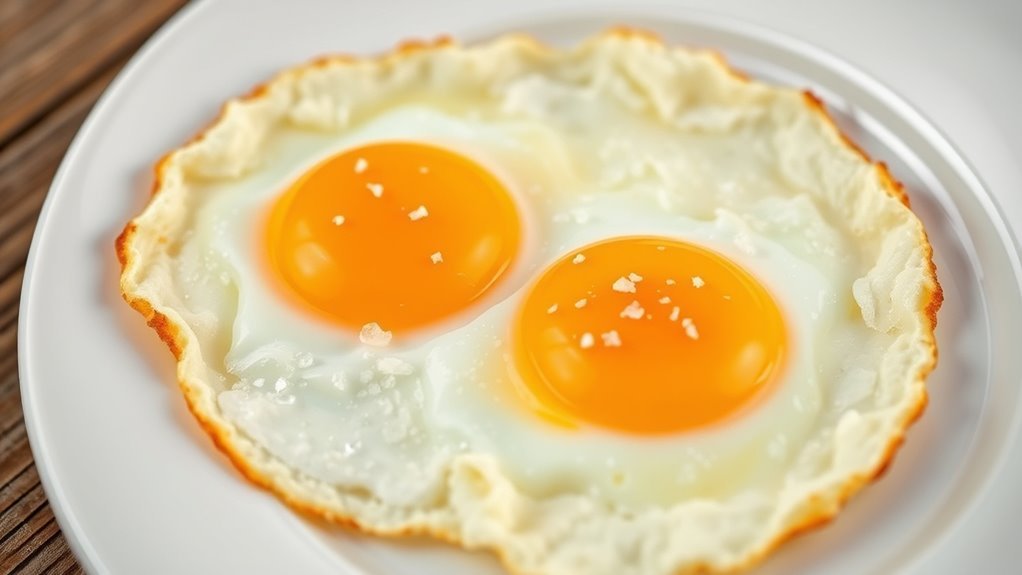
How Much Protein Is in Two Fried Eggs?
You get about 12.6 grams of high-quality protein from two large fried eggs, with each egg offering around 6.3 grams. Cooking doesn’t reduce their protein; frying can actually make it easier for your body to absorb.
Eggs provide all nine essential amino acids, making them a complete protein source that supports muscle growth and repair.
Plus, two fried eggs contribute markedly to your daily protein needs.
Keep exploring to find more about their nutrients and meal ideas.
How Much Protein Is in Two Fried Eggs?

Although cooking methods vary, two large fried eggs consistently provide about 12.6 grams of high-quality protein. When you fry eggs, the protein content stays stable, so you’re getting the same nutritional value as with other cooking techniques. Each fried egg delivers roughly 6.3 grams of protein, making two eggs a solid source of complete protein that your body can digest and absorb efficiently.
This protein has a biological value of about 94%, which means your body uses it very well. Including two fried eggs in your meal appreciably contributes to your daily protein needs, especially if you combine them with other protein-rich foods. So, fried eggs aren’t just delicious—they’re a powerful, nutritious option to boost your protein intake.
Does Cooking Change the Protein in Fried Eggs?

You might wonder if frying affects the protein in your eggs, but the total amount stays about the same at 12.6 grams for two eggs. Cooking actually makes the protein easier for your body to absorb without losing its quality.
Just keep in mind that frying adds extra calories and fat from the oil, though it doesn’t reduce protein content.
Protein Stability During Cooking
When you fry eggs, the total protein content stays nearly the same because egg proteins are heat-stable and keep their nutritional value through cooking. The protein stability in eggs means that even with exposure to heat during cooking, the structure of these proteins remains largely intact. This stability guarantees that the nutritional value you get from two fried eggs closely matches that of raw eggs.
While cooking may cause slight protein denaturation, it doesn’t reduce the overall protein amount. In fact, frying with minimal oil preserves most of the protein’s benefits, similar to other cooking methods like boiling or poaching. So, you can enjoy your fried eggs knowing their protein content and quality hold up well during cooking.
Nutritional Impact Of Frying
Because frying eggs in minimal oil keeps their protein content intact, you can enjoy two fried eggs with about 12 grams of high-quality protein. Frying doesn’t reduce the total protein but actually enhances protein digestibility, making it easier for your body to absorb nutrients.
Here’s what you should know about the nutritional impact of frying:
- Frying slightly denatures proteins, improving digestibility without lowering protein quantity.
- Eggs retain their complete protein profile, meaning you get all essential amino acids.
- Adding ingredients like cheese or milk during frying boosts protein content, but the egg’s inherent protein remains stable.
What Other Nutrients Are in Two Fried Eggs?

Although two fried eggs are well-known for their protein content, they also pack a variety of essential nutrients that support your overall health. For instance, they provide about 82 IU of vitamin D, which plays a key role in bone health and immune function. You’ll also get roughly 294 mg of choline, important for brain development and liver function.
Additionally, two fried eggs offer around 31.7 mcg of selenium, a powerful antioxidant that helps protect your cells from damage. Beyond these, the yolks are rich in vitamin A and deliver significant amounts of calcium and iron, contributing to your daily mineral intake.
You’ll also benefit from iodine, B vitamins, and potassium, making fried eggs a nutrient-dense choice beyond just protein.
Are Two Fried Eggs a Complete Protein Source?
You get all nine essential amino acids from two fried eggs, making them a complete protein source. Their high biological value means your body absorbs this protein efficiently, supporting muscle repair and growth.
Frying doesn’t affect the protein quality, so you’re still getting superior nutrition.
Essential Amino Acid Profile
When you eat two fried eggs, you get about 12 grams of complete protein that contains all nine essential amino acids your body needs. This makes eggs an excellent source of high-quality protein that supports muscle repair and overall health.
Here’s why their essential amino acid profile stands out:
- Eggs provide all nine essential amino acids in proportions that match human requirements, qualifying them as a complete protein.
- Their biological value is around 94%, meaning your body efficiently uses the protein for tissue synthesis.
- Frying doesn’t alter the amino acid composition, so you get the same nutritional benefits whether eggs are raw or fried.
Protein Quality And Benefits
Since two fried eggs deliver about 12.6 grams of complete protein with all nine essential amino acids, they serve as an excellent source to support muscle repair and growth. The protein quality in eggs is exceptionally high, boasting a biological value around 94%, which means your body efficiently uses this high-quality protein for tissue synthesis.
Fried eggs maintain their nutritional benefits without considerable loss in protein quality, making them a convenient, digestible source. As a complete protein, two fried eggs contribute substantially to meeting your daily protein needs, supporting crucial bodily functions.
While they provide a solid protein base, combining eggs with other protein sources ensures you get a well-rounded nutrient profile for ideal health and muscle maintenance.
Do Two Eggs Provide Enough Protein for Your Day?
Although two fried eggs provide about 12.6 grams of complete protein, they only cover roughly 22-23% of your daily protein needs. While eggs are a great protein source, relying on just two won’t meet your daily requirement.
To guarantee you get enough protein, consider these points:
- The average adult needs about 0.8 grams of protein per kilogram of body weight, so two eggs fall short of this target.
- Incorporate a variety of protein-rich foods like meat, dairy, beans, or nuts throughout the day to reach your daily requirement.
- Using eggs as part of a balanced diet helps you benefit from their high-quality protein but won’t suffice on their own.
In short, eggs are valuable but should complement other protein sources.
Can You Safely Eat Two Eggs Every Day?
If you enjoy eating two eggs daily, you can generally do so without worrying about negative health effects. Two eggs provide around 12.6 grams of high-quality protein, making them a valuable part of your daily diet. For most healthy adults, the dietary cholesterol in eggs has minimal impact on blood cholesterol levels.
Including two eggs in your daily diet offers health benefits like muscle maintenance and increased satiety, helping you stay fuller longer. However, if you have conditions like high cholesterol, diabetes, or heart disease, it’s wise to consult a healthcare professional before making eggs a daily habit.
Best Ways to Cook Two Eggs for Nutrition and Flavor
When you want to enjoy two eggs with both great taste and ideal nutrition, choosing the right cooking method makes all the difference. How you cook your egg affects the protein quality, flavor, and calorie count.
- Frying eggs in minimal oil or non-stick spray helps preserve protein and nutrients while adding crispy texture and flavor.
- Cooking eggs over easy or sunny side up keeps most nutrients intact and offers a delightful fried egg experience without excess fat.
- Boiling or poaching eggs delivers pure protein and nutrients with no added fat, making it a low-calorie, healthy option.
Each method balances nutrition and flavor differently, so pick the way that best fits your taste and dietary goals.
What Meals Go Well With Two Fried Eggs for Balance?
To create a balanced meal with two fried eggs, you’ll want to pair them with foods that provide fiber, healthy fats, and essential vitamins. Start your breakfast with whole grain toast and avocado to add fiber and healthy fats alongside the eggs’ protein. Include sautéed spinach and cherry tomatoes for vitamins and antioxidants that boost your meal’s nutritional value.
Adding roasted sweet potatoes or quinoa offers complex carbohydrates that complement the protein in eggs, making your meal more satisfying. For extra protein and calcium, try a small portion of cheese or Greek yogurt. Finally, a fresh fruit salad or berries can provide natural sweetness and more fiber, rounding out your balanced meal perfectly.
This approach guarantees a nutritious, well-rounded breakfast.
Frequently Asked Questions
How Much Protein Is in 2 Whole Fried Eggs?
Two whole fried eggs contain about 12.6 grams of protein. You’ll get all essential amino acids, making them a great choice to boost your daily protein intake for muscle repair and overall health.
Are 2 Eggs a Day Enough Protein?
Two eggs provide about 22% of your daily protein needs, so they’re not enough alone.
You’ll need to eat other protein-rich foods throughout the day to meet your body’s requirements and stay healthy.
Are Two Fried Eggs Too Much?
Two fried eggs aren’t too much for most healthy people. You can enjoy them daily as part of a balanced diet, but if you have cholesterol concerns, it’s wise to limit your intake or consult your doctor.
How Much Protein Is in 2 Full Eggs?
Two full eggs give you about 12.6 grams of protein. You’ll get high-quality protein from both the whites and yolks, helping your muscles recover and keeping your body fueled throughout the day.
Conclusion
Two fried eggs pack about 12 grams of protein, giving you a solid start to your day or a quick protein boost anytime. Cooking doesn’t reduce their protein, so you get all the benefits whether you fry, scramble, or poach them.
Plus, they’re a complete protein source, meaning they contain all nine essential amino acids your body needs. So, two eggs can be a simple, nutritious way to support your daily protein goals.
In conclusion, two fried eggs provide a convenient and effective way to increase your protein intake. Whether for breakfast or a snack, they deliver essential nutrients and help meet your daily protein requirements.