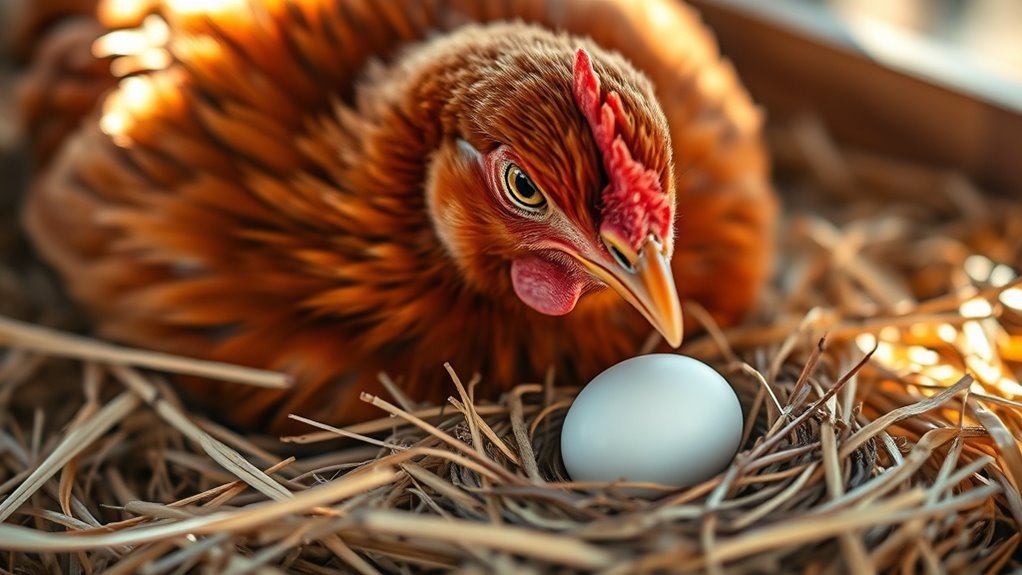
How Old Are Hens When They Start to Lay Eggs?
Hens usually start laying eggs between 16 and 24 weeks old, with most beginning around 18 to 22 weeks. How old hens are when they start to lay eggs depends largely on their breed and environmental factors.
Lighter breeds like Leghorns lay earlier, while heavier breeds such as Orpingtons tend to take a bit longer.
Daylight length and care also affect when she starts producing eggs, so providing good lighting and a calm environment can help encourage egg laying.
If you want to make certain she’s ready and comfortable, there’s more to consider regarding signs, feeding, and nesting.
When Do Hens Usually Start Laying Eggs?

Although the exact timing varies, most hens start laying eggs between 16 and 24 weeks old, with the average around 18 to 22 weeks. When you raise hens, you’ll notice the age of hens plays a key role in when they start to lay. As they approach this stage, physical signs like a bright red comb and nesting behavior become apparent.
While the breed influences how early hens start laying, other factors like lighting, nutrition, and housing conditions also affect when they begin laying eggs. Understanding these influences helps you predict and support your hens’ egg production. So, if you’re wondering when hens start laying, expect most to begin within this window, though individual variations are normal.
How Breed Affects the Age Hens Lay Their First Egg

Since breed directly influences a hen’s maturity rate, it plays a crucial role in when she lays her first egg. Different breeds have varying genetics that determine their laying age. For example, egg-laying breeds like Leghorns and Rhode Island Reds typically start producing their first egg between 17 and 19 weeks.
In contrast, heavier breeds such as Orpingtons and Barred Rocks usually begin laying later, around 20 to 22 weeks. Bantam and ornamental breeds show more variation, with some starting as early as 16 weeks and others as late as 24 weeks.
Understanding the breed’s genetic background helps you predict when your hen will start laying, making breed selection key if you want eggs earlier or later in the production cycle.
Environmental Factors That Influence When Hens Start Laying

You’ll notice that the length of daylight plays a big role in when your hens start laying, with longer days encouraging earlier egg production.
Keeping your hens comfortable by managing temperature and stress is equally important, as harsh conditions can delay laying. Using coop lighting strategies, like adding a timed bulb, can help extend daylight hours and get your hens laying sooner.
Daylight Duration Effects
When daylight stretches to 14-16 hours, hens receive the signal to start laying eggs consistently. You’ll notice that as daylight hours increase, hens start laying more regularly because their hormonal cycle kicks into gear, boosting egg production.
During shorter days in fall and winter, hens often reduce or stop laying since the natural light isn’t enough to trigger their reproductive systems. To maintain steady egg production year-round, you can use artificial lighting.
A simple setup with a 60-watt bulb on a timer adds about two extra hours of light in the early morning and late afternoon, mimicking longer daylight hours. This helps hens stay on schedule, ensuring they keep laying even when natural light is limited.
Temperature And Comfort
Although daylight signals hens to start laying, temperature and comfort play a crucial role in determining how quickly they begin. When hens experience stable temperatures around 70-75°F and comfortable surroundings, they face less stress and become more active, which speeds up laying.
If the temperature drops or conditions are drafty, hens use extra energy to stay warm, delaying egg production. Sudden temperature changes cause stress, disrupting their laying schedule.
To support earlier and consistent laying, you should provide proper ventilation, insulation, and shade to maintain a steady environment. By managing temperature and comfort effectively, you reduce stress and create ideal conditions that encourage hens to start laying sooner and maintain regular egg production.
Coop Lighting Strategies
Since daylight triggers hens to lay eggs, controlling coop lighting plays a vital role in encouraging early and consistent egg production. You can help your layer hens start laying by managing their exposure to light, especially during shorter days.
Here’s how to optimize coop lighting:
- Provide at least 16 hours of light daily to stimulate egg production.
- Use artificial lighting, like a 25-watt incandescent bulb, to supplement natural light.
- Install timers to mimic natural daylight hours, turning lights on early morning and late afternoon.
- Ensure the coop is well-lit and free from shadows to promote consistent laying behavior.
Physical and Behavioral Signs That Your Hen Is Ready to Lay
As your hen approaches laying age, you’ll notice her comb and wattles become enlarged, bright red, and swollen—clear physical signs she’s getting ready. Along with these combing changes, watch her behavior closely. She’ll show increased interest in nesting by sitting in or testing nesting boxes more frequently.
This nesting behavior signals her physical readiness to lay eggs. You might also see her squat when you approach or handle her, another physical cue. Vocalizations like egg songs or more frequent squawking often accompany these changes.
Together, these combing and behavioral signs help you know when your hen is preparing to start laying, making it easier to provide the right environment and care during this exciting stage.
How Lighting Affects When Hens Start Laying Eggs
You’ll notice hens need around 14-16 hours of light daily to start laying eggs consistently. When daylight shortens in fall and winter, egg production can slow down or stop.
Using supplemental lighting with timers can help keep your hens laying steadily even during darker months.
Daylight Hours Influence
Even if your hens are physically ready to lay eggs, they won’t start without enough daylight. Daylight hours play a essential role in signaling hens to begin egg laying, regardless of their hens age. Here’s how lighting influences their laying cycle:
- Hens need 14-16 hours of daylight daily to trigger egg production.
- Shorter days in fall and winter can delay egg laying until spring.
- Without sufficient light, egg laying may pause even if hens are mature.
- Supplemental lighting can extend daylight hours, encouraging consistent laying.
Supplemental Lighting Benefits
Since hens rely heavily on daylight to start laying, supplementing natural light can make a big difference in when they begin producing eggs. By providing 16 hours of light per day through supplemental lighting, you can encourage hens to reduce their laying age and start egg production earlier.
Using a 60-watt bulb on a timer extends the natural daylight hours, especially during shorter winter days, helping hens maintain a consistent laying cycle. Energy-efficient fluorescent or LED lights work well for this purpose, ensuring hens get enough light without high costs.
Without supplemental lighting, hens often delay laying until natural daylight increases in spring. So, by managing daylight hours with supplemental lighting, you actively support earlier and more reliable egg production in your flock.
Switching Pullets to Layer Feed Before They Start Laying
When your pullets reach around 16 weeks or start showing signs they’re ready to lay, it’s essential to shift them from starter to layer feed. This change supports healthy egg production by providing the nutrients pullets need as they begin laying.
To guarantee a smooth transition, keep these tips in mind: Gradually introduce layer feed over several days to avoid digestive upset. Choose a high-quality layer feed with about 17% protein and added calcium, like Nutrena NatureWise.
Offer oyster shells free choice to boost calcium intake for strong eggshells. Monitor pullets closely for signs of readiness around 16 weeks, adjusting feed accordingly.
Switching to layer feed at the right time sets your hens up for a productive and healthy laying period.
Preparing Nesting Boxes for Your Laying Hens
Preparing comfortable and accessible nesting boxes plays an essential role in encouraging your hens to lay consistently. You should provide one nesting box for every four laying hens to reduce competition and stress. Each box needs to be about 10-12 inches square and 18 inches deep, giving your hens enough room to nest comfortably.
Position the nesting boxes off the ground, between 1 to 3 feet high, inside a quiet, dark corner of the coop to offer the privacy they prefer when laying eggs. Line the boxes with straw, shavings, or shredded paper to keep them clean and cozy.
Regularly clean and check the nesting boxes to encourage use and prevent egg breakage, ensuring a smooth egg-laying experience for your hens.
Frequently Asked Questions
How Do You Know When Your Chickens Are Ready to Lay Eggs?
You’ll know your chickens are ready to lay when their combs and wattles turn bright red, they visit nesting boxes often, make egg songs, and their pelvic bones start to separate.
Watch for small or false eggs, too.
Can You Eat the First Egg Your Chicken Lays?
Wondering if you can eat that first egg? Absolutely, you can! Just remember, it might be smaller or have a thinner shell, but it’s safe and nutritious as long as your hen looks healthy.
At What Age Does a Hen Start Mating?
You’ll notice hens start mating around 4 to 6 months old, once they reach sexual maturity. Their behavior changes with increased interest in roosters, and successful mating improves as they both fully mature.
What Is the Earliest a Chicken Can Lay an Egg?
The earliest a chicken can lay an egg is around 16 weeks old. If you’re raising fast-maturing breeds like Leghorns, they might start laying that early, but factors like nutrition and lighting also play a role.
Conclusion
Now that you know when hens start laying, you’re ready to watch your feathered friends bloom like morning sunflowers. Keep an eye on their behavior and environment, and adjust their feed and lighting like a careful gardener tending to buds about to burst.
With patience and care, your hens will soon gift you with their first precious eggs, turning your coop into a treasure chest of golden mornings. Remember, understanding how old hens are when they start to lay eggs helps you provide the best care for them.
Get ready—the wait is almost over!