At What Age Does a Chicken Start Laying Eggs?
You’ll typically see your chicken start laying eggs between 18 and 22 weeks of age, though some breeds like Leghorns can begin as early as 16 weeks. Heavier breeds like Plymouth Rocks might wait until 24 weeks.
Lighting, breed, and environment also influence when hens start. Providing around 16 hours of daily light can encourage earlier laying.
If you want to know how to recognize readiness signs and support your hen’s egg-laying journey, keep exploring the details ahead.
When Do Chickens Typically Start Laying Eggs?

Although the exact age varies by breed and conditions, chickens typically start laying eggs between 18 and 22 weeks old. You might notice faster-maturing breeds like Leghorns beginning as early as 16 weeks, while heavier breeds such as Plymouth Rocks may take closer to 24 weeks.
When your chickens are getting ready to lay, you’ll see physical signs like a redder, larger comb and increased nesting behavior. These signals tell you that egg production is about to begin.
Once your chickens start laying eggs, they usually hit peak production around 30 weeks old. After that, their productivity gradually declines. Understanding this timeline helps you anticipate when your flock will begin providing fresh eggs consistently.
How Breed, Environment, and Lighting Affect Laying Age

You’ll notice that different breeds start laying eggs at different ages, with smaller breeds maturing faster than larger ones.
Your hens’ environment—like temperature and stress—also plays a big role in when they begin laying.
Plus, controlling lighting duration can speed up or delay their first eggs by mimicking longer daylight hours.
Breed Maturity Variations
How soon your chickens start laying eggs depends largely on their breed and environment. Different chicken breeds reach breed maturity at varying rates, directly influencing their egg-laying age. For example, Leghorns, known for their quick development, often begin laying around 16-18 weeks, while heavier breeds like Plymouth Rocks typically start later, around 20-24 weeks.
Fast-maturing breeds such as Rhode Island Reds and Australorps also tend to lay earlier than slower-maturing ones like Orpingtons. While breed is a key factor, managing lighting and nutrition tailored to each breed can optimize when they start laying. Understanding these breed maturity variations helps you set realistic expectations and care routines for your flock’s egg-laying timeline.
Environmental Impact Onlaying
While breed genetics set the foundation for when your hens begin laying, environmental factors like lighting, temperature, and nutrition play crucial roles in determining the exact timing. Different breeds mature at different rates, but daylight hours and seasonal changes can either speed up or delay egg production.
For example, shorter daylight hours in fall and winter often postpone laying, while longer, natural daylight encourages earlier starts. You can manage these environmental factors by maintaining ideal coop temperatures and feeding nutritious diets.
Although lighting duration itself is a separate topic, you should be aware that natural light availability tied to seasonal changes significantly impacts when your hens start laying. Paying attention to these details ensures your flock begins producing eggs at the best possible time.
Lighting Duration Effects
Because lighting duration directly influences your hens’ biological rhythms, managing it carefully can substantially affect when they start laying eggs. You can encourage earlier egg-laying by providing at least 16 hours of lighting daily, especially during shorter days in fall and winter.
Supplemental lighting helps maintain consistent light exposure, preventing delays in egg production. Keep in mind that breed plays a role too—breeds like Leghorns and Rhode Island Reds generally begin laying around 18 to 20 weeks when lighting conditions are ideal.
Physical and Behavioral Signs of Egg-Laying Readiness

You’ll notice your hen’s comb and wattles become larger and brighter red as she gets ready to lay. She might also start squatting when you approach, showing she’s hormonally prepared.
Keep an eye on her activity around the nesting box—that’s a strong sign she’s about to start laying.
Comb And Wattle Changes
As hens near their laying age, you’ll notice their combs and wattles enlarge and turn a deeper, vibrant red. This reddening signals increased blood flow and hormonal changes, indicating your hen is getting ready to lay eggs. Typically, this swelling and color shift happen between 18 to 22 weeks, though it varies by breed and environment.
Watching your hen’s comb and wattle can give you clear clues about her reproductive maturity. When these features become more pronounced and richly colored, it means her body is preparing for egg production. Paying attention to these physical changes helps you anticipate when your hen will start laying, allowing you to provide the best care during this important stage.
Nesting And Squatting Behavior
Along with changes in comb and wattle color, hens start showing clear behaviors that signal they’re ready to lay eggs. One of the most noticeable signs is nesting behavior—you’ll see hens spending more time exploring and inspecting potential egg-laying spots. They seek quiet, secluded areas and often settle into nesting boxes more frequently.
Another key behavior to watch for is squatting; when you approach, your hen might crouch with wings slightly spread, showing a submissive posture that indicates readiness. Increased vocalizations like loud cackling or clucking also accompany this stage.
These nesting and squatting behaviors are reliable signs that your hen is approaching her first egg-laying phase, helping you anticipate when to prepare for fresh eggs in your flock.
Preparing Nesting Boxes to Encourage Egg-Laying
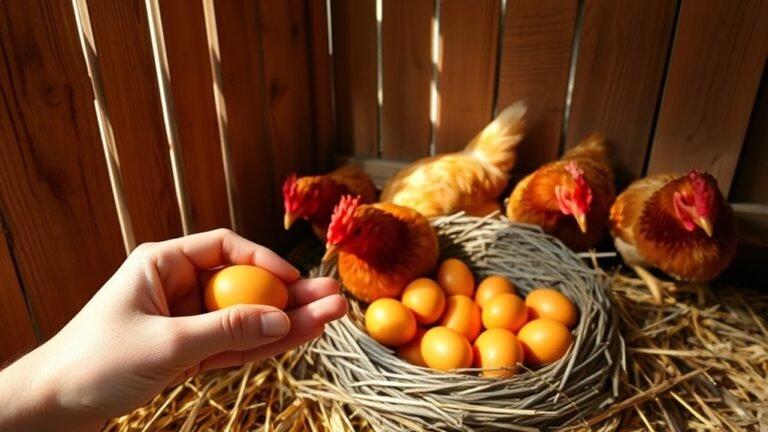
When preparing nesting boxes to encourage egg-laying, providing enough space and comfort is essential for your hens. Use one 1-foot square nesting box per four hens to avoid overcrowding. Line each box with soft bedding like straw or shavings for a cozy feel.
Place nesting boxes in a quiet, dark corner of the coop to offer privacy and security. Elevate them off the ground to prevent drafts and egg breakage. Regularly clean and refresh bedding to keep hens returning consistently.
| Aspect | Recommendation | Reason |
|---|---|---|
| Space per box | 1 ft² per 4 hens | Prevents crowding |
| Bedding | Straw or shavings | Adds comfort |
| Location | Quiet, dark coop corner | Provides privacy and security |
| Height | Off the ground | Avoids drafts and breakage |
Switching to Layer Feed for Healthy Eggs
To support your hens’ peak egg production, you should switch them to a complete layer feed around 18 weeks of age. Choose a layer feed formulated with calcium and other essential nutrients to promote strong eggshells and overall hen health. Transition from starter-grower feed to layer feed to help your birds adjust smoothly.
Maintain a consistent diet by ensuring that at least 90% of their daily intake comes from this balanced layer feed, limiting treats to less than 10%. Don’t forget to provide calcium supplementation, such as crushed oyster shells, alongside fresh, clean water to optimize eggshell quality. This careful feeding strategy supports healthy egg production and keeps your hens thriving as they begin laying.
Tips to Support Your Hen’s First Eggs
Now that your hens are on the right feed, it’s time to focus on supporting their very first eggs. When your hen start laying, she needs the right environment to ease into the egg-laying process. Watch for signs like a reddening comb and increased nesting behavior signaling her first egg is near.
To help her along:
- Provide balanced layer feed rich in calcium for strong shells
- Set up cozy, dark nesting boxes in quiet spots
- Ensure consistent lighting of at least 16 hours daily
Maintain a calm environment to reduce stress. Keep fresh water always available.
Frequently Asked Questions
What Is the Best Age for Chickens to Lay Eggs?
The best age for your chickens to lay eggs is between 6 months and 1 year, when their production peaks.
Keep them healthy, well-fed, and comfortable to maximize egg-laying during this prime period.
What Is the 90/10 Rule for Chicken?
The 90/10 rule means you’ll get 90% of your eggs from just 10% of your hens.
Focus on those top layers to boost productivity, and consider culling or repurposing less productive birds.
What Is the Number One Killer of Chickens?
You’ll find avian predators like foxes, raccoons, and hawks are the number one killers of chickens.
Protecting your flock with secure housing and vigilance helps keep these threats—and diseases—at bay for healthier chickens.
How Do You Tell When Your Chickens Are Ready to Start Laying Eggs?
You’ll know your chickens are ready to lay when their combs and wattles turn bright red. They squat submissively, explore nesting boxes, and vocalize more.
You might also find small eggs or see increased interest in the rooster.
Conclusion
Think of your chicken’s journey like a sunrise—slowly brightening until the first golden egg appears. Just as dawn depends on the right mix of light and warmth, your hen needs the perfect blend of care, environment, and nutrition to start laying.
By watching her signs and preparing her nest, you’re not just waiting for eggs—you’re nurturing a daily miracle. This marks new beginnings and the promise of life’s gentle rhythms unfolding before you.
Understanding the age at which a chicken starts laying eggs helps you provide the best care. With proper attention, your hen will thrive and fill your coop with fresh eggs regularly.