How to Get Egg Off a Car in 5 Easy Steps
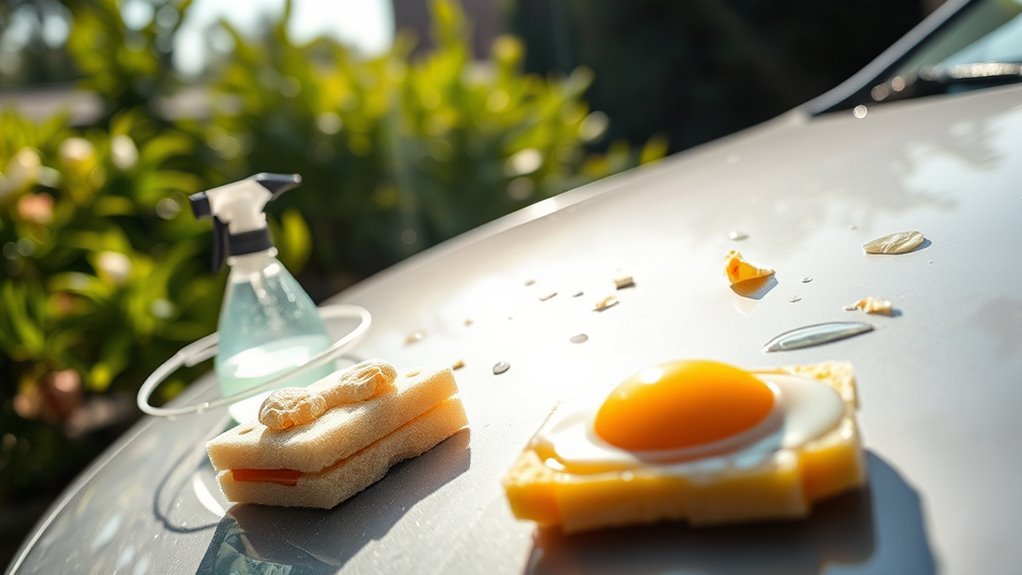
To get egg off your car in 5 easy steps, start by carefully removing any eggshells by hand to avoid scratches. Eggs can damage your car’s paint if not cleaned properly, so it’s important to act quickly.
Next, soften the dried egg residue with a warm, damp cloth to make removal easier.
Then, apply a vinegar solution to gently loosen stubborn stains without harming the paint.
Afterward, rinse the area thoroughly to remove any leftover cleaning solution and egg residue.
Dry the surface with a microfiber towel to prevent water spots from forming.
Finally, protect your paint by waxing your car. This will help restore the shine and provide a protective layer against future damage.
Keep going to discover helpful tips that guarantee your paint stays flawless.
Carefully Remove Eggshells to Protect Your Paint

Before you begin cleaning the egg off your car, carefully remove any large eggshell fragments by hand to avoid scratching the paint. You’ll want to be gentle and use your fingers to pick out the bigger pieces of eggshells, preventing any accidental damage.
Next, take a soft cloth dampened with water and carefully lift away tiny shell shards without pressing too hard. Being careful here is key because applying too much force or scraping can chip the paint.
It’s important to remove all eggshell fragments as soon as possible since they can shatter further and embed themselves into the surface, making removal harder. Ensuring no shell pieces remain will protect your car’s paint and prepare it for the next cleaning steps.
Soften Egg Residue on Car Paint With Warm Water

Once you’ve carefully removed all eggshell fragments, it’s time to soften the dried egg residue that might still cling to your car’s paint. Soak a soft cloth or sponge in warm water—around 100°F (38°C)—and apply it gently to the affected area. Let the warm water sit for at least five minutes to effectively soften egg residue without risking damage to your car paint.
This gentle removal method helps loosen baked-on dried egg, making it easier to wipe away. If the residue remains stubborn, repeat the warm water application as needed, avoiding harsh scrubbing. Gradually, the warm water will lift the egg deposits, preserving your car’s finish and preventing scratches during cleanup.
Apply Vinegar Solution to Loosen Tough Egg Stains

If warm water alone can’t remove the stubborn egg stains, you’ll want to apply a vinegar solution to break down the residue effectively. Mix two cups of warm water with two cups of white vinegar to create a powerful loosening solution. Soak a clean microfiber cloth in this vinegar mix and apply it directly to the dried egg stain.
Let the cloth soak on the stain for 15-20 minutes, allowing the vinegar to dissolve eggshell and protein buildup. If the stain remains, re-soak the cloth and keep the area moist for better loosening. After soaking, gently wipe the softened egg residue with a microfiber cloth—avoid scrubbing to protect your car’s paint.
This method helps loosen tough egg stains safely and efficiently.
Rinse and Dry Car Paint Thoroughly After Cleaning
After removing all egg residue, you’ll want to rinse your car thoroughly with plain water to flush away any leftover cleaning solutions and debris. Next, use a clean microfiber towel to gently dry the paint, preventing water spots and streaks. Avoid rubbing aggressively; instead, pat dry to protect your paint from scratches and micro-abrasions.
Make sure to dry crevices and seams completely to prevent trapped moisture that can cause paint damage over time. For best results, dry your car in a shaded area to avoid rapid evaporation and water spots.
| Step | Tip |
|---|---|
| Rinse | Use plain water to remove residue |
| Dry Method | Pat dry with a microfiber towel |
| Avoid | Don’t rub hard to prevent scratches |
| Detail Focus | Dry crevices to avoid trapped moisture |
| Location | Dry in shade to prevent water spots |
Wax Your Car Paint to Protect After Egg Removal
Although you’ve thoroughly cleaned and dried your car, applying a quality wax is essential to protect the paint from future damage. After you remove the egg, wait at least 24 hours to ensure the paint is completely dry and free of residue before waxing. Use a spray wax or ceramic-based wax for easy application and longer-lasting protection.
Wax creates a protective barrier that shields your car’s paint from contaminants and environmental harm, reducing the chance of stains or bonding from future spills. Regularly waxing every 3 to 4 months will maintain this barrier, safeguarding your car from UV rays, oxidation, and minor scratches.
This simple step not only protects but also enhances the gloss and depth of your vehicle’s paint finish.
Frequently Asked Questions
How to Get an Egg off Your Car?
You should gently remove eggshells, then soak a microfiber cloth in warm water or vinegar solution. Apply it, let it sit, and wipe the residue carefully.
Finish by washing and waxing your car to protect the paint.
Will WD-40 Remove Eggs From Car?
Wonder if WD-40 can really help with that stubborn egg on your car? Yes, it can loosen dried egg residue, but remember to wash the area afterward to protect your paint and avoid using it on plastic parts.
Can Egg Ruin Paint on My Car?
Yes, egg can ruin your car’s paint if you don’t clean it quickly. The proteins and acids in egg can bond with and eat through the paint, causing stains or peeling.
Act fast to protect your car.
What Do You Do When Your Car Is Egged?
When your car’s a canvas marred by egg, act fast—you’ll want to gently lift fragments, soak the stain with vinegar water, and wipe softly.
Don’t let anger scratch your paint; protect it instead with care and patience.
Conclusion
Now that you’ve gently escorted those unwelcome guests off your car’s surface, your ride can breathe easy again.
By softly coaxing away stubborn marks and giving your paint a loving finish, you’re not just cleaning—you’re pampering your car’s glow.
Remember, a little tender care goes a long way in keeping your paint happy and shining bright.
So, take these steps to heart and let your car bask in the spotlight once more, free from egg stains and looking pristine.