10 Easy Steps to Get Rust Off Your Cast Iron Pan
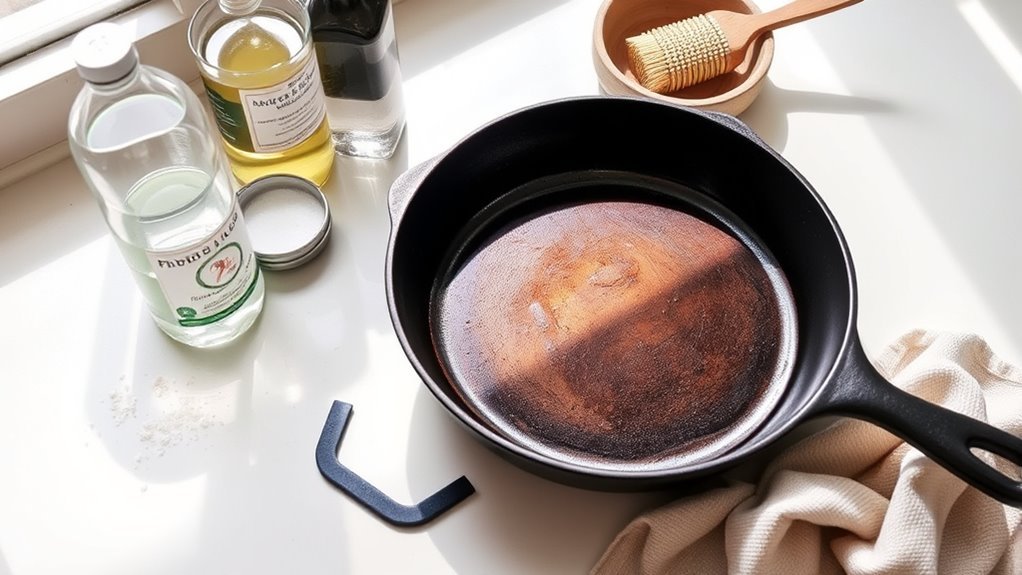
To get rust off your cast iron pan, first inspect it for rust spots and gather steel wool, gloves, vinegar, and oil. Removing rust from cast iron is essential to maintain its seasoning and cooking quality.
Soak the pan in equal parts vinegar and hot water for 15-30 minutes to loosen rust, then scrub firmly with steel wool.
Rinse the pan thoroughly to remove any vinegar residue. Dry it completely to prevent new rust from forming.
Next, apply a thin layer of oil to the surface.
Bake the pan upside down at 450°F for an hour, then cool it inside the oven.
Repeat the seasoning process to build a smooth, rust-resistant surface.
Keep following these steps to restore your pan perfectly and keep it in top condition.
Check Your Pan for Rust Before You Start

Before you begin removing rust, carefully inspect your cast iron pan for any visible rust spots, focusing on the cooking surface and exterior. Look for reddish-brown or orange flaky patches that signal a rusty cast iron skillet. Run a paper towel or cloth over the pan; rust may leave a stain or residue.
Check if the rust is superficial or deeply embedded by gently scraping with your finger or utensil. Don’t forget to examine the handles and underside for corrosion. This initial step helps you understand how much effort it’ll take to restore cast iron.
Once you identify rust, you can proceed with easy steps to restore and season your cast iron. Proper inspection ensures you know where to remove rust and how to season your cast to cure and adhere the new seasoning.
Gather Tools and Materials for Rust Removal

Since removing rust requires some elbow grease, you’ll want to gather the right tools and materials to make the process easier and safer. Start with steel wool or a Lodge Rust Eraser to scrub the rust off your cast iron pan effectively. Prepare warm, soapy water and a sponge to clean the skillet after scrubbing.
Don’t forget to wear gloves to protect your hands during the aggressive scrubbing process. You’ll also need two clean, dry, lint-free cloths—one for drying the pan and another for applying oil. Choose a high-smoke-point oil like vegetable oil to season your cast iron pan once the rust is removed.
Having these essentials ready will streamline the rust removal and restoration of your cast iron cookware.
Soak the Pan in a Vinegar and Hot Water Solution

You’ll want to soak your cast iron pan in a solution of equal parts vinegar and hot water to loosen the rust effectively. Keep the soak brief—about 15 to 30 minutes—to avoid damaging the metal beneath. This gives the vinegar enough time to break down the rust so you can scrub it off easily afterward.
Vinegar To Loosen Rust
When rust clings stubbornly to your cast iron pan, soaking it in a mixture of equal parts white vinegar and hot water can help break down the corrosion. This simple solution penetrates rust, loosening it for easier removal.
Here’s how to use vinegar to loosen rust effectively:
- Mix equal parts white vinegar and hot water in a container large enough to submerge your pan.
- Soak the pan in the solution, allowing the vinegar to soften the rust flakes.
- After soaking, scrub the pan with steel wool or a brush to remove loosened rust.
- Rinse thoroughly with water to eliminate residual acidity and rust particles, then dry completely to prevent new rust.
This method preps your pan perfectly for re-seasoning and long-term use.
Optimal Soaking Duration
Although vinegar effectively loosens rust on cast iron pans, you shouldn’t soak your pan for too long. Soaking in equal parts vinegar and hot water for 1 to 2 hours is ideal to loosen surface rust without harming the metal. If your pan has light rust, 30 minutes to 1 hour is enough to soften the spots before scrubbing.
For heavily rusted pans, you might soak up to 4 hours, but check frequently to avoid damaging the seasoning or causing pitting. Prolonged exposure beyond 2 hours risks breaking down the seasoning layer and promoting corrosion. After soaking, always rinse and dry your pan thoroughly to remove vinegar residues and prevent new rust from forming.
This careful timing keeps your cast iron safe and rust-free.
Scrub Away Rust Using Steel Wool or a Rust Eraser
Since rust can cling stubbornly to your cast iron pan, scrubbing with steel wool or a Lodge Rust Eraser is essential to remove it completely. Here’s how to do it effectively:
- Put on gloves to protect your hands and improve your grip on the abrasive tool.
- Apply firm pressure while scrubbing to break away rust flakes without damaging the pan’s surface.
- Spend about 10 minutes focusing on heavily rusted spots to ensure all rust is gone.
- After scrubbing, wash the skillet with warm, soapy water to clear away any leftover rust particles.
Following these steps will restore your pan’s surface and prepare it for seasoning or further cleaning.
Rinse the Pan Thoroughly to Remove Rust Residue
After scrubbing away the rust with steel wool or a rust eraser, you’ll want to rinse your cast iron pan thoroughly to clear out any remaining rust particles. Use warm water to loosen and wash away rust residues without harming the pan’s seasoning. Make sure water flows over every rusted spot, especially in crevices and corners, where rust flakes often hide.
Avoid soap unless you’re reseasoning right after, since soap can strip the seasoning you’re trying to preserve. Thorough rinsing removes loose rust and debris, setting you up for the next step. Just remember to dry the pan immediately afterward to prevent new rust from forming on any leftover moisture.
This careful rinsing ensures your pan is clean and ready for restoration.
Dry Your Cast Iron Pan Completely After Rust Removal
When you finish rinsing your cast iron pan, don’t leave any moisture behind—dry it immediately with a clean, lint-free cloth or paper towel to stop rust from forming again. Follow these steps to guarantee your pan is completely dry:
- Wipe the entire surface, including the handle and crevices, to remove all visible water.
- Avoid air drying, especially in humid environments, as leftover moisture can cause rust.
- Place the pan on low heat on your stovetop for several minutes to evaporate any hidden water.
- Check thoroughly before moving on to the next step, making sure no damp spots remain.
Thorough drying protects your cast iron and keeps it rust-free after cleaning.
Apply a Thin Layer of Cooking Oil to the Pan’s Surface
Choose a high-smoke-point oil like flaxseed or vegetable oil to guarantee proper seasoning.
Use a lint-free cloth or paper towel to spread less than a teaspoon evenly across the pan’s surface.
Applying too much oil can cause sticky spots, so keep the layer thin and consistent.
Choosing The Right Oil
Although seasoning your cast iron pan requires care, applying a very thin layer of cooking oil guarantees an even coating that prevents excess buildup and sticking. Choosing the right oil is essential for a durable, non-stick surface. Follow these tips:
- Pick oils with a high smoke point like vegetable, canola, or flaxseed oil for best results.
- Avoid thick or low-smoke-point oils that can leave a sticky residue.
- Use a clean cloth or paper towel to apply the oil evenly over the entire pan, including the handle and exterior.
- Remember, less is more—only a light, uniform coat is needed to protect your cast iron and enhance seasoning.
Selecting the right oil makes all the difference in preserving your pan after rust removal.
Applying Oil Evenly
Since even coverage is key, you’ll want to apply a thin layer of cooking oil carefully across every surface of your cast iron pan. Use a clean cloth or paper towel to spread a small, even amount of oil, making sure to cover the interior, exterior, and handle thoroughly.
Choose a heat-resistant oil with a high smoke point, like vegetable or flaxseed oil, for the best seasoning results. Apply the oil thinly and uniformly to avoid sticky or gummy buildup. After coating, wipe off any excess oil so it doesn’t pool or create uneven spots during baking.
This careful application guarantees a smooth, durable seasoning layer that protects your pan and enhances its cooking performance.
Bake the Pan Upside Down to Set the Seasoning
When you bake your cast iron pan upside down, you let excess oil drip off, preventing uneven seasoning and sticky pooling. This method guarantees the seasoning bonds evenly across the entire surface.
Here’s what you need to do:
- Preheat your oven to 450–500°F.
- Place a sheet of aluminum foil on the bottom rack to catch drips.
- Position the pan upside down on the rack above the foil.
- Bake for about an hour to cure and harden the seasoning layer.
This technique guarantees a smooth, durable finish by letting the oil set properly without pooling. Baking upside down is a key step in restoring and protecting your cast iron pan for long-lasting use.
Cool the Pan Inside the Oven for Proper Curing
To guarantee your cast iron pan’s seasoning bonds properly, let it cool inside the oven after baking. Turn off the oven and leave the pan inside to cool gradually. This prevents temperature shock that could warp or crack your pan.
Cooling it slowly also helps the seasoning cure evenly, forming a durable non-stick surface. Keeping the pan inside the oven reduces exposure to moisture, minimizing rust risk. Don’t rush by removing the pan while it’s still hot—you might burn yourself or damage the seasoning layer.
Wait until both the oven and pan are completely cool before taking it out. This simple step ensures your cast iron maintains a strong, rust-resistant coating that lasts longer and performs better during future use.
Repeat Seasoning to Build a Durable, Rust-Free Surface
You’ll want to apply multiple thin coats of oil to your cast iron, baking it each time to lock in a strong, protective layer. This repeated seasoning builds adhesion and guarantees a smooth, rust-resistant finish.
Keep at it until the surface feels durable and even, giving your pan lasting protection.
Multiple Coats Enhance Protection
Although a single seasoning can provide basic protection, applying multiple thin coats of oil substantially strengthens your cast iron skillet’s non-stick surface. Each additional layer bonds with the previous one, creating a more durable, rust-resistant barrier.
Here’s why multiple coats matter:
- They build a thicker protective layer that blocks moisture and prevents rust.
- Each layer fills in small scratches and imperfections, smoothing the surface.
- Repeated seasoning improves corrosion resistance, extending your skillet’s lifespan.
- Consistently applying multiple coats after cleaning ensures ongoing protection and rust prevention.
Oven Baking Ensures Adhesion
Applying multiple coats of oil only sets the stage for a strong seasoning; oven baking locks that protection in place. After you apply oil, bake your cast iron pan at 450–500°F to permanently bond the seasoning to the surface. This heat polymerizes the oil, creating a durable, rust-resistant layer.
Don’t rush the cooling—let the pan cool gradually inside the oven to ensure the seasoning cures properly, preventing flaking or peeling. Repeating this baking process multiple times builds up thicker, more resilient layers that protect your pan from moisture and rust.
Each cycle strengthens the bond, enhancing durability and longevity. By consistently using oven baking during seasoning, you create a tough, well-adhered coating that keeps your cast iron rust-free and ready for use.
Achieving A Smooth Finish
When you repeat the seasoning process, each new layer fills in tiny imperfections and builds a tough, rust-resistant surface. This gradual buildup creates a smooth, even finish that improves your pan’s performance and appearance.
To achieve this:
- Apply thin, even coats of oil after each cleaning.
- Bake the pan at a high temperature to polymerize the oil.
- Repeat seasoning multiple times to build a thick, durable layer.
- Regularly re-season after rust removal to maintain smoothness and prevent future corrosion.
Frequently Asked Questions
What Is the Fastest Way to Remove Rust From Cast Iron?
The fastest way to remove rust from your cast iron pan is soaking it briefly in equal parts vinegar and water, then scrubbing with steel wool or a rust eraser.
Heat the pan slightly to loosen rust before scrubbing.
Will Vinegar Remove Rust From Cast Iron?
Yes, vinegar will remove rust from cast iron quickly, but don’t just soak it indefinitely. You’ll want to monitor the time carefully to avoid damage, then scrub and dry it thoroughly to keep it rust-free.
Can I Still Use My Cast-Iron Skillet if It Has Rust?
Yes, you can still use your cast-iron skillet if it has rust, as long as you remove the rust completely, dry it thoroughly, and reseason the pan to restore its safety and non-stick surface.
Start by scrubbing the rust off with steel wool or a stiff brush. Once the rust is gone, wash the skillet with soap and water, then dry it immediately and completely to prevent new rust from forming.
After drying, apply a thin layer of oil all over the skillet and heat it in the oven to reseason the surface. This process will help bring back the skillet’s protective coating and make it safe for cooking again.
What Should You Not Clean Cast Iron With?
Don’t clean your cast iron with harsh chemicals or steel wool that strip seasoning and scratch surfaces; instead, use gentle scrubbing and minimal soap.
Avoid dishwashers and acidic cleaners—they ruin your pan’s protective layer and cause rust.
Conclusion
Now that you’ve restored your cast iron pan, remember that “a stitch in time saves nine.” Taking care of rust early means your pan will last for years to come.
Keep seasoning it regularly and drying it thoroughly after each use to prevent rust from sneaking back. With just a little effort, you’ll enjoy cooking on a smooth, durable surface every time.
Happy cooking and happy caring for your trusty skillet! Regular maintenance is key to keeping your cast iron pan rust-free and in top condition.