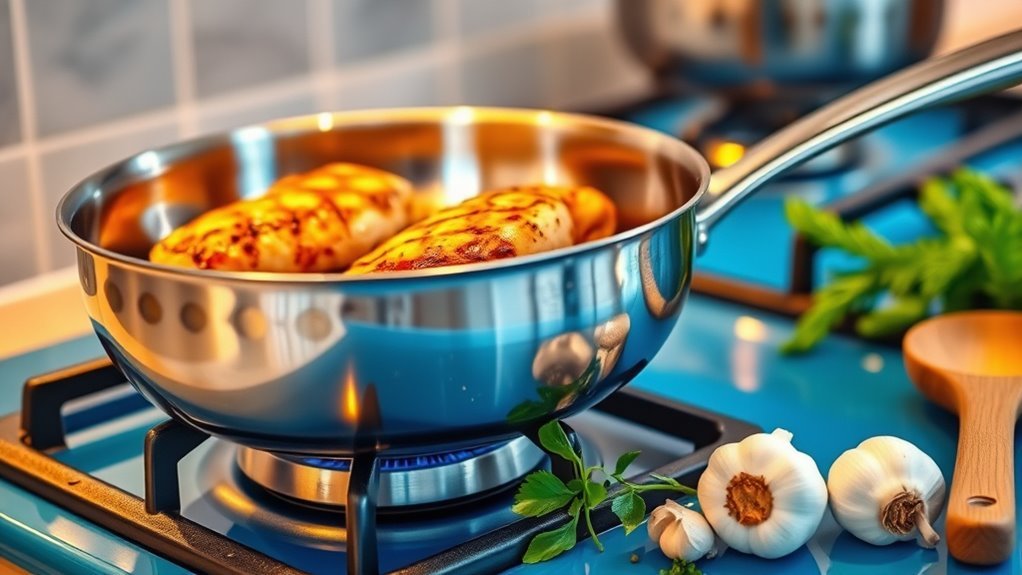
7 Essential Tips to Properly Cook on Stainless Steel Pans
To cook perfectly on stainless steel pans, it’s essential to understand the basics of heat management and preparation. Preheat your pan over medium heat until it’s hot—test with water droplets that dance.
Add oil only after preheating, and wait for it to shimmer before adding dry, room-temperature ingredients.
Avoid overcrowding the pan to keep it hot and promote proper browning. This helps achieve that coveted sear without sticking.
After cooking, let the pan cool before washing it gently to preserve its surface and maintain its longevity.
Stick with these fundamentals, and you’ll be able to unleash even better techniques for flawless results every time. Mastering stainless steel pans is easier than you think with the right approach.
Preheat Your Stainless Steel Pan Properly Every Time

How do you know when your stainless steel pan is ready for cooking? First, you need to preheat your stainless steel pan over medium heat for about 2-3 minutes. This step is vital because reaching the right temperature prevents food from sticking and promotes even cooking.
Skipping this and adding ingredients to a cold pan often leads to burning or uneven searing. Proper preheating ensures the pan’s surface is hot enough to lock in flavors and create that perfect browning.
Although water droplets can help test the heat, you’ll want to avoid adding food or oil before your pan reaches the ideal temperature. Consistently preheating your pan this way improves every dish you cook by giving you better control and results.
Check If Your Pan Is Hot Enough With the Water Droplet Test

To check if your pan’s hot enough, drop a few water droplets onto the surface and watch how they behave. If they form little beads that dance around, you’re seeing the Leidenfrost Effect, which means the pan’s at the perfect temperature.
That’s your cue to add oil—too soon or too late, and you risk sticking or uneven cooking.
Water Droplet Behavior
Wondering if your stainless steel pan has reached the right cooking temperature? Use the water droplet test to find out. After you preheat the pan, sprinkle a few drops of water onto its surface.
If the droplets instantly evaporate or just sizzle away without moving, your pan isn’t hot enough yet—give it more time to preheat. But when the water droplets skitter or dance across the pan, you’re witnessing the Leidenfrost Effect in action.
This means the surface temperature is around 350-375°F, which is ideal for cooking. This behavior shows your pan is hot enough to reduce sticking and improve cooking results. Paying attention to how water droplets behave helps you master heat control with stainless steel pans.
Leidenfrost Effect Explained
Noticing water droplets skittering across your stainless steel pan means you’ve triggered the Leidenfrost Effect, a key sign that your pan has reached the right temperature. When you sprinkle water droplets onto a properly preheated pan, they don’t just sizzle and evaporate immediately—they dance and hover, skittering across the surface.
This phenomenon occurs around 350-375°F, indicating your pan is perfect for cooking. If the droplets bubble vigorously and vanish instantly without movement, your pan either isn’t hot enough or is too hot.
Using the water droplet test helps you preheat your pan precisely, ensuring even heat distribution and reducing sticking. Recognizing the Leidenfrost Effect means you’re ready to cook with confidence on your stainless steel cookware.
Timing Oil Addition
When you add oil too early or before your pan reaches the right temperature, it can cause sticking and uneven cooking. Proper timing oil addition starts with knowing when your pan is hot enough. To check, preheat the pan and perform the water droplet test: add a few drops of water to the surface.
If the droplets sizzle, dance, and form beads that roll around, your pan has reached about 350-375°F—ideal for cooking. If the water simply bubbles without movement, keep preheating. Adding oil only after the water droplet test confirms proper heat helps prevent food from sticking and ensures even cooking.
Mastering this simple step will improve your results on stainless steel pans every time.
Add Oil or Fat After Preheating Your Stainless Steel Pan

You want to add oil or fat only after your stainless steel pan is properly preheated and hot enough to shimmer.
Choosing the right cooking fat and using about 1-2 tablespoons helps create a smooth, non-stick surface. Watch for the oil to move easily before you start cooking to prevent sticking and boost flavor.
Timing Oil Addition
Although it might seem natural to add oil right away, you should wait until your stainless steel pan is properly preheated and shimmering before pouring in the oil or fat. Preheating guarantees the pan reaches the right temperature, creating a hot surface that helps prevent sticking.
When you add oil to a cold pan, it can soak into the metal and cause food to stick. But once the pan shimmers, adding 1-2 tablespoons of oil coats the surface evenly, forming a natural non-stick barrier. This timing not only stops food from sticking but also promotes even browning.
Choosing Cooking Fats
How do you choose the best cooking fat for your stainless steel pan? First, always preheat your pan before adding cooking fats like oil or butter. Adding fat to a hot pan ensures a proper non-stick surface, preventing sticking and promoting even browning.
Use 1-2 tablespoons, swirling to coat the surface evenly.
| Cooking Fat | Smoke Point (°F) | Best Use |
|---|---|---|
| Olive Oil | 375 | Medium heat sautéing |
| Canola Oil | 400 | High heat frying |
| Butter | 350 | Flavor, lower heat cooking |
| Avocado Oil | 520 | High heat searing |
| Coconut Oil | 350 | Medium heat, adds sweetness |
Choose fats that match your cooking temperature to guarantee your pan’s non-stick quality and enhance flavor.
Recognizing Oil Readiness
When your stainless steel pan reaches the right temperature, it will shimmer, signaling it’s time to add your oil or fat. This shimmering oil shows your pan is properly preheated and hot enough for cooking. Adding oil too early, before the pan is hot, increases the risk of food sticking and uneven cooking.
To ensure oil readiness, watch for the oil to move easily and ripple once poured—this means it’s reached the ideal temperature for searing. Properly heated oil creates a barrier that prevents sticking and promotes even browning.
Wait for Oil to Shimmer Before Adding Food to Your Pan
Before you add your food, wait until the oil shimmers in the pan—that subtle ripple means it’s reached the perfect temperature of about 350-375°F. This shimmer signals the oil has preheated sufficiently to create a natural non-stick surface on your stainless steel pan. Adding food too soon can cause sticking because the oil hasn’t bonded properly with the pan surface yet.
When the oil shimmers, it forms a barrier between the pan and your ingredients, making cooking smoother and more efficient. This ideal pan temperature ensures your food sears and browns evenly without tearing or sticking. So, always watch for that shimmer before cooking—it’s your best indicator that the pan and oil are ready for perfect results.
Bring Ingredients to Room Temperature and Pat Dry to Prevent Sticking
Although it’s tempting to cook ingredients straight from the fridge, bringing them to room temperature and patting them dry can make a big difference in preventing sticking on your stainless steel pan. Room temperature ingredients reduce surface moisture, which helps create better contact with the pan when you preheat it.
Pat dry your ingredients with a paper towel to remove excess water that causes sticking and splattering. This also promotes even cooking and browning, preventing steam buildup that interferes with searing.
| Tip | Benefit |
|---|---|
| Bring to room temperature | Reduces moisture, prevents sticking |
| Pat dry ingredients | Removes excess water, avoids splatter |
| Preheat pan properly | Ensures even cooking, better sear |
| Use dry ingredients | Promotes crust formation, less sticking |
Avoid Overcrowding Your Stainless Steel Pan to Maintain Heat
If you cram too much food into your stainless steel pan, the temperature drops and your ingredients end up steaming instead of searing. Overcrowding reduces pan temperature below the ideal 350-375°F, leading to food sticking and uneven cooking.
To maintain heat retention and achieve even cooking, follow these tips:
- Leave 1 to 2 inches of space around each ingredient for proper heat circulation.
- Cook in small batches to keep the pan hot and ensure a crisp, golden crust.
- Avoid filling the pan too full to prevent lowering the pan temperature.
- Remember that overcrowding causes moisture buildup, resulting in steaming rather than searing.
Cool and Clean Your Stainless Steel Pan Gently After Cooking
When you finish cooking, let your stainless steel pan cool completely to avoid warping from sudden temperature changes. Never pour cold water into a hot pan, as this can damage the metal and reduce its lifespan.
Once cool, wash the pan using warm water and a soft sponge or cloth to clean it gently. Avoid abrasive scrubbers that might scratch the stainless steel surface. For stubborn residues, soak the pan in warm, soapy water or a vinegar solution before cleaning.
After washing, dry your pan thoroughly with a soft towel to prevent water spots and keep its shiny finish. By cooling and cleaning your stainless steel pan gently after each use, you’ll maintain its durability and ensure it performs well for years.
Frequently Asked Questions
What Is the Trick to Using Stainless Steel Pans?
The trick is to preheat your pan properly, add oil once it’s hot, and wait for it to shimmer. Use patience—let food naturally release before flipping, and always make certain ingredients are dry and at room temperature.
How Do I Keep Things From Sticking to My Stainless Steel Pans?
Picture shimmering oil rippling like golden waves—preheat your pan well, add oil till it shimmers, then place dry, room-temperature food gently.
Don’t rush flipping; wait until it naturally releases, keeping sticking firmly at bay.
What Is the Rule for Stainless Steel Pans?
The key rule is to properly preheat your stainless steel pan before adding any food. Heat it until water droplets dance, then add oil.
This prevents sticking and guarantees even cooking for the best results.
Is There Anything You Shouldn’t Cook in a Stainless Steel Pan?
Ever tried cooking delicate eggs in a stainless steel pan? You shouldn’t cook sticky or highly acidic foods for long because they’ll stick or damage the surface.
Conclusion
Cooking on stainless steel pans is like conducting an orchestra—you’re the maestro guiding each instrument to create harmony. When you preheat, test, oil, and patiently wait, you’re setting the stage for a flawless performance.
Treat your ingredients with care, avoid overcrowding, and finish with gentle cleaning to keep your pan in tune.
Master these steps, and your cooking will sing with flavor and ease every time you step into the kitchen. Following these essential tips to properly cook on stainless steel pans will ensure delicious results and extend the life of your cookware.