How to Remove Moisture From Double Pane Windows Step by Step
To remove moisture from your double pane windows effectively, start by drilling small holes near the corners to vent trapped moisture. This step is crucial for releasing the condensation that forms between the panes.
Next, place silica gel packets inside the window to absorb any remaining dampness. Using a hair dryer on low heat outside the window can help evaporate moisture faster.
After the moisture is gone, seal the holes with clear silicone caulk to prevent future leaks.
Regularly controlling indoor humidity and inspecting window seals also helps prevent moisture buildup.
If you want to explore more detailed fixes and professional options, there’s plenty to uncover for maintaining your double pane windows.
How to Identify Moisture Problems in Double Pane Windows

How can you tell if your double pane windows have moisture problems? Look for a foggy appearance or haze in double pane glass—that’s a clear sign of trapped moisture. Condensation or water between panes often indicates seal failure, allowing moisture buildup inside the window seal.
You might notice visible water droplets, streaks, or mineral deposits on the interior glass surface. Frost or ice during cold weather also signals moisture trapped inside, reducing insulation effectiveness. Check for seal deterioration around the frame, such as dirt buildup or rust, which can compromise the window seal and let moisture in.
These signs of moisture problems mean the sealed space is compromised, and addressing them promptly will help preserve your windows and maintain their clarity.
Why Does Moisture Build Up Between Double Pane Windows?

Although double pane windows are designed to keep moisture out, seal failure often lets humid air seep inside, causing moisture buildup between the panes. This happens because window seals and sealant deteriorate over time due to temperature changes and environmental factors. When the seal breaks, trapped moisture condenses on the cold glass surfaces, ruining the insulation effect and causing foggy glass.
Loss of insulating gas further worsens the problem. Here’s a quick overview:
| Cause | Effect | Result |
|---|---|---|
| Seal deterioration | Humid air infiltration | Trapped moisture |
| Seal failure | Insulating gas loss | Reduced insulation |
| Condensation | Moisture buildup | Cloudy double pane windows |
Understanding these factors helps you recognize why condensation appears inside double pane windows.
How to Remove Moisture From Double Pane Windows Yourself

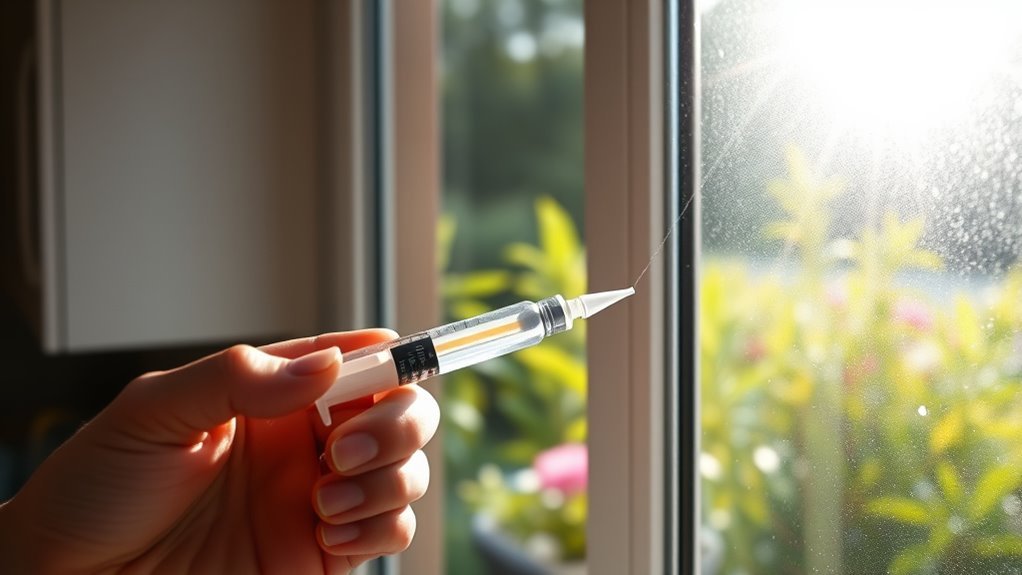
If you notice moisture trapped between your double pane windows, you can take steps to remove it yourself before considering a full replacement. Start by carefully using a drill with a ¼-inch bit to create small drill holes near the corners of the insulated glass. This allows moisture and condensation to escape.
Next, insert silica gel or desiccant packets into these holes to absorb residual moisture. Gently wipe the inside glass with a microfiber cloth and apply gentle heat from a hair dryer outside the window to encourage evaporation.
Once moisture removal is complete, seal the drilled holes using clear silicone caulk or weatherproof sealant to prevent further moisture infiltration.
- Drill holes near corners
- Insert desiccant packets
- Use heat for evaporation
- Seal holes with silicone sealant
Should You Fix Double Pane Window Moisture Yourself or Call a Pro?
While you can try fixing moisture between double pane windows yourself, calling a professional usually provides a more reliable and lasting solution. DIY moisture removal often only masks seal failure and risks damaging the insulated glass or window seal.
Professional repair includes accurate diagnosis, proper resealing, or full insulated glass replacement, which restores energy efficiency and stops moisture buildup for good.
| Aspect | DIY Fixes | Professional Repair |
|---|---|---|
| Seal Failure | Often undetected | Accurately diagnosed |
| Moisture Removal | Temporary, may not last | Permanent, thorough solution |
| Risks | Glass damage, worsened issues | Minimizes risks, expert care |
| Energy Efficiency | Often compromised | Fully restored |
Choosing a pro guarantees durable window repair and preserves your home’s comfort and value.
How to Use Dehumidifiers and Moisture Absorbers
To tackle moisture in your double-pane windows, start by choosing a dehumidifier that matches your room size for effective humidity control. Place it near the window or in the room’s center to maximize moisture removal.
Don’t forget to use moisture absorbers like silica gel packs inside the window frame to keep the space dry between cleanings.
Choosing Effective Dehumidifiers
Since moisture buildup on double-pane windows often results from high indoor humidity, choosing the right dehumidifier can make a significant difference in reducing condensation. To guarantee effective moisture removal, pick a dehumidifier suited for your room size and capable of handling the humidity levels you face. Don’t forget to regularly empty the water tank and perform filter cleaning to maintain its effectiveness.
Supplement your setup with moisture absorbers for localized moisture control.
- Select a dehumidifier with adequate capacity for your room size
- Maintain clear airflow around the unit for peak performance
- Regularly empty the water tank and clean filters
- Use moisture absorbers like silica gel in small or tricky spots
These steps improve condensation control and protect your double-pane windows.
Placement For Maximum Efficiency
Although selecting the right dehumidifier is essential, where you place it can make all the difference in how well it controls moisture. Position your dehumidifier near the double-pane window for continuous humidity reduction. Use moisture absorbers like silica gel or calcium chloride in corners or edges of the window frame to trap moisture effectively.
Guarantee proper ventilation and good air circulation by opening nearby windows or using exhaust fans. Replace or recharge desiccant packs regularly to sustain moisture removal efficiency.
| Item | Recommended Placement |
|---|---|
| Dehumidifier | Near double-pane window |
| Silica gel packs | Between panes or window sash |
| Calcium chloride | Window frame corners and edges |
| Desiccant packs | Easily accessible for recharge |
| Ventilation | Nearby windows or exhaust fans |
Using Moisture Absorber Products
When you want to effectively reduce moisture inside your double-pane windows, using moisture absorber products is essential. These products help maintain moisture control and prevent condensation inside the window interior.
To maximize moisture removal, consider these tips:
- Place silica gel or desiccant packs between the panes to absorb excess humidity.
- Use a dehumidifier near the windows to lower overall humidity levels below 50%.
- Set a dedicated dehumidifier to maintain consistent humidity between 30-50% for ideal condensation prevention.
- Regularly replace or recharge moisture absorber products to ensure continued effectiveness.
How to Inspect and Repair Window Seals to Stop Moisture
If you want to stop moisture from building up between your double pane windows, start by carefully inspecting the window seals for any cracks, gaps, or peeling. These signs indicate seal failure, allowing moisture ingress and causing fogging between panes.
Use a flashlight to inspect window edges closely, looking for sealant deterioration or corrosion on metal spacers. Perform a condensation check by pressing gently around the window gasket; if it feels loose or air escapes, the seal might be compromised.
Since repairing window seals requires specialized tools, consider professional repair if you spot persistent moisture or suspect serious damage. A proper repair process involves resealing or replacing the window gasket to restore airtightness and prevent future condensation, ensuring your windows stay clear and moisture-free.
Temporary Fixes for Moisture in Double Pane Windows
Since replacing or professionally repairing double pane windows can take time, you can try temporary fixes to reduce moisture and fogging. These methods help improve window clarity by addressing trapped moisture and condensation until professional repair is possible.
Temporary fixes can reduce moisture and fogging in double pane windows until professional repair is feasible.
- Drill small holes (about ¼ inch) in the window corners to let trapped moisture escape.
- Insert desiccant packs into the holes to absorb remaining moisture.
- Use a hair dryer or heat gun on low to promote evaporation of condensation.
- After drying, seal the holes with weatherproof sealant to prevent more moisture entry.
What to Expect From Professional Window Repair or Replacement
When you call a professional, they’ll start with a thorough diagnostic assessment to pinpoint the issue. They’ll help you decide whether repairing or replacing your window makes the most sense for your situation.
Plus, you can expect warranties that give you peace of mind about the durability and quality of the work.
Diagnostic Assessment Process
Although moisture trapped between double pane windows can be frustrating, a professional diagnostic assessment will pinpoint the exact cause of the problem. During the evaluation, a technician performs a thorough window inspection using specialized tools like moisture meters and infrared cameras for precise moisture detection. They identify whether a seal breach or seal failure caused the condensation and assess the extent of damage.
This damage assessment helps determine if desiccant replacement or window repair is viable. You’ll receive a detailed professional evaluation report outlining the findings and recommended next steps.
Key components of the diagnostic process include:
- Detecting moisture using infrared cameras and moisture meters
- Inspecting seals, spacers, and glass for breaches or failures
- Evaluating the window’s age and warranty status
- Recommending solutions based on damage severity and cost-effectiveness
Repair Versus Replacement
After identifying the cause and extent of moisture damage in your double pane windows, you’ll need to decide between repair and replacement. Professional repair often includes sealant resealing or swapping out the insulated glass unit to fix seal failure and guarantee effective moisture removal. Technicians may also replace desiccants to absorb lingering moisture.
Repair costs range from $181 to $412 per window, making it a cost-effective choice for minor window damage. However, if the damage is extensive, replacement options might be better. Full window replacement, averaging around $750 per window, restores energy efficiency and long-term durability more reliably than DIY fixes.
Ultimately, your choice depends on the severity of the seal failure, the age of the window, and desired energy savings.
Warranty And Guarantees
What kind of warranty can you expect from professional window repair or replacement? Typically, warranties range from 1 to 10 years and come with guarantees against moisture infiltration and seal failure. When choosing professional repair, you should carefully review the repair warranty terms, especially regarding damage exclusion like accidental impacts or improper maintenance.
Some providers offer extended service plans for extra protection.
Consider these key points about warranties and guarantees:
- Coverage often includes seal replacement, gas fills, and glass components
- Damage exclusion clauses may limit insurance coverage
- Regular inspections or professional maintenance might be required to keep the warranty valid
- Service plans can extend protection against future moisture issues or seal failure
Understanding these details helps you secure lasting results and peace of mind.
How to Prevent Moisture From Returning in Double Pane Windows
To keep moisture from returning in your double pane windows, you need to maintain a tight seal and control indoor humidity. Regularly check and replace worn sealant and weatherstripping to stop moisture and air leaks into the gas-filled window cavity. Keep indoor humidity between 30% and 50% using dehumidifiers or air conditioning to reduce condensation risk.
Ensure proper drainage by cleaning gutters and weep holes, preventing water buildup near window frames. Adding window insulation film or storm windows helps minimize temperature fluctuations that stress seals and cause moisture. Schedule annual professional inspections and repairs to catch seal failures early.
Frequently Asked Questions
How to Get Moisture Out of Double-Pane Windows?
You drill small holes in the window corners to release moisture, insert desiccant packs to absorb it, gently warm the glass with a hairdryer, then seal the holes with waterproof sealant to prevent future moisture buildup.
How to Get Rid of Condensation Inside Double-Glazed Windows?
You can drill small holes, use desiccant packets inside, or gently warm the glass with a hair dryer to evaporate moisture.
If condensation persists, you’ll likely need a professional to replace the sealed glass unit.
Is There a Way to Clean in Between Double-Pane Windows?
You can’t clean between double-pane windows easily without risking damage. Your best bet is to call a professional to replace or reseal the unit.
DIY attempts often void warranties and compromise window integrity.
Should You Wipe Condensation off Windows?
When condensation blurs your view like morning fog, go ahead and wipe it off with a dry cloth.
You’ll improve visibility temporarily, but remember, it won’t fix the underlying moisture problem inside the window.
Conclusion
Think of your double pane windows like a sealed treasure chest—when moisture sneaks inside, it clouds the precious view you cherish.
By identifying leaks, drying the air, and sealing cracks, you’re not just fixing glass; you’re protecting that treasure from corrosion.
Whether you tackle it yourself or call a pro, remember: maintaining that clarity is like guarding a secret—once lost, it’s hard to restore.
Keep your windows clear, and your view bright by following these steps to remove moisture from double pane windows effectively.