5 Steps to Save a Rusted Cast Iron Pan
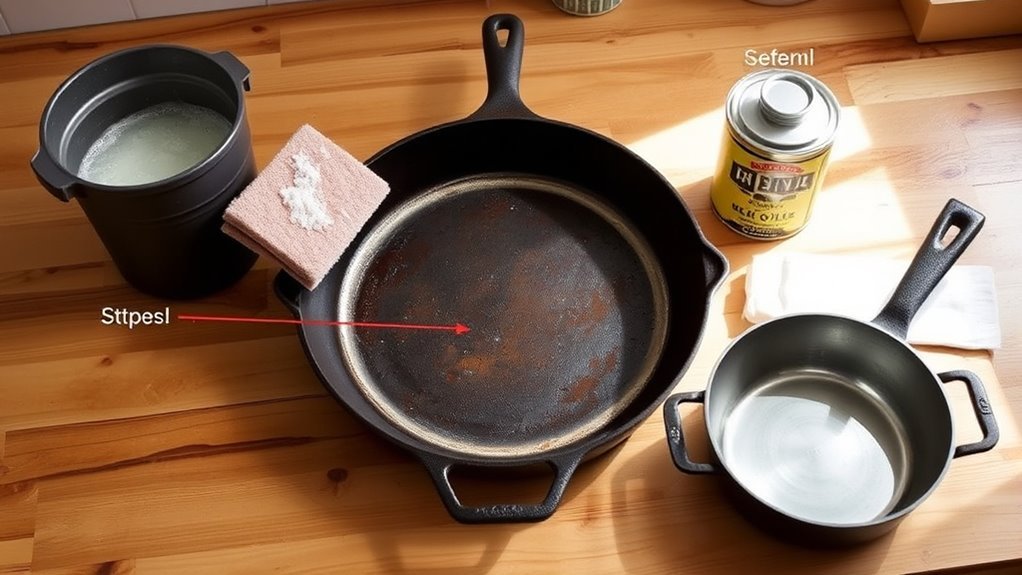
To save your rusted cast iron pan, start by gathering essential supplies like steel wool, dish soap, towels, and oil. Setting up a clean workspace will make the restoration process easier and more efficient.
Next, tackle the rust by scrubbing the pan with steel wool or soaking it in vinegar for several hours. After soaking, scrub off the loosened rust thoroughly to restore the surface.
Once the rust is removed, wash the pan well with dish soap and dry it immediately to prevent new rust from forming.
Season your pan by applying a thin layer of oil and baking it in a hot oven. This step protects the surface and helps build a non-stick coating.
Finally, maintain your cast iron pan by regularly oiling it and drying it properly after each use.
Consistent care will keep rust at bay and extend the life of your cookware.
Keep going to uncover more tips for lasting care.
Get Your Tools Ready and Set Up Your Workspace

Before you begin removing rust, gather all the necessary tools like steel wool, scrubbing pads, dish soap, dry towels, and cooking oil. Setting up your workspace is just as important for effective rust removal on your cast iron cookware. Choose a clean, well-lit area with a flat surface to work on your rusty cast iron pot and pans.
Protect the surface with newspaper or plastic sheeting to catch debris and avoid mess. Have warm water and mild dish soap ready for washing after cleaning. Don’t forget safety precautions—keep protective gloves and eye protection close by to handle abrasive cleaning tools safely.
A proper workspace setup and having the right cleaning tools make restoring your cast iron cookware smoother and safer.
Remove Rust With Steel Wool or Vinegar Soak

When rust has taken hold of your cast iron pan, you can remove it effectively by scrubbing with fine steel wool or soaking the pan in white vinegar. Use steel wool to scrub the rusted areas firmly until you expose the bare cast iron beneath.
If you prefer, try a vinegar soak by submerging the pan for 6 to 12 hours; this loosens and dissolves rust for easier removal. After soaking, scrub the surface with a brush or sponge to eliminate remaining rust particles.
This rust removal process helps restore your pan’s surface, making it ready for seasoning. For heavily rusted pans, repeat the vinegar soak and scrubbing as needed to fully restore your pan and ensure a smooth, rust-free finish.
Clean and Dry Your Pan After Rust Removal

Once you’ve removed the rust, wash your cast iron pan thoroughly with warm water and mild dish soap to clear away any leftover debris or rust particles. It’s essential to clean your pan properly after rust removal to avoid trapping residual debris that can cause future rust.
Next, dry your cast iron immediately using a lint-free cloth or paper towels. Moisture left on the surface can lead to new rust spots. To make sure your pan is completely dry, place it on low heat on your stovetop for a few minutes; this evaporates any remaining dampness.
Double-check for wet areas and dry them carefully if needed. Following these steps will help you clean and dry your cast iron effectively, preparing it for the next stage of restoration.
Season Your Cast Iron Pan in the Oven
After thoroughly cleaning and drying your pan, the next step is to season it in the oven. Preheat your oven to 450-500°F and place aluminum foil on the bottom rack to catch drips. Apply a thin, even layer of oil to the cast iron surface, avoiding any pooling.
Place the pan upside down on the middle rack and bake for 1 hour to polymerize the oil, forming a protective seasoning layer. Turn off the oven and let the pan cool inside. Repeat seasoning if needed for a smooth, glossy finish free of rust.
| Step | Temperature (°F) | Duration |
|---|---|---|
| Preheat oven | 450-500 | – |
| Apply oil | – | Thin layer |
| Bake pan | 450-500 | 1 hour |
| Cool in oven | – | Until cool |
Keep Your Cast Iron Pan Rust-Free With Proper Care
To keep your cast iron pan rust-free, you need to dry it thoroughly right after cleaning and apply a thin layer of oil before storing it. Moisture is the main culprit for rust, so proper drying prevents rust formation. Use cooking oil to coat the surface, creating a protective barrier that supports rust prevention.
Follow cleaning tips that avoid soaking or harsh detergents, which can strip seasoning and expose the pan to rust. Regular maintenance includes inspecting your cast iron for rust spots and re-seasoning it periodically to reinforce the non-stick coating.
Store your pan in a dry, low-humidity place to further reduce rust risks. By combining these steps, you’ll extend your pan’s life and enjoy rust-free cooking for years to come.
Frequently Asked Questions
Can a Rusted Cast Iron Pan Be Saved?
Yes, you can save a rusted cast iron pan by scrubbing off the rust, drying it thoroughly, and re-seasoning it.
With care, you’ll restore its non-stick surface and enjoy using it for years to come.
Will Vinegar Take Rust off of Cast Iron?
Vinegar’s like a magic eraser—it will take rust off your cast iron by dissolving it. Just soak your pan for several hours, then scrub and rinse to reveal a cleaner, rust-free surface ready for seasoning.
Be careful not to leave it soaking too long, as vinegar can also start to eat away at the metal itself. After removing the rust, make sure to dry the pan thoroughly and apply a layer of oil to protect it. This process can restore your cast iron and get it back in cooking shape.
How to Strip and Reseason a Cast Iron Pan?
You strip your cast iron by scrubbing off old seasoning and rust with steel wool, then wash and dry it thoroughly.
Next, you apply a thin oil layer and bake it upside down at high heat to reseason it.
What Are the Common Mistakes in Restoring Cast Iron?
Restoring cast iron isn’t a walk in the park. You’ll mess up if you over-scrub, use harsh abrasives, skip drying, apply too much oil, or ignore cracks.
These mistakes can ruin your pan’s soul and performance.
Conclusion
Now that you’ve saved your rusted cast iron pan, you’re ready to cook up a storm like a pioneer with a trusty skillet. Just remember, regular care and seasoning keep that iron in tip-top shape for years to come.
Don’t let rust sneak back in—wipe, dry, and season after every use. With a little effort, your pan will stay as reliable as a trusty old timepiece, ready for countless meals ahead.
Proper maintenance is key to preserving your cast iron skillet. Consistent seasoning and cleaning prevent rust and ensure your pan remains a durable, non-stick cooking essential.
By following these steps, your cast iron cookware will provide excellent performance and last for generations to come.