How to Stop Chickens Eating Their Own Eggs Step by Step
To stop your chickens from eating their own eggs, start by observing your flock carefully. Identify which hens are the culprits by checking for yolk or shell residue on their feathers. This step is crucial for targeted intervention.
Collect eggs multiple times throughout the day to minimize the temptation for hens to peck at them. Keep the nesting areas clean and comfortable by using soft bedding, which encourages hens to lay eggs in designated spots.
Enhance their diet with high-protein feed and calcium supplements to address nutritional deficiencies that might cause egg eating. Provide secure, cushioned nesting boxes to protect eggs from damage.
Additionally, placing fake eggs in the nests can act as a deterrent to discourage hens from pecking at real eggs. By following these steps, you’ll quickly reduce the problem.
There are also more strategies available to fine-tune your approach.
Why Chickens Start Eating Their Own Eggs
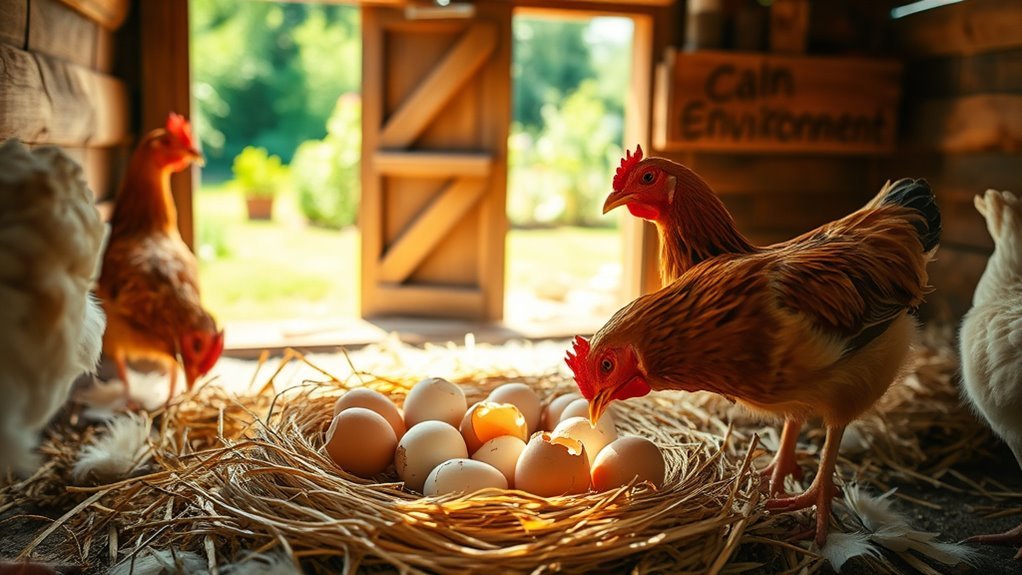
Although it may seem surprising, chickens often start eating their own eggs out of simple curiosity, especially young hens exploring their surroundings. When an egg accidentally cracks in the nest box, it catches their attention, sparking pecking behavior that can quickly turn into a habit.
If you notice egg eating hens, consider nutritional deficiencies like calcium deficiency or lack of protein, which can drive them to seek eggs as a nutrient source. Boredom and stress also play a role; hens with inadequate nesting conditions or limited stimulation may start pecking eggs simply out of frustration.
Once one hen begins, the behavior often spreads through the flock, making it vital to understand these root causes to prevent egg eating from becoming a persistent problem.
Identifying and Managing Egg-Eating Hens
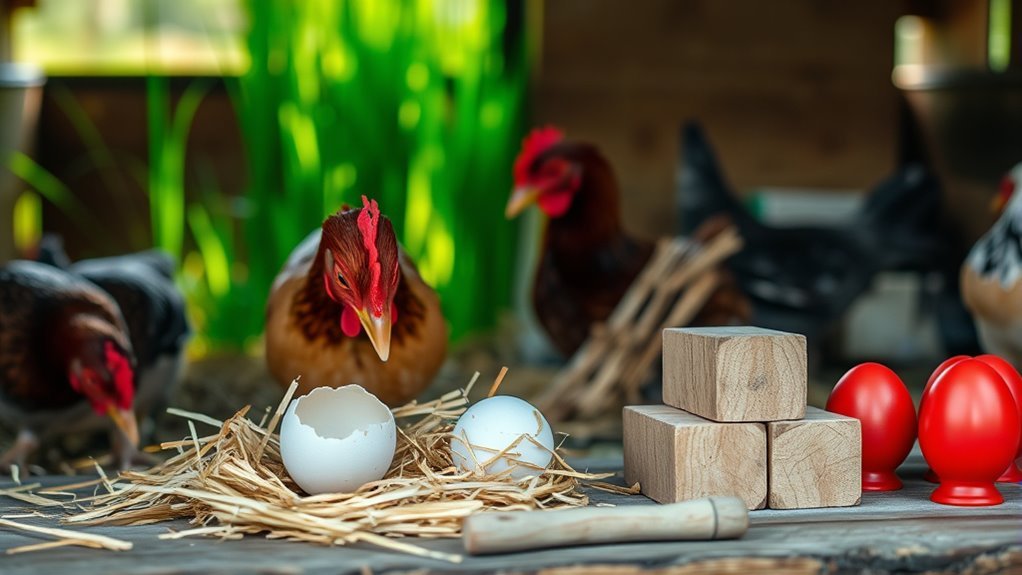
You’ll want to watch your flock closely during nesting times to spot hens showing signs of egg-eating, like yolk or shell on their feathers. Using tools like nestbox cameras or dye-filled eggs can help you identify which hens are the culprits.
Once identified, managing these egg-eaters quickly prevents the behavior from spreading to others.
Recognizing Egg-Eating Behavior
When you notice yolk or shell fragments on your hens’ feathers or around the nest boxes, it’s a clear sign that some of your chickens might be eating their own eggs. To recognize egg-eating behavior, observe hens around the nest boxes early in the morning or right after they lay. Look closely for sticky beaks, yolk-stained faces, or missing shell fragments, which can help you identify the hen responsible.
Using cameras or direct supervision makes it easier to pinpoint the culprit. Once you identify hen or hens engaging in egg-eating, mark hens for easy tracking and management. Being proactive in recognizing and monitoring this behavior will help you address the problem before it escalates and affects your flock’s well-being and egg production.
Identifying Problem Hens
Since egg-eating can quickly spread through a flock, you need to identify the problem hens as soon as possible. Start by monitoring your chickens during peak laying times, like early morning, when they’re most likely to eat eggs. Look closely for signs such as yolk or shell fragments on a hen’s feathers, beak, or face—these clues help you identify the egg-eater.
Use a camera or direct supervision to spot which hens display this behavior. Once you suspect culprits, isolate them temporarily to observe their actions without the flock’s influence. Keep detailed records of egg-eating patterns over several days to confirm persistent offenders.
This careful monitoring lets you accurately identify and manage the problem hens before the behavior becomes widespread.
Managing Egg-Eaters Effectively
After spotting the hens that are eating eggs, your next step is to manage their behavior effectively to stop the habit from spreading. You need to identify the egg-eating hen and take quick action in the nesting area. Use these strategies:
- Place fake eggs in the nest box to deter the egg eater and observe reactions.
- Use nestbox cameras or watch closely to identify hen behavior around eggs frequently.
- Try dye-filled or spicy eggs to confirm which hen consumes them.
- Remove or isolate the identified egg-eating hen to prevent others from copying.
- Keep detailed records of egg-eating signs and hen activity to monitor progress.
Collecting Eggs and Managing Your Coop

Although it may seem simple, collecting eggs frequently—at least two to three times a day—plays a crucial role in preventing hens from pecking at and eating them. You should collect eggs gently to avoid cracked eggs, which can trigger pecking behavior.
Make certain your nesting boxes are clean, well-maintained, and lined with soft bedding to cushion eggs and reduce breakage. Using roll-away nest boxes or adding nest box curtains helps hide eggs from the hens, making them less accessible and lowering the chance of egg-eating.
Regular coop management includes promptly removing any cracked or broken eggs to discourage pecking behavior. By staying consistent with these practices, you’ll create a safer, more controlled environment that deters hens from developing harmful egg-eating habits.
Improving Diet to Prevent Egg Eating
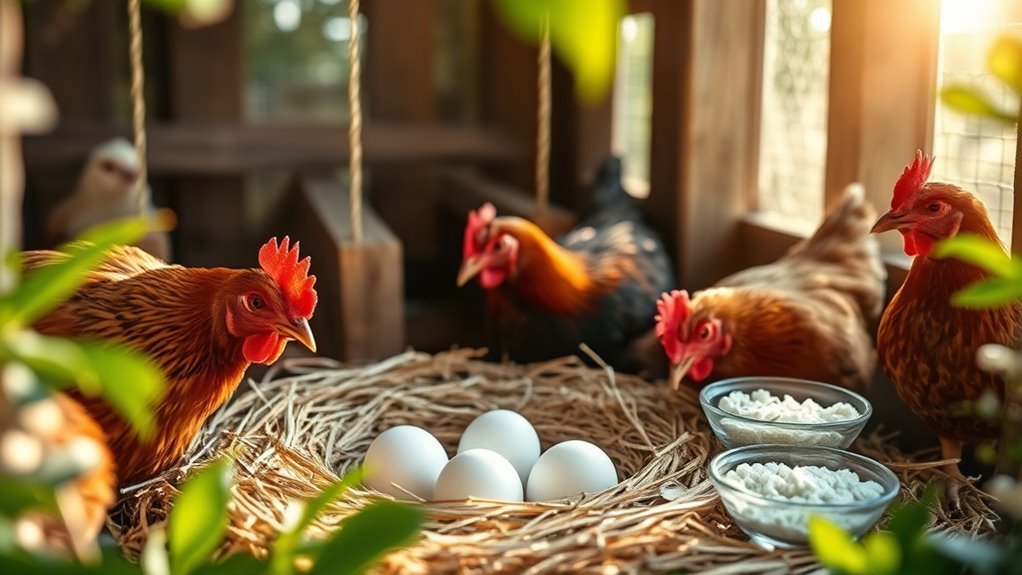
If your hens don’t get enough protein and calcium, they’re more likely to start eating their own eggs. Adjusting your feeding strategy can prevent this egg eating habit from developing. Focus on quality nutrition early to keep hens satisfied and healthy.
- Provide layer feed with at least 16% protein, like fermented Green Mountain Organic Coarse Layer feed.
- Supplement with calcium sources such as oyster shells or crushed eggshells to strengthen eggshells.
- Offer high-protein treats like mealworms, sunflower seeds, or yogurt to meet extra nutritional needs.
- Avoid feeding raw eggs; cooked or scrambled eggs are safer to prevent taste development.
- Adjust diet seasonally and maintain consistent, high-quality feeding to reduce deficiencies.
This approach helps prevent hens from pecking and eating eggs, protecting your flock and eggs early on.
Setting Up Nesting Boxes to Protect Eggs
When you set up nesting boxes with high, slanted doors, eggs roll away from your hens’ reach, cutting down their temptation to peck or eat them. Use cushioned nesting material inside the nesting box to prevent eggs from cracking, which can attract pecking.
A covered nest—using curtains or dark fabric—helps keep eggs hidden, further discouraging hens from pecking. Place the roll away nesting boxes in quiet, dimly lit areas to reduce stress and prevent destructive behaviors.
Don’t forget to collect eggs frequently, ideally multiple times a day, to remove eggs promptly and prevent hens from developing bad habits. By carefully arranging your nesting boxes this way, you’ll effectively prevent egg eating and protect your flock’s precious eggs.
Using Decoy Eggs and Deterrents to Stop Egg Eating
To discourage your hens from eating their eggs, you can place decoy eggs made of ceramic or wood in their nesting boxes. These fake eggs help prevent egg pecking by directing the egg-eating hen’s attention away from real eggs.
To effectively stop egg eating, consider these deterrents:
- Use fake eggs that produce popping sounds when pecked to startle hens.
- Regularly replace decoy eggs to maintain their effectiveness.
- Fill real eggs with hot sauce or hot pepper to make them unappealing.
- Cover nesting boxes with dark cloth to create a dim environment.
- Position decoy eggs prominently to attract hens’ focus.
Frequently Asked Questions
How Can You Stop Chickens From Eating Their Own Eggs?
You can stop chickens from eating their eggs by collecting eggs frequently, using fake eggs to deter pecking, providing a balanced diet with enough protein and calcium, darkening nests, and promptly removing broken eggs.
Collect eggs often to reduce the temptation for chickens to peck at them. Introducing fake eggs can help discourage pecking behavior.
Ensure your chickens have a balanced diet rich in protein and calcium to meet their nutritional needs. Darkening the nesting boxes makes eggs less visible and less likely to be eaten.
Always remove broken eggs quickly as they can attract chickens to eat eggs.
How to Teach Chickens Not to Eat Their Eggs?
To teach chickens not to eat eggs, you’ll need to break the cycle. Replace real eggs with fake ones, add deterrents like hot sauce inside, and keep collecting eggs often to nip the habit in the bud.
Consistent monitoring and quick removal of eggs can help prevent chickens from developing the habit. Additionally, providing plenty of food and calcium supplements can reduce the likelihood of egg-eating.
Using these methods together will help train your chickens to leave their eggs alone over time.
How Do I Break the Egg Eating Habit?
You break the egg-eating habit by removing broken eggs quickly, using decoy eggs, collecting real eggs frequently, darkening nests, and providing distractions.
Consistency and patience will help your hens lose interest in eating their own eggs.
Why Would a Chicken Start Eating Its Own Eggs?
You’d think your chicken’s eating eggs is a scandal bigger than a soap opera—curiosity, nutritional gaps, or boredom can trigger it.
Once they taste one, they might turn into relentless egg bandits, so watch closely!
Conclusion
Stopping your chickens from eating their own eggs might feel like trying to stop a tornado, but with the right steps, you can totally turn things around.
By managing your coop, improving their diet, and using clever deterrents like decoy eggs, you’ll protect your precious eggs and keep your flock happy.
Stay consistent, and soon enough, you’ll wonder how you ever dealt with egg-eating chaos in the first place!
Implementing these effective methods to stop chickens eating their own eggs will ensure a healthier flock and more eggs for you to enjoy.