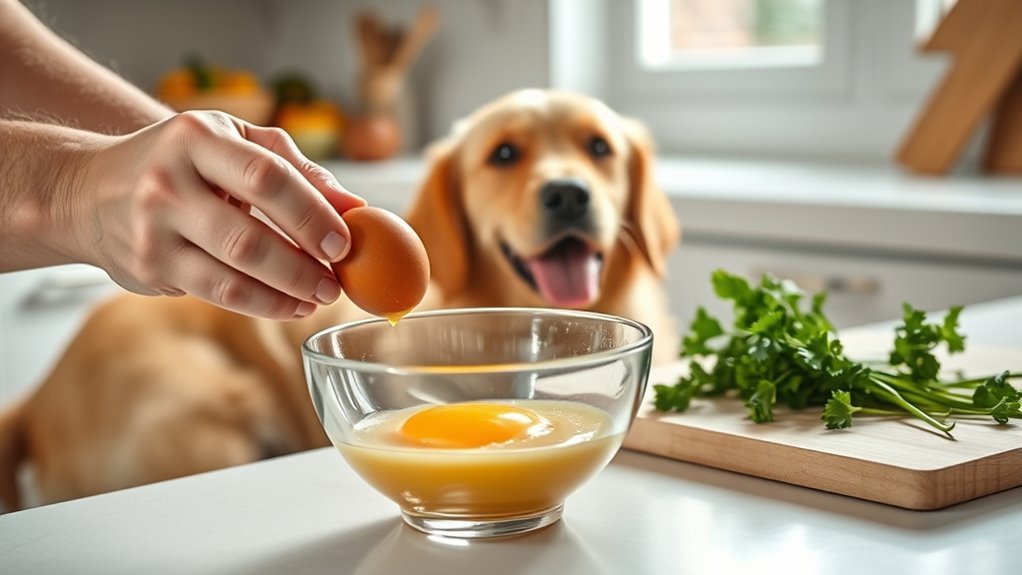
How to Safely Give Raw Eggs to Your Dog
You can safely give your dog raw eggs by choosing fresh, uncracked eggs from trusted sources and rinsing them gently before use. Raw eggs for dogs can be a nutritious addition to their diet when introduced carefully.
Start with a small amount, like a teaspoon mixed into their regular food, and introduce raw eggs once a week while watching for any digestive or allergic reactions.
Avoid raw eggs for dogs with health issues or weakened immunity. If you keep these tips in mind, you’ll better understand how to nourish your dog safely with eggs and even add calcium from eggshells.
Benefits and Risks of Feeding Raw Eggs to Dogs

Although raw eggs can provide your dog with essential nutrients similar to cooked eggs, you need to be cautious because they carry certain risks. Raw eggs may contain Salmonella, which can cause infections, especially in dogs with weakened immune systems or digestive issues. Additionally, avidin in raw egg whites can interfere with biotin absorption, potentially leading to deficiencies if fed frequently.
While raw eggs don’t offer extra health benefits compared to cooked ones, feeding them in moderation is key to maintaining your dog’s safety. Proper safety measures during feeding help minimize these risks. By balancing the health benefits and risks, you ensure your dog enjoys the nutritional value of raw eggs without compromising their well-being.
How to Select and Prepare Safe Raw Eggs for Dogs

You’ll want to pick eggs from trusted sources like organic or pasture-raised farms to keep things safe. Always rinse the eggs well and check for any cracks or damage before using them.
If you’re concerned about bacteria, lightly baking or boiling the eggs can help protect your dog without losing nutrients.
Choosing Quality Eggs
When selecting eggs for your dog, prioritize those from organic, pasture-raised hens to guarantee higher nutrient content and fewer chemicals. Choose eggs labeled free-range or pasture-raised to assure top quality. Always inspect each egg carefully; avoid any with cracks or an unbroken shell, as damaged shells increase contamination risk.
Make sure the eggs are fresh by checking the sell-by date or performing a simple freshness test. Store your eggs properly by refrigerating them at 40°F or below to maintain their quality and safety. Use eggs within 3-5 weeks of purchase to keep nutrient content intact.
Before giving raw eggs to your dog, rinse them gently with water to remove dirt or bacteria, but avoid soap or detergents that can leave harmful residues.
Safe Preparation Methods
Since raw eggs can carry bacteria like Salmonella, you should take careful steps to prepare them safely for your dog. Start by selecting fresh, organic, pasture-raised eggs from trusted sources to minimize bacteria risk. Rinse eggs gently with water to remove dirt without stripping protective coatings, avoiding soap or detergents.
Store eggs in the fridge at or below 40°F to maintain freshness. For safer feeding raw eggs, consider boiling eggs lightly—this cooking eggs method kills harmful bacteria while preserving essential nutrients. Whether feeding raw eggs or lightly cooked ones, proper egg preparation methods ensure egg safety and support dog nutrition.
This careful approach makes eggs a nutritious addition to your dog’s diet, balancing benefits with health precautions.
When to Consult Your Veterinarian About Raw Eggs

You should talk to your veterinarian before giving raw eggs if your dog has health issues or is prone to allergies.
Watch closely for signs like vomiting, diarrhea, or skin problems that may indicate a reaction. Your vet can help you manage these risks and recommend the safest way to include raw eggs in your dog’s diet.
Health Conditions Requiring Caution
Although raw eggs can offer nutritional benefits, certain health conditions demand extra caution before feeding them to your dog. If your dog has a compromised immune system or suffers from pancreatitis, raw eggs increase the infection risk and should generally be avoided.
Pregnant dogs, puppies, and nursing dogs also need vet consultation before introducing raw eggs to their diet to prevent complications. Dogs with food allergies or sensitivities might react negatively to raw eggs, making a veterinarian’s advice essential.
Additionally, if your dog has a history of gastrointestinal issues, feeding cooked eggs instead of raw helps reduce infection risk. Always check with your vet to ensure raw eggs are safe, especially when health conditions are involved, to protect your dog’s well-being.
Signs Of Adverse Reactions
When your dog shows symptoms like vomiting, diarrhea, or dehydration after eating raw eggs, it’s important to consult your veterinarian promptly. These signs of adverse reactions could indicate digestive upset or a more serious issue. Watch for allergic reactions such as skin irritation, swelling, or respiratory issues like wheezing, which require immediate vet consultation.
If your dog becomes lethargic or displays persistent digestive problems, don’t delay seeking professional advice. Salmonella infection is another concern; fever or abnormal stool after raw egg consumption demands urgent veterinary attention. Any unusual behavior following raw eggs shouldn’t be ignored.
Being vigilant about these signs of adverse reactions helps ensure your dog’s safety and well-being when feeding raw eggs.
Vet Guidance For Allergies
Since raw eggs can trigger allergic reactions in some dogs, consulting your veterinarian before introducing them is essential, especially if your dog has a history of food sensitivities. Your vet can provide guidance on allergy testing or suggest an elimination diet to identify potential food allergies safely.
Watch for signs of allergy such as vomiting, diarrhea, swelling, or difficulty breathing, and stop feeding eggs immediately if these allergy symptoms appear. Dogs prone to dog allergies, like Labradors or Cocker Spaniels, especially need veterinarian advice before trying raw eggs.
Use the table below to recognize when to seek vet guidance:
| Situation | Action Needed | Notes |
|---|---|---|
| History of food sensitivities | Consult veterinarian | Allergy testing recommended |
| Signs of allergy present | Stop eggs, seek vet care | Immediate attention required |
| Breed prone to allergies | Vet evaluation before feed | Preventive measure |
| Uncertain symptoms | Use elimination diet | Identify specific allergies |
How to Introduce Raw Eggs to Your Dog Gradually
Before introducing raw eggs to your dog, start by offering just a teaspoon mixed into their regular food to see how they react. This initial step helps you gradually introduce raw eggs while minimizing any risk. Make sure to use fresh eggs that are properly stored and free from cracks to avoid bacterial contamination.
Mix the small amount thoroughly with food to help your dog get accustomed to the texture and flavor. Introduce raw eggs once a week at first, and carefully monitor for any signs of digestive upset or allergic reactions. If you notice any issues, stop feeding raw eggs immediately.
Always consult your veterinarian before adding raw eggs to your dog’s diet to ensure it suits their health needs.
How to Monitor Your Dog’s Health After Feeding Raw Eggs
After feeding your dog raw eggs, watch closely for any signs of digestive upset like vomiting, diarrhea, or lethargy within the next 24 to 48 hours. It’s important to monitor health carefully, noting any allergic reactions such as swelling, sneezing, wheezing, or skin irritation.
Keep an eye on your dog’s energy levels, appetite, and coat condition, as changes can indicate underlying issues. Also, check for signs of dehydration like dry gums or sunken eyes, especially if gastrointestinal upset occurs.
If your dog shows persistent or severe symptoms, seek veterinary care promptly. Early intervention ensures proper diagnosis and treatment, helping your dog stay healthy and comfortable after consuming raw eggs. Monitoring symptoms diligently helps you respond appropriately and maintain your pet’s well-being.
Adding Eggshells for Calcium: Timing and Preparation
Keeping a close watch on your dog’s reaction to raw eggs helps you decide when to safely add eggshells for extra calcium. Before adding eggshells, consult your vet to determine the right calcium dosage based on your dog’s size and health.
For preparation, rinse, dry, and bake eggshells at 250°F for 10 minutes to eliminate bacteria. Then, grind them into a fine powder to ensure safe consumption and proper absorption.
Start by incorporating a small amount of eggshell powder—about ⅛ teaspoon per 20 pounds of body weight—into your dog diet gradually. Maintain consistency and monitor your dog for any adverse reactions.
Avoid store-bought eggshells that may contain chemicals, and never exceed recommended dosage to prevent calcium overdose.
Frequently Asked Questions
Is It Okay to Feed Dogs Raw Eggs?
You can feed your dog raw eggs occasionally, but you shouldn’t do it regularly due to bacterial risks and nutrient imbalances.
Always consult your vet first to ascertain it’s safe and suitable for your dog’s health.
Can We Give Unboiled Eggs to Dogs?
You can give your dog unboiled eggs, but it’s risky. To keep them safe, use clean, organic eggs and feed sparingly.
Cooking eggs is safer since it kills bacteria and neutralizes harmful compounds.
Conclusion
Feeding raw eggs to your furry friend can bring beneficial boosts, but balancing bravery with caution is essential. By selecting safe, sanitized shells, slowly introducing eggs, and watching your dog’s wellness, you’ll ward off worries while welcoming wholesome nutrition. Always ask your vet about any uncertainties, ensuring a smooth, safe supplement to your pup’s plate.
Remember, responsible routines reap rewarding results, making mealtime a mindful, marvelous moment for both of you. Prioritizing your dog’s health means practicing safe feeding habits and consulting professionals when in doubt. These steps are key to safely giving raw eggs to your dog and enhancing their overall wellbeing.