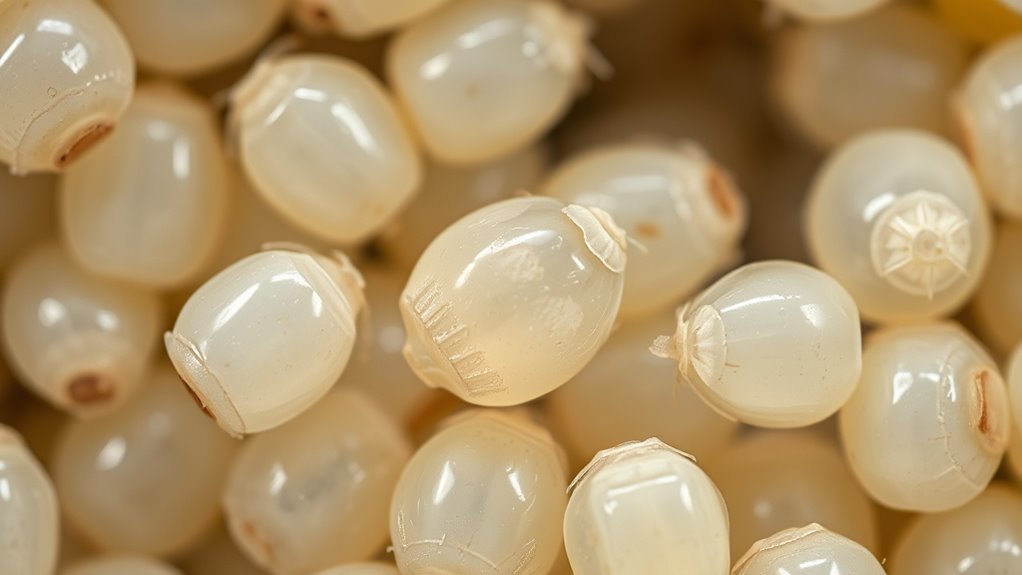
What Colour Are Dead Lice Eggs?
Dead lice eggs turn white, gray, or translucent because the embryo inside dies, causing them to lose their original tan or brown color.
You’ll notice dead eggs look dull and brittle, unlike live ones, which are shiny and darker. These empty shells stay stuck to your hair but no longer pose a risk.
Their position on your hair can also hint at age and viability.
Keep exploring to discover how to identify and handle these eggs effectively.
What Are Lice Eggs (Nits) and How Do They Develop?

Although you might not notice them at first, lice eggs—called nits—are tiny, oval-shaped capsules about the size of a sesame seed that female lice firmly glue to hair shafts. These lice eggs are attached using a waterproof, glue-like substance, making them hard to remove.
Inside each nit, an embryo begins to develop during an incubation period lasting about 7 to 10 days. When development completes, the nit will hatch, releasing a nymph.
After hatching, the empty shell remains glued to the hair until you remove it or it naturally sheds with hair growth. The color of nits changes as they develop—from live lice eggs to dead nits—and their appearance can help indicate whether an embryo is alive or the shell is empty.
How to Tell Dead Lice Eggs From Live Ones by Color

You can tell dead lice eggs from live ones by paying close attention to their color. Live nits usually appear tan or brown with a shiny surface, while dead eggs turn white, gray, or translucent and look dull.
Noticing these color differences helps you identify which eggs are still viable and which aren’t.
Color Differences Explained
When you examine lice eggs closely, their color reveals whether they’re alive or dead. Live eggs tend to be brown or tan, indicating a viable embryo inside. As the embryo dies, a color change occurs, turning the egg white, gray, or pale—signs that the egg is nonviable.
Dead eggs lose their glossy sheen and appear dull and matte. You’ll notice dead eggs lack the dark spots that signify a living embryo. Additionally, hatched shells, which are no longer attached near the scalp, often look white or translucent, confirming they’re empty remnants.
Identifying Viable Egg Colors
Understanding the subtle color differences between live and dead lice eggs helps you quickly identify which nits still contain developing lice. Viable eggs typically show a tan or brown egg color with a glossy appearance, indicating a healthy embryo inside.
In contrast, dead lice eggs and dead nits appear white, gray, translucent, or pale. These non-viable eggs often look dull, matte, or shriveled due to the breakdown of the embryo. You can identify dead eggs by their faded or yellowish color as they decompose over time.
Recognizing these differences in color and appearance allows you to distinguish viable eggs from dead nits effectively, ensuring you focus treatment on live infestations rather than wasting effort on non-viable, dead lice eggs.
Why Dead Lice Eggs Look White, Gray, or Translucent

Although live lice eggs show darker pigmentation, dead lice eggs look white, gray, or translucent because they no longer contain a developing embryo. Without a viable embryo, the egg loses its color and appears as empty shells.
This lack of pigmentation gives dead eggs a dull, shriveled appearance, contrasting with the glossy look of healthy nits. You can easily tell dead lice eggs apart by their pale or translucent color, signaling no embryo inside.
| Egg Status | Color | Appearance |
|---|---|---|
| Live | Darker shades | Glossy, full |
| Dead | White, gray | Dull, shriveled |
| Dead | Translucent | Empty shell look |
| Viable | Pigmented | Glossy, plump |
How Hair Growth Changes the Position of Dead Lice Eggs
You can often tell how long lice eggs have been attached by their distance from the scalp. Hair growth pushes dead lice eggs downward along the hair shaft over time, so those found near the scalp are usually newer.
Since hair grows about half an inch per month, the position of these eggs reveals their age and viability. Dead lice eggs located several centimeters away are older and unlikely to hatch, showing a later stage in the lice lifecycle.
This natural movement caused by hair growth helps you determine how long the eggs have been stuck there. Paying attention to the location of these eggs gives you clues about their viability and whether any treatment is needed to address live infestations.
Empty Casings vs. Dead Lice Eggs: What’s the Difference?
While dead lice eggs and their empty casings may look similar at first glance, you can tell them apart by their color, texture, and location on the hair shaft. Dead lice eggs typically appear white or translucent with a dull, matte appearance, while empty casings often look shriveled or shrunken. Both remain firmly stuck to hair, but empty casings are usually found farther from the scalp since the hair has grown since the egg hatched.
In contrast, viable eggs are darker—tan or brown—and have a smooth, glossy appearance indicating viability. To distinguish dead lice eggs from empty casings, focus on their color and texture: white or translucent shells indicate no viability, helping you identify and target only live infestations.
How to Spot Dead Lice Eggs and Not Mistake Them for Dandruff
Since dead lice eggs and dandruff often appear similar at a glance, it’s important to know how to tell them apart to avoid confusion. Dead lice eggs are typically white or gray and show a dull appearance, unlike dandruff, which is flaky and white. You’ll notice dead lice eggs are firmly attached to the hair shaft using a waterproof cement, so they don’t brush away easily like dandruff does.
They also tend to be located farther from the scalp, indicating age. The color change from brown to white or gray signals a loss of viability, and dead eggs often look shriveled rather than smooth and shiny. By spotting these traits, you can confidently identify dead lice eggs and know they are not dandruff.
Why Dead Lice Eggs Stay Stuck to Hair After They Die
Recognizing dead lice eggs can help you avoid mistaking them for dandruff, but understanding why these eggs stay stuck to hair even after they die is equally important. Dead lice eggs remain glued to hair shafts because female lice use a waterproof, adhesive substance that doesn’t dissolve once the egg dies.
This strong, cement-like substance causes the eggs to remain attached firmly to the hair shaft, preventing them from falling off naturally. Hair growth won’t dislodge these eggs; they persist and only come off when physically removed or when the hair is cut.
The adhesive’s resistance to moisture means dead lice eggs can stay stuck for months, making it essential to remove them manually rather than expecting them to fall away on their own.
How Ovicidal Treatments Change Lice Egg Color and Help Removal
When you apply ovicidal treatments, the developing embryo inside each lice egg perishes, causing the egg to change color from brown or tan to white, gray, or translucent. This color change signals that the eggs are nonviable and won’t hatch. Ovicidal treatments not only kill live lice but also affect the lice egg color by making the eggs become white or discolored eggs.
These treatments often weaken or dissolve the glue-like egg shell, which helps you remove eggs more easily from hair strands. Even though dead lice eggs stay stuck initially, the altered shell integrity after treatment lets you comb them out effectively. By targeting both live lice and dead lice eggs, ovicidal treatments ensure thorough removal and reduce the chance of reinfestation.
When Can You Stop Worrying About Dead Lice Eggs in Your Hair?
Although dead lice eggs can stay attached to your hair for weeks, you can stop worrying about them once you’ve removed all live lice and new active nits. Dead lice eggs, usually white or gray, remain attached to hair strands but aren’t a sign of ongoing infestation.
As your hair grows, eggs farther from the scalp will naturally fall out or get trimmed away. The presence of only dead or empty nits, especially those located more than a quarter inch from the scalp, shows the lice have been effectively treated.
To be sure, regularly inspect and remove any remaining eggs. Manual removal of dead lice eggs helps ensure you’re free from live lice, so once you’ve done this, you can confidently stop worrying about dead lice eggs in your hair.
Tips for Safely Removing Dead Lice Eggs Without Damaging Hair
Since dead lice eggs cling tightly to hair strands, you’ll want to remove them carefully to avoid damage. Use a fine-toothed metal lice comb on damp hair for the best grip. Gently lift and slide the comb through hair near the scalp, focusing on white or translucent dead lice eggs.
Avoid harsh chemicals and excessive force, as dead eggs are brittle and can cause hair damage if broken. Regularly clean your comb with hot water or alcohol to ensure safe removal.
| Step | Tip |
|---|---|
| 1. Prepare Hair | Dampen to reduce breakage |
| 2. Choose Comb | Fine-toothed metal comb |
| 3. Combing | Gentle lift, slide near scalp |
| 4. Handle Eggs | Avoid harsh force, brittle eggs break |
| 5. Clean Comb | Use hot water or alcohol |
Frequently Asked Questions
How to Tell if Lice Eggs Are Dead?
You can tell lice eggs are dead if they’re white, gray, or translucent, not tan or brown. They usually sit farther from the scalp, look dull or shriveled, and come off easily with a comb.
Do Dead Lice Eggs Change Color?
Did you know over 90% of lice eggs change color when they die? Yes, dead lice eggs do change color—you’ll notice them turning white, gray, or translucent, signaling they’ve stopped developing and are no longer viable.
This color change is a helpful indicator when checking for active infestations. Live lice eggs, or nits, are usually yellow or tan and firmly attached to hair shafts.
In contrast, dead eggs lose that vibrant color and become dull, making it easier to distinguish between viable and non-viable eggs during treatment.
Are Brown Lice Eggs Alive?
Yes, brown lice eggs are alive because their color comes from developing embryos inside.
If the eggs were dead, you’d see them turn white, gray, or translucent instead, indicating no active growth or life inside.
What Does an Empty Lice Egg Look Like?
An empty lice egg looks white, gray, or translucent, often shriveled or flattened. You’ll notice it’s dull, not glossy, and usually farther from the scalp, indicating it’s old and no longer viable for hatching.
Conclusion
Now that you know dead lice eggs often look white, gray, or translucent, you can spot them more easily. Did you know a single female louse can lay up to 300 eggs in her lifetime? That means seeing even a few dead eggs means you’re making progress!
Keep removing those tiny, stubborn nits carefully, and soon you’ll be free from lice worries. Stay patient—clear hair is just a comb stroke away! Remember, recognizing the color of dead lice eggs is key to effective treatment and prevention.