What Do Flea Eggs Look Like on Carpet?
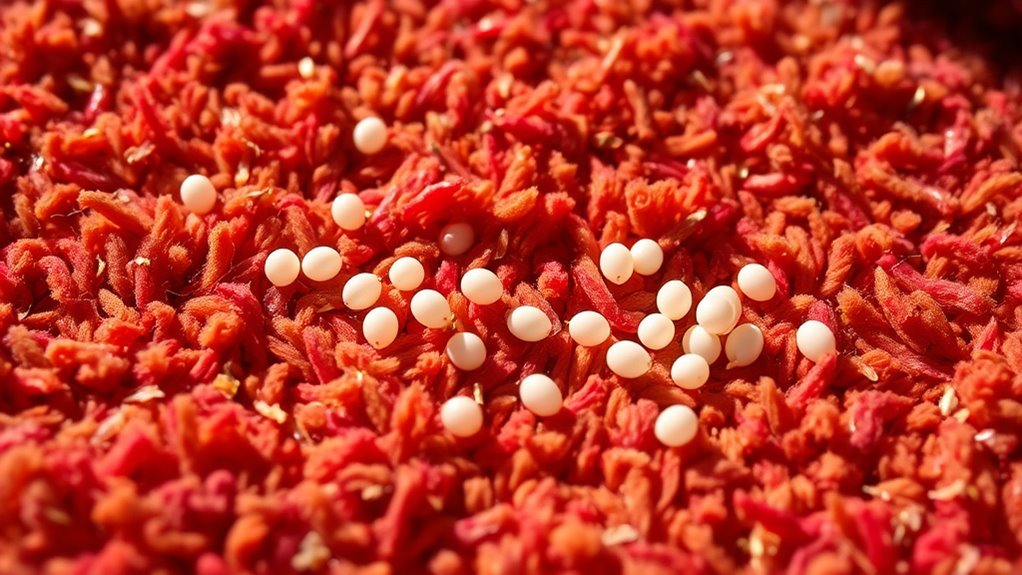
You’ll spot flea eggs on your carpet as tiny, oval, glossy specks about the size of salt grains or dandruff. Flea eggs are off-white to pearly-white and easily fall off your pet into carpet fibers, especially in shaded or high-traffic spots.
They look smooth and non-sticky, unlike dust or debris. If you’re worried about an infestation, knowing what flea eggs look like on carpet is just the start.
Exploring where they hide and how to remove them helps you stay ahead.
What Do Flea Eggs Look Like on Carpet Fibers?

Although flea eggs are tiny—about 0.5 mm and oval-shaped—they’re often mistaken for specks of salt or dandruff on your carpet fibers. These flea eggs are smooth, glossy, and off-white to pearly-white, making them hard to spot at first glance. Because they’re non-sticky, they easily fall off your pets and settle deep within the carpet fibers and pile.
You’ll often find these tiny, oval eggs embedded in the carpet, blending in with the texture. When you shine a flashlight or disturb the carpet, the eggs might catch the light, revealing themselves as small, shiny specks of salt nestled in the fibers. To identify them clearly, you may need to inspect vacuum contents under magnification after cleaning your carpet.
Where Do Flea Eggs Hide in Your Carpet and Home?

Since flea eggs easily fall off your pets, they often settle deep within carpet fibers, especially in high-traffic or shaded spots where your pets like to rest. These eggs hide in dark spots like under furniture, behind baseboards, and beneath cushions. Don’t forget to check bedding and rugs, as flea eggs accumulate there with organic debris.
Their small size and hiding places make them hard to spot without close inspection. Regular vacuuming of carpet fibers, baseboards, and under furniture is essential to remove flea eggs before they hatch. By focusing on these common hiding places and maintaining thorough inspection routines, you reduce the risk of an infestation and keep your home flea-free.
How Can You Tell Flea Eggs Apart From Dust and Debris?

When you inspect your carpet closely, you might mistake flea eggs for ordinary dust or debris because of their small size and shape. However, flea eggs are tiny, oval-shaped, and look like specks of rice, unlike the irregular shapes of dust and debris. Flea eggs have a smooth, glossy surface and feel non-sticky, while dust tends to be powdery or crumbly.
If you place the eggs on a white surface and add water, flea eggs remain white or translucent, helping you distinguish them from dirt. Dust and debris vary in texture and often include pet hair or dirt, making them irregular in appearance. Recognizing these differences helps you identify flea eggs accurately.
How Flea Eggs Lead to Bigger Infestations
If you don’t remove flea eggs from your carpet, you’ll quickly face a growing infestation. Female fleas lay up to 50 eggs daily, which fall off pets and scatter across your carpet. These tiny, oval eggs blend with debris due to their smooth egg appearance, making them easy to miss.
Once eggs hatch within 1-10 days under warm, humid conditions, flea larvae emerge, continuing the flea life cycle. As larvae develop, they fuel the expanding flea population, turning a minor issue into a full carpet infestation. Ignoring eggs on carpet allows the problem to escalate rapidly, making flea control much harder.
Addressing flea eggs early is key to stopping the cycle and preventing a severe infestation from taking hold in your home.
Easy Ways to Remove Flea Eggs From Your Carpet
Ignoring flea eggs on your carpet lets the infestation grow quickly, but you can take straightforward steps to tackle the problem. First, regular vacuuming is essential; a vacuum with a HEPA filter removes up to 95% of flea eggs, larvae, and debris embedded in carpet fibers. Since flea eggs look like tiny off-white specks, thorough vacuuming targets these hidden pests effectively.
Next, use a steam cleaner at 130°F or higher to kill flea eggs deep within the carpet without chemicals. Don’t forget to wash pet bedding and rugs in hot water to eliminate eggs on carpet and fabrics. Combining vacuuming, steam cleaning, and washing pet bedding ensures thorough flea eggs removal to protect your home from infestation.
Frequently Asked Questions
Can You See Flea Eggs on Carpet?
You can’t easily see flea eggs on carpet since they’re tiny and translucent.
But if you use a flashlight or magnifying glass, you’ll spot small white specks hidden in fibers, especially on darker or dense carpets.
What Can Be Mistaken for Flea Eggs?
You might think you’ve spotted flea eggs, but don’t jump to conclusions!
Those tiny white specks could be dandruff, salt crystals, or even carpet fibers.
Look closely—they’re smoother and glossier than most debris you see.
What Kills Flea Eggs Instantly?
You can kill flea eggs instantly by steam cleaning carpets above 160°F, applying diatomaceous earth, or using commercial sprays with ovicides.
Regular vacuuming and insect growth regulators also help stop eggs from hatching effectively.
Does Vacuuming Flea Eggs Kill Them?
No, vacuuming flea eggs doesn’t kill them, but it removes many from your carpet. You should vacuum thoroughly and dispose of contents immediately.
Then use treatments like steam or insect growth regulators to effectively eliminate eggs.
Conclusion
Imagine flea eggs like tiny white grains of sand hiding in your carpet’s fibers, almost invisible but ready to multiply fast—just like seeds scattered by the wind. If you don’t act quickly, those “seeds” will turn into a full-blown flea garden before you know it.
By spotting and removing flea eggs early, you’re stopping the problem at its root, keeping your home comfy and pest-free. Don’t let those tiny invaders take over!
Recognizing what flea eggs look like on carpet is key to effective flea control. Regular inspection and cleaning can help you catch these eggs before they hatch, ensuring a flea-free environment for you and your pets.