What Happens If Dove Eggs Don’t Hatch in the Nest
If dove eggs don’t hatch in the nest, it usually means the embryos didn’t develop properly or the parents abandoned them due to infertility, damage, or neglect.
You might notice the eggs stay cold, look dirty, or smell foul after about two weeks. These signs indicate that the eggs are unlikely to hatch.
Parents sometimes leave the nest for hours or even days but often return to check on the eggs.
If the adults don’t come back, the nest is likely abandoned.
This can be distressing to observe, but it is a natural occurrence in some cases.
There are ways you can safely handle unhatched eggs and even support future nesting success.
Taking careful steps can help encourage the parents to try again or assist other doves in the area.
How to Tell If Dove Eggs Are Abandoned

How can you tell if dove eggs have been abandoned? First, observe the nest closely. If the eggs remain unhatched after 14-16 days, they may be abandoned or non-viable.
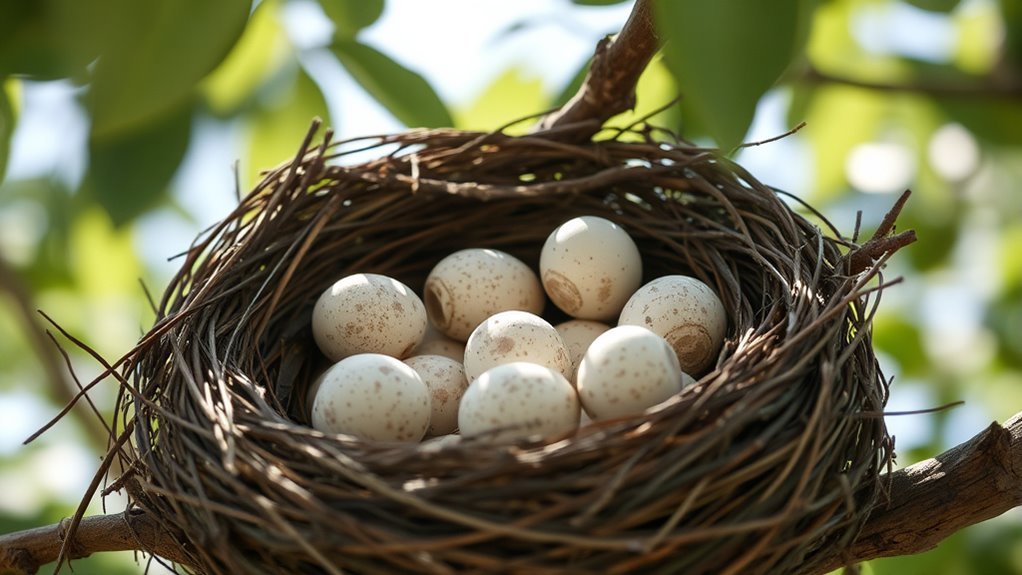
Notice whether the parent birds visit the nest—if they’re consistently absent for hours or days, especially during usual incubation times, it’s a strong sign the eggs are abandoned. Check the eggs themselves; if they look dirty, cracked, or show no movement, they’re likely no longer being incubated.
You can also feel the eggs—if they’re cold or dried out, that’s another indication of abandonment. Finally, a foul smell coming from the eggs confirms they’re no longer viable. By watching these signs, you can determine if dove eggs have truly been abandoned.
Why Don’t Dove Eggs Hatch?

Although dove eggs often hold promise, they don’t always hatch as expected. One main reason is infertility, which becomes more common as the breeding season progresses. Environmental factors like extreme weather, pollution, or chemical exposure also play a role by disrupting incubation.
Physical damage to eggshells or poor nesting conditions can prevent embryos from developing properly. If parents don’t incubate the eggs correctly, the embryos usually perish before hatching.
| Cause | Effect on Hatching |
|---|---|
| Infertility | No embryo development |
| Environmental Stress | Interrupts incubation process |
| Eggshell Damage | Hinders embryo growth |
| Improper Incubation | Embryo death before hatching |
Understanding these factors helps you realize why some dove eggs fail to hatch.
What Happens When Dove Parents Leave Their Eggs

When dove parents leave their eggs, it’s usually due to stress or disturbance, and you might notice the eggs left cold or uncovered.
If you spot signs of neglect like dirt or damage on the eggs, the chances of hatching drop dramatically.
Sometimes, the parents return, but often the nest is abandoned for good once the eggs are no longer viable.
Reasons For Abandonment
If dove parents sense danger or disturbance near their nest, they often abandon their eggs to protect themselves. This abandonment can happen even if the eggs look healthy and ready to hatch.
As you might notice with an abandoned mourning dove’s nest, increased human activity, loud noises, or nearby predators can stress the parents enough to leave. Once the eggs are left unattended, they won’t develop further and usually won’t hatch.
Without warmth and care, the eggs become vulnerable to predators and natural decay. So, when you spot an abandoned mourning dove nest, it’s often due to these environmental pressures that made the parents prioritize their safety over incubation.
Understanding these reasons helps explain why some dove eggs don’t hatch in the nest.
Signs Of Egg Neglect
Since dove parents play an essential role in keeping their eggs warm and protected, leaving them unattended for more than a day usually causes the eggs to become non-viable. You’ll notice signs of egg neglect when the eggs grow cold, develop mold, or emit foul odors.
If you see no cracks or hatching signs after the typical incubation period, it’s a red flag. The eggs may turn white or chalky as the embryo deteriorates, signaling abandonment.
Mourning parents often leave eggs exposed, increasing risks from predators and insects. If the eggs remain unincubated beyond 14-16 days, they’re generally considered abandoned.
At this point, removing them is best to prevent further issues. Recognizing these signs helps you understand what happens when dove parents leave their eggs unattended.
Possible Parental Returns
Noticing unattended eggs can make you wonder whether mourning dove parents will return to care for them. Possible parental returns do happen, especially if the absence is brief. Typically, dove parents leave the eggs unattended for short periods during incubation but return to check and continue warming them.
However, if eggs remain unhatched beyond the usual 14-16 days, the parents might abandon the nest entirely. When parents come back after extended absences, they often inspect the eggs, evaluating their viability. If the eggs show no development, you’ll likely see the parents stop incubating.
Whether they return depends on environmental cues, egg condition, and nest safety. So, while possible parental returns give hope, prolonged neglect usually signals the end of care for the eggs.
Safely Removing Unhatched Dove Eggs
When you confirm a dove nest is inactive—usually after four weeks past the expected hatch date—you can safely remove the unhatched eggs. To do this properly, wear gloves to avoid transferring oils or scents that might deter parent birds if they return. Gently take the unhatched eggs from the nest without disturbing the structure.
Once removed, dispose of the eggs in compost or trash far from the nesting area to prevent attracting predators or insects. Avoid handling eggs before the nest is clearly inactive, as disturbing an active nest can reduce the chances of successful future nesting.
Can You Hatch and Raise Abandoned Dove Chicks?
If you find abandoned dove eggs or chicks, know that hatching and raising them is tricky without the right equipment and experience. Incubators require precise conditions, and hand-rearing demands specialized diets and careful feeding schedules.
While some foster doves might help, their size and needs often make this option difficult.
Challenges Of Hand-Raising
Although hand-raising abandoned dove chicks might seem like a compassionate choice, you’ll quickly realize it demands specialized knowledge and equipment. Dove chicks are tiny and delicate, requiring precise temperature and humidity that natural eggs benefit from in the nest.
Without professional incubators mimicking these conditions, hatching eggs can be difficult. Once hatched, the chicks need a carefully balanced diet, often a specialized formula delivered with a tiny syringe. You must monitor them constantly, as their survival depends on consistent feeding and care.
The process is complex and time-consuming, and even slight mistakes can be fatal. If you find unhatched eggs or abandoned chicks, you should weigh these challenges carefully before attempting hand-raising, as success isn’t guaranteed without expert tools and experience.
Incubation And Foster Options
Since mourning dove eggs need a precise 14-16 day incubation period with controlled temperature and humidity, you’ll require a specialized incubator to successfully hatch abandoned eggs.
Foster care is another option, where ring-neck doves or similar birds can accept and raise the chicks. Hand-raising is possible but challenging due to their delicate nature.
| Aspect | Details | Tips |
|---|---|---|
| Incubation Time | 14-16 days | Monitor temperature & humidity |
| Foster Species | Ring-neck doves, others | Ensure species compatibility |
| Hand-Raising | Difficult, low success rate | Use specialized feeding tools |
If eggs don’t hatch after incubation, remove them to prevent spoilage and allow the parents to re-nest.
Supporting Mourning Doves for Future Nesting
When mourning dove eggs don’t hatch, you can still support the pair’s future nesting efforts by creating a safe, quiet environment that encourages re-nesting. Supporting mourning doves means minimizing disturbances near their nests so the birds feel secure enough to try again. You can also enhance their chances by providing access to calcium-rich foods, which are essential for healthy egg production.
Since mourning doves often lay multiple clutches per breeding season, your efforts help them recover from previous losses. Monitoring nests carefully allows you to spot issues early and, if needed, offer fostering options to boost survival rates. By actively supporting mourning doves this way, you increase the likelihood they’ll successfully hatch eggs in future nesting attempts.
Frequently Asked Questions
What Happens if Dove Eggs Don’t Hatch?
If dove eggs don’t hatch, you’ll notice inactivity after two weeks. You should wait around four weeks before safely removing them to keep the nest clean and prevent pests.
This allows birds to abandon the site naturally.
How Long Will a Dove Sit on an Unhatched Egg?
Like a patient guardian watching over a fading flame, you’ll find doves sitting on unhatched eggs for up to two weeks, hoping for life.
But they’ll leave once hope dims, usually after 14 to 16 days.
What Are the Signs of a Failed Hatch?
You’ll notice uncracked, discolored eggs with mold or slime, no movement or cracks, and dry shells after incubation.
Parents might stop attending the nest, signaling the eggs didn’t hatch successfully.
What Do Birds Do With Unhatched Eggs?
When you see unhatched eggs, birds usually stop incubating them and may remove or abandon them to avoid attracting predators.
Sometimes, the eggs stay in the nest, drying out or getting moldy before the birds leave.
Conclusion
If dove eggs don’t hatch, you’ll want to watch closely, act kindly, and decide wisely. You’ll need to recognize abandonment, consider safe removal, and weigh the chance to nurture chicks yourself.
You’ll protect future nests, respect nature’s timing, and support mourning doves in their cycle of life. By understanding what happens when eggs don’t hatch, you’ll help guarantee these gentle birds thrive, return, and continue their beautiful story of survival and care.