7 Best Pans to Fry Chicken Perfectly
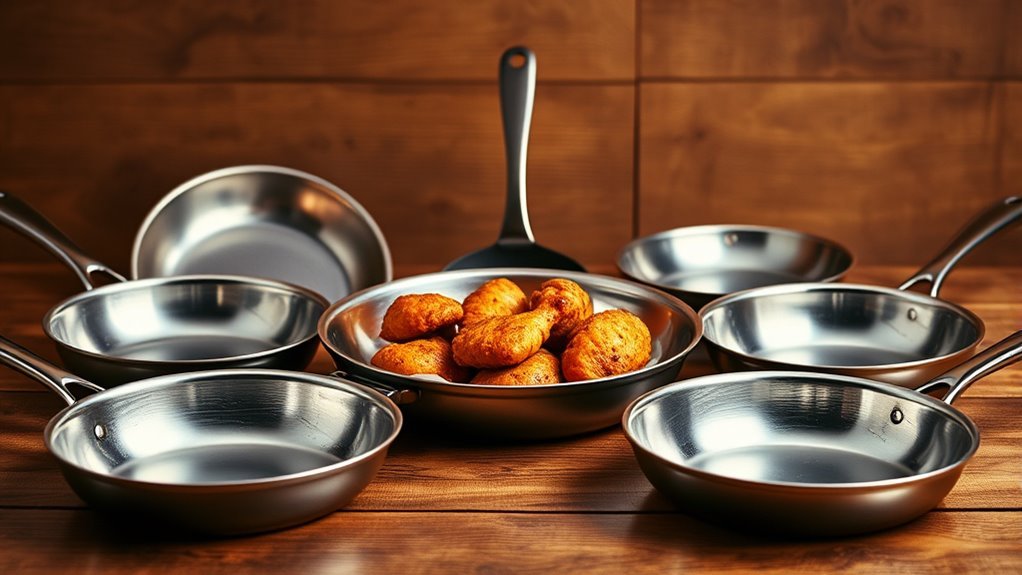
To fry chicken perfectly, choosing the right pan is essential. A wide, shallow pan helps prevent overcrowding and ensures even heat distribution, which is key for a crispy, golden crust.
Cast iron skillets are excellent for heat retention, giving your chicken a deliciously crispy crust. Enameled cast iron pans offer the same even cooking but with easier cleanup.
Stainless steel pans provide precise browning control, allowing for perfectly seared chicken every time. Carbon steel heats up quickly, making it great for faster searing.
For larger batches, deep fryers maintain a steady oil temperature, ensuring consistent frying results.
Interested in mastering your pan choice and frying techniques? Keep exploring to get the best results every time.
How to Choose the Best Pan for Frying Chicken

When you’re frying chicken, choosing the right pan makes all the difference in achieving a crispy, evenly cooked crust. A cast iron skillet excels thanks to its superior heat retention, maintaining steady heat for deep frying and creating that perfect crispy chicken.
Alternatively, a stainless steel pan offers excellent heat control with quick responsiveness, ideal for searing and frying evenly. While pans with a nonstick surface are handy for delicate pieces, they don’t deliver the same deep browning.
Pan size also matters—a wide 10-12 inch skillet with shallow sides helps you avoid overcrowding, letting you fry chicken in a single layer of oil without steaming. Picking the right pan guarantees your chicken fries evenly and crisps up beautifully every time.
Cast Iron Skillets: Heat Retention and Crispy Crusts

Because cast iron skillets retain heat exceptionally well, they create the steady high temperatures you need for frying chicken with a perfectly crispy crust. When properly seasoned, your cast iron skillet develops natural nonstick properties, enhancing browning and searing. The thick walls ensure even heat distribution, eliminating hot spots that cause uneven cooking or burning.
Plus, being oven safe lets you finish frying chicken at a consistent heat for extra crispiness.
| Feature | Benefit |
|---|---|
| Heat Retention | Maintains steady high heat |
| Even Heat Distribution | Prevents hot spots |
| Seasoned Surface | Natural nonstick, better crust |
Using a cast iron skillet ensures crispy crusts and juicy chicken every time.
Enameled Cast Iron: Easy Cleanup and Even Cooking

You’ll appreciate how enameled cast iron combines durable, attractive design with excellent heat distribution for frying chicken evenly. These pans are oven-safe up to 500°F, so you can easily switch from stovetop searing to oven finishing.
Plus, their smooth enamel surface makes cleanup a breeze after cooking.
Durable and Attractive Design
Though traditional cast iron pans require seasoning and careful maintenance, enameled cast iron offers a durable and attractive alternative that makes frying chicken easier. Its robust design ensures even heat distribution, eliminating hot spots and providing consistent cooking results.
You’ll appreciate the easy-to-clean, smooth enamel surface that resists staining without needing seasoning. Plus, the colorful cookware adds great visual appeal to your kitchen, letting you serve directly from stove to table.
Unlike stainless steel or nonstick coating pans, enameled cast iron combines durability with style, making it a versatile choice for any cook.
| Feature | Benefit | Comparison |
|---|---|---|
| Enameled Cast Iron | Even heat distribution | No hot spots |
| Durability | Long-lasting performance | More robust than nonstick |
| Easy to Clean | Stain-resistant surface | No seasoning needed |
| Visual Appeal | Vibrant, colorful look | Stove-to-table ready |
Oven-Safe Heat Distribution
Enameled cast iron pans don’t just look great—they excel in heat distribution, ensuring your fried chicken cooks evenly and browns beautifully. Thanks to their superior heat retention, these pans maintain a steady oil temperature, giving you perfectly crispy fried chicken every time.
Their oven-safe design lets you easily move from stovetop searing to oven roasting without missing a beat, promoting even cooking throughout. The durable cookware’s enamelled cast iron surface also prevents sticking, making cleanup a breeze after frying.
Plus, the enamel coating resists staining and discoloration, so your pan stays in excellent condition for years. If you want a reliable pan that combines easy cleanup with consistent heat distribution, enameled cast iron is a smart choice for frying and finishing your fried chicken in the oven.
Stainless Steel Pans: Crisp, Golden Searing
You’ll love how stainless steel pans give you precise heat control for that perfect, golden sear on your chicken. Preheating the pan and adding enough oil keeps your chicken from sticking while building up a flavorful fond.
That fond is key—it’s what you’ll use to whip up rich, delicious pan sauces right after searing.
Heat Control Precision
When you want crisp, golden chicken skin, stainless steel pans with multi-layer construction deliver unmatched heat control precision. Their layered construction ensures even heat distribution, eliminating hot spots that cause uneven browning. Here’s how you benefit:
- Preheating the pan thoroughly creates a consistent cooking surface, essential for perfect searing.
- Superior heat conduction allows precise temperature control, so you can maintain the ideal heat level.
- The pan’s temperature responsiveness enables quick heat adjustments during cooking for better results.
- A flat, wide surface maximizes contact with the chicken, promoting uniform heat transfer.
With these features, stainless steel pans give you reliable heat control, making it easier to achieve that perfect crispy crust every time.
Fond Formation Benefits
How does a stainless steel pan elevate your chicken’s flavor? It’s all about fond formation—the caramelized bits that develop during searing chicken. Stainless steel pans excel at this because their high heat retention ensures even browning and consistent Maillard reactions, creating that crisp, golden crust you want.
When you sear chicken in a properly heated stainless steel pan, these caramelized bits stick to the surface, locking in rich, savory flavors. Later, you can deglaze the pan with wine or broth, dissolving the fond to craft delicious pan sauces that intensify the dish.
Preheating And Oil
Although stainless steel pans offer excellent heat retention, proper preheating is key to achieving that crisp, golden sear on your chicken. To preheat stainless steel effectively and use oil correctly, follow these steps:
- Preheat the pan over medium-high heat for 2-3 minutes until water droplets sizzle on contact, indicating it’s hot enough.
- Add oil only once the pan is hot; wait until the oil shimmers to ensure it’s at the right temperature.
- Use a thermometer to check the oil temperature, aiming for 350°F to 375°F for ideal browning.
- Avoid overcrowding to maintain hot oil and heat evenly, which helps create a uniform, crisp, golden sear without sogginess.
Mastering preheating and oil control guarantees perfect frying results every time.
Carbon Steel Pans: Quick Heating and Browning
Carbon steel pans heat up in just minutes, making them perfect for frying chicken quickly and efficiently. Their excellent heat conduction ensures even browning without hot spots. As you use your pan, a nonstick patina develops, enhancing searing and browning while creating a naturally slick cooking surface.
These pans handle high temperatures up to 600°F, ideal for crispy, golden chicken skin. Just remember, proper seasoning prevents rust and maintains that prized nonstick layer.
| Feature | Benefit | Tip |
|---|---|---|
| Quick heating | Saves time | Preheat pan 2-3 minutes |
| Even heat conduction | Uniform browning | Avoid overcrowding chicken |
| High temperature | Crispy skin | Use medium-high heat |
| Nonstick patina | Easy release | Season regularly |
| Durable surface | Long-lasting performance | Dry thoroughly after washing |
Deep Fryers vs. Frying Pans: Which Is Best for Chicken?
When choosing the best way to fry chicken, you’ll find that both deep fryers and frying pans have their strengths. Here’s a quick comparison to help you decide:
- Deep fryers maintain consistent oil temperature and feature baskets that prevent overcrowding, ensuring even cooking.
- Frying pans, especially cast iron or stainless steel, require careful heat control and monitoring to avoid overheating oil.
- Deep fryers offer high sides and enclosed lids, reducing splattering and increasing safety during frying.
- Frying pans provide more versatility for different cooking methods but demand attention to oil temperature and technique for crispy chicken.
For large batches and uniform results, deep fryers excel. If you prefer control and versatility with smaller portions, frying pans are your go-to.
Pan Size and Shape: Effects on Fried Chicken Quality
Choosing the right pan size and shape plays a crucial role in achieving perfectly fried chicken. A wide, shallow pan—around 10-12 inches—promotes even cooking by enhancing heat transfer and heat retention, allowing the oil to maintain temperature consistently. This shape also improves airflow around each piece, preventing overcrowding and ensuring a crispy crust.
On the other hand, deep pans trap steam, which can soften the crust despite minimizing oil spatter. Smaller pans restrict space, causing uneven cooking and soggy spots due to overcrowding. So, selecting a pan with the right size and shape helps you optimize crust browning, crispiness, and even cooking.
In short, a wide, shallow skillet is your best bet for frying chicken with a golden, crunchy exterior every time.
Frequently Asked Questions
What Is the Best Type of Pan to Fry Chicken In?
You’ll want to use a cast iron skillet to fry chicken perfectly. It holds and distributes heat evenly, creating a crispy crust.
Make sure your pan is wide enough to avoid overcrowding and steaming the chicken.
Is It Better to Fry Chicken in Cast Iron or Stainless Steel?
When it comes to frying chicken, cast iron steals the show with its heat-holding magic, giving you a crispy, golden crust.
Stainless steel’s quick heating helps, but cast iron’s steady warmth wins your chicken’s heart every time.
How to Pan Fry Chicken Without Making It Tough?
You’ll avoid tough chicken by cooking it over medium heat, not overcrowding the pan, and preheating your oil for a good sear.
Let the chicken rest after frying to keep it juicy and tender.
Is It Better to Fry in Stainless Steel or Nonstick?
You’ll want to fry chicken in stainless steel for a crisp, evenly browned crust since it handles high heat better.
Nonstick pans are easier for gentle cooking but don’t achieve the same sear quality.
Conclusion
Choosing the perfect pan is like finding the key to a golden, crispy treasure. Whether you crave the sturdy embrace of cast iron or the quick heat of carbon steel, your chicken deserves the best stage to shine.
Remember, the right pan doesn’t just cook—it transforms each bite into a symphony of crunch and flavor. So grab your favorite skillet, and let your kitchen become a haven where fried chicken dreams come alive.
With the best pans to fry chicken perfectly, you can achieve that irresistible crispy crust and juicy interior every time. Invest in quality cookware, and elevate your fried chicken to restaurant-worthy deliciousness.