3 Key Differences Between Duck Eggs and Chicken Eggs
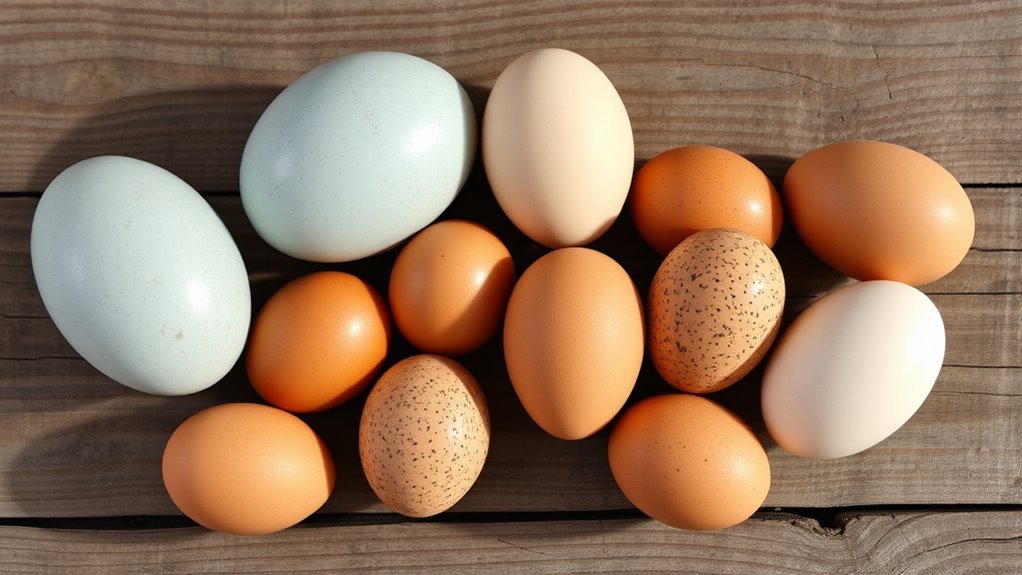
You’ll notice duck eggs are bigger, with thicker shells and a wider range of colors compared to chicken eggs.
Nutritionally, duck eggs pack more fat, protein, and cholesterol, making them richer and more calorie-dense.
Taste-wise, they have a stronger, creamier flavor that changes how you cook and bake—often needing longer, gentler cooking.
If you want to experiment with their unique qualities, exploring these differences deeper could really enhance your kitchen skills.
Understanding the key differences between duck eggs and chicken eggs can open new culinary possibilities and improve your recipes.
Duck Vs. Chicken Eggs: Size and Appearance

How do duck eggs compare to chicken eggs in size and appearance? Duck eggs are noticeably larger, typically 50–100% bigger, weighing around 3.5 ounces compared to chicken eggs’ 2.5 ounces. This size difference means duck eggs have a yolk nearly twice as large, with a richer golden orange color.
When you look at the shell, duck eggs offer more variety in color—white, gray, green, brown, speckled, and even black—unlike chicken eggs, which usually come in uniform white or brown. The shell thickness is another key difference; duck eggs have thicker, more durable shells that require more force to crack.
Additionally, the egg white in duck eggs is clearer and less runny, contributing to their unique appearance and texture compared to chicken eggs.
What’s the Nutritional Difference Between Duck and Chicken Eggs?

Beyond their size and appearance, duck and chicken eggs differ markedly in nutritional content. Duck eggs, being a larger egg, contain more calories and a higher fat content than chicken eggs. You’ll find duck eggs pack about 18.5 grams of fat per 100 grams compared to 11 grams in chicken eggs.
Their egg yolks are richer in protein and cholesterol—offering roughly 12 grams of protein and 276% of your daily cholesterol value, versus 10 grams and 92% in chicken eggs. When you make a dietary comparison, duck eggs also provide more vitamins and minerals, including vitamin B12, folate, iron, and omega-3 fatty acids.
How Do Duck and Chicken Eggs Differ in Taste and Cooking?

Although duck eggs share similarities with chicken eggs, their taste and cooking qualities stand out distinctly. You’ll notice duck eggs have a richer, more intense flavor, often described as gamy or savory. When cooking, their larger yolks and higher fat content affect texture and moisture, especially in baking.
Consider these key differences:
- Duck eggs produce creamier, fluffier baked goods due to richer yolks.
- You’ll need longer cooking times and lower heat to avoid burning egg whites.
- Frying or scrambling duck eggs yields a thicker, more substantial texture.
- One duck egg can replace two chicken eggs for enhanced richness but may require recipe adjustments.
Frequently Asked Questions
Are Duck Eggs Better for You Than Chicken Eggs?
Duck eggs aren’t necessarily better for you; they have more nutrients but also much higher cholesterol and fat.
If you’re watching heart health or fat intake, chicken eggs are usually the safer, healthier choice for you.
How to Differentiate Duck Eggs From Chicken Eggs?
You might think all eggs look alike, but you’ll spot duck eggs by their larger size, thicker shells, and vibrant colors like blue or green.
Crack one open, and you’ll see a deep orange yolk, too.
Why Do Chefs Prefer Duck Eggs?
You prefer duck eggs because their richer yolks and higher fat content make your baked goods fluffier and more flavorful. Their thicker shells also keep them fresh longer, giving you reliability and enhanced taste in your dishes.
Why Aren’t Duck Eggs More Popular?
You don’t choose duck eggs often because they cost more, taste stronger, crack harder, and feel unfamiliar.
You prefer convenience, mild flavor, ease, and tradition—so chicken eggs win your daily breakfast routine every time.
Conclusion
When you compare duck and chicken eggs, you might’ve heard duck eggs are always better nutritionally or tastier. While duck eggs do pack more protein and fat, it’s not a clear-cut win for everyone—it really depends on your taste and cooking style.
So, don’t just assume duck eggs are superior; try both yourself. That way, you’ll discover which one truly fits your kitchen and palate best.
In conclusion, understanding the key differences between duck eggs and chicken eggs helps you make an informed choice. Whether you prioritize nutrition, flavor, or cooking versatility, testing both types will guide you to the perfect egg for your needs.