What Sizes Do Shower Pans Come In?
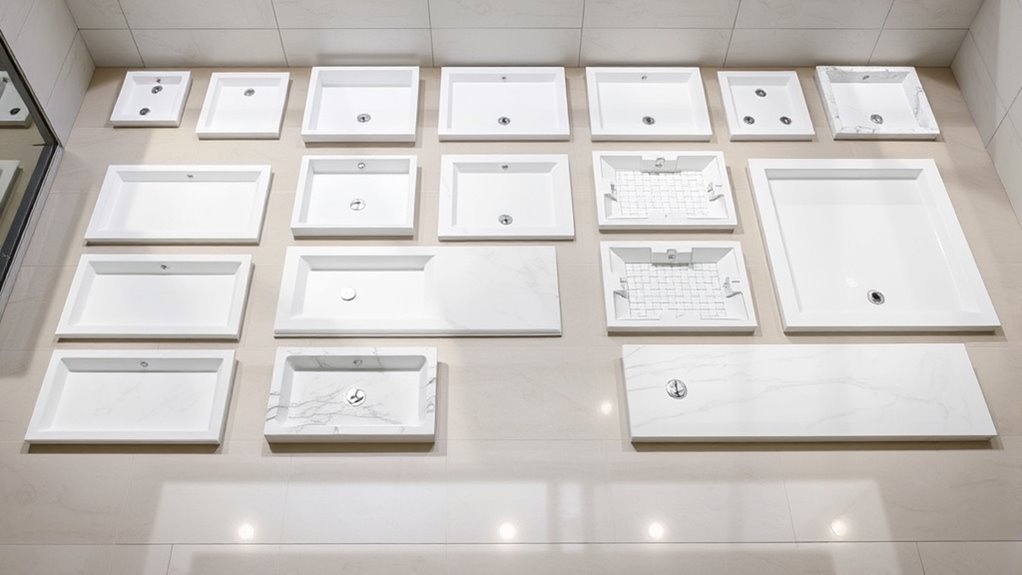
Shower pans come in a variety of sizes to accommodate different bathroom layouts and styles. Common dimensions range from compact 30×30 inches to roomy 60×60 inches, making it easier to find the right fit for your space. Popular square sizes like 36×36 inches are ideal for smaller bathrooms.
Rectangular pans, such as 36×60 inches, are perfect for tub-to-shower conversions, offering a practical solution without major remodeling.
Corner neo-angle shower pans save space while adding a stylish touch to your bathroom design.
When choosing a shower pan, consider important factors like drain placement and threshold height, as these affect both fit and usability.
Additionally, explore various material options and custom sizes to find the perfect shower pan that matches your bathroom’s unique dimensions.
What Are Standard Shower Pan Sizes and Dimensions

When choosing a shower pan, you’ll find standard sizes typically range from 30×30 inches to 60×60 inches, fitting most bathroom layouts. Square shower pans often come in 30×30, 36×36, or 42×42 inches, perfect for small to medium bathrooms.
If you prefer a rectangular shower, common sizes include 36×60 or 48×36 inches, ideal for walk-in designs. These standard shower pan dimensions cover most needs, but if your space is unique, custom sizes are available, reaching up to 95 inches wide by 60 inches deep.
Whether you want a standard shower pan or a custom fit, these size options ensure you can find something that suits your bathroom without compromising style or function.
Square Shower Pan Sizes for Small Bathrooms

Choosing the right square shower pan size can make a big difference in a small bathroom’s functionality and comfort. Square shower pans for small bathrooms typically come in standard sizes ranging from 30×30 inches to 42×42 inches. The 36×36-inch pan is the most common choice, striking a balance between space-saving and usability.
If you have very tight quarters, a 30×30-inch pan works well, especially in guest bathrooms. Corner shower pans designed in square shapes are perfect for maximizing limited space without sacrificing style or convenience. When selecting shower base sizes, focus on fitting your layout while ensuring enough room to move comfortably.
Sticking to these standard sizes helps you avoid costly custom options while optimizing your small bathroom’s shower area.
Rectangular Shower Pan Sizes for Tub-to-Shower Conversions

When converting a tub to a shower, choosing the right rectangular shower pan size is key to maximizing your space. Common dimensions like 36×60 inches or 48×36 inches offer both comfort and flexibility.
Make sure to measure carefully and consider drain placement to optimize your bathroom layout.
Common Rectangular Dimensions
Several common rectangular shower pan sizes fit tub-to-shower conversions, such as 48 x 30 inches and 60 x 30 inches. Rectangular shower pans typically come in standard sizes but can also be custom sizes to match your bathroom’s layout.
Most dimensions range from 42 x 32 inches to 60 x 42 inches, often featuring a center drain to simplify plumbing adjustments. Here’s a quick look at popular sizes:
| Width (inches) | Length (inches) | Drain Position |
|---|---|---|
| 48 | 30 | Center |
| 60 | 30 | Side or Center |
| 48 | 36 | Center |
| 42 | 32 | Side |
Choosing the right size guarantees a smooth tub-to-shower conversion with suitable space and drainage.
Benefits For Conversions
Although converting a bathtub into a shower can seem intimidating, rectangular shower pans sized around 36×60 inches make the process straightforward and efficient. These standard sizes align well with typical tub dimensions, allowing for a smooth swap without major remodeling.
If you need more space or improved accessibility, larger rectangular shower pans, like 48×60 inches, offer extra room for comfort and ease of movement. For unique bathroom layouts, custom rectangular pans can be crafted to fit perfectly, ensuring your tub-to-shower conversion looks seamless.
Additionally, many rectangular pans feature integrated drains and low thresholds, which enhance safety and accessibility, making your new shower both practical and user-friendly. Choosing the right rectangular shower pan simplifies your conversion and improves your daily routine.
Space Optimization Tips
To optimize space during your tub-to-shower conversion, you’ll want to carefully measure your bathroom and existing bathtub before selecting a rectangular shower pan.
Rectangular pans come in standard shower sizes, typically ranging from 30 to 60 inches wide and 32 to 60 inches deep, offering flexibility for space optimization. Larger pans, like 48×36 or 60×30 inches, maximize usable area, ideal for walk-in showers.
If your bathroom’s layout is unique, custom sizes up to 95 inches wide and 60 inches deep can be made to ensure a perfect fit. Accurate measurements guarantee smooth installation and a functional space, balancing accessibility and style.
Choosing the right rectangular shower pan size is key to transforming your tub area efficiently without wasting any valuable space.
Making the Most of Corners With Neo-Angle Shower Bases
When you want to maximize your bathroom’s layout, neo-angle shower bases offer a smart solution by fitting neatly into corners. These corner shower bases typically come in sizes ranging from 36×36 to 48×48 inches, designed with a 135° front angle that suits small or oddly shaped spaces.
A neo-angle shower base not only saves space but also adds a stylish touch to your bathroom with its modern design. The space-saving shape allows you to use corners efficiently without sacrificing comfort. Plus, the drain placement—usually centered or near the corner—is optimized for effective water flow, keeping your shower functional and clean.
Choosing a neo-angle base makes the most of your bathroom corners while enhancing both style and practicality.
How Threshold Height and Drain Placement Impact Installation and Usability
Since threshold height and drain placement directly affect how your shower functions and fits, you’ll want to contemplate both carefully during installation. Threshold height typically ranges from 1 to 6 inches, and choosing one under 2 inches improves accessibility, making entry easier and safer.
Drain placement—whether centered, left, or right—impacts the shape and size of your shower pan, so precise measurements are essential to match shower pan sizes and avoid water pooling. Proper drain placement ensures effective drainage and prevents leaks, boosting usability.
Customizing these features during installation not only enhances safety but also ensures your shower works seamlessly with doors or curbless designs. Paying attention here helps you create a shower space that’s functional, accessible, and tailored to your needs.
Walk-In Shower Pan Sizes for Easy Accessibility
Adjusting threshold height and drain placement sets the stage for choosing the right walk-in shower pan size that fits your space and accessibility needs. Walk-in shower pans come in various shower pan sizes to match your bathroom and mobility requirements. Low threshold heights, typically between 1 to 4 inches, enhance accessibility, especially in custom shower designs.
Below is a quick guide to common sizes and features:
| Size (inches) | Accessibility | Threshold Height (inches) |
|---|---|---|
| 30 x 30 | Compact, limited space | 1 – 3 |
| 36 x 36 | Balanced, easy access | 1 – 3 |
| 48 x 60 | Spacious, mobility aid | 1 – 4 |
| Custom up to 95 x 60 | Tailored fit | 1 – 4 |
Pick a shower pan size that balances comfort with your bathroom layout for best results.
What to Do When Standard Shower Pans Don’t Fit Your Space
If standard shower pans don’t fit your space, you’ll need to explore custom options to guarantee a perfect fit. Many manufacturers offer custom sizes up to 95 inches wide by 60 inches deep, ideal for non-standard spaces. Before installation, measure precisely after demolition to ensure the new pan will fit perfectly.
You can order cut-to-size pans made from mortar, tile, or solid surfaces tailored to your bathroom’s unique layout. Hiring professional installers can help modify existing pans or create custom-fit solutions, ensuring a seamless installation. While custom sizes often cost more, they prevent awkward gaps and water issues by fitting your space exactly.
Taking these steps ensures your shower pan complements your bathroom without compromising function or style.
Shower Pan Materials and Their Impact on Size Choices
When custom sizing your shower pan, the material you choose plays a big role in what dimensions you can achieve and how easy the installation will be. Shower pan materials like acrylic and fiberglass are lightweight and flexible, offering size options from 30×30 inches up to 60×60 inches. You can even trim them to fit unusual spaces.
On the other hand, solid surface pans, such as those made from DuPont Corian, provide extensive size options and over 100 color choices since they can be custom fabricated to your exact dimensions. However, thicker and heavier materials limit easy modifications. Understanding how each material affects thickness, weight, and cut-ability helps you select the right shower pan that fits your bathroom perfectly and simplifies installation.
Measuring Your Bathroom for the Right Shower Pan
Although selecting the right shower pan material is important, accurately measuring your bathroom space sets the foundation for a proper fit. Start by measuring the width and depth from wall to wall to find the maximum shower pan size.
Next, confirm drain placement by checking its distance from walls. Don’t forget to verify rough-in dimensions, including stud-to-stud measurements, to ensure compatibility with existing framing.
Also, consider the threshold height and any obstructions like plumbing or floor joists.
| Measurement Type | What to Check | Why It Matters |
|---|---|---|
| Bathroom Space | Width & depth | Determines max pan size |
| Drain Placement | Distance from walls | Ensures proper drain alignment |
| Rough-in Dimensions | Stud-to-stud spacing | Fits existing framing |
| Threshold Height | Height from floor | Accessibility & aesthetics |
| Obstructions | Joists, plumbing | Affects pan shape & size |
Frequently Asked Questions
What Is the Standard Size of a Shower Pan?
The standard size of a shower pan is typically 60 by 30 inches. You’ll find smaller options, like 30 by 30 inches, or ADA-compliant pans at 36 by 36 inches, perfect depending on your bathroom needs.
What Are Standard Shower Tray Sizes?
Standard shower tray sizes range like puzzle pieces from 30×30 to 42×42 inches for squares, 60×30 for rectangles, and 32×32 to 36×36 for corners.
You’ll find options fitting most bathroom layouts easily.
What Is the Difference Between a Shower Pan and a Shower Base?
You’ll find the shower pan is the thin waterproof layer preventing leaks, while the shower base is the solid, preformed structure supporting the pan and shower floor.
They work together but serve different roles in your shower setup.
Can You Put a Shower Pan Directly on Plywood?
You shouldn’t put a shower pan directly on plywood—it risks leaks and damage.
Instead, you need a waterproof membrane or cement board beneath it to safeguard the subfloor and ensure your shower stays dry and sturdy for years.
Conclusion
Now that you know the common shower pan sizes and how factors like shape, threshold height, and drain placement affect your options, you’re better equipped to pick the perfect fit. Don’t stress if standard pans don’t match your space—custom or alternative designs can work wonders.
Measuring carefully and considering materials will help you avoid surprises. With the right info, you can confidently choose a shower pan that combines style, function, and comfort in your bathroom.
When selecting shower pans sizes, remember that the right dimensions ensure proper drainage and prevent water damage. Whether standard or custom, choosing the appropriate shower pan size is key to a successful bathroom remodel.