What to Feed Quail for Laying Eggs How to Guide
To help your quail lay healthy eggs, feeding them the right diet is essential. What to feed quail for laying eggs includes a balanced diet with 17-20% protein and plenty of calcium, such as crushed oyster shells, to ensure strong eggshells.
Use starter feed for chicks up to 8 weeks old, then switch to adult layer feed to meet their nutritional needs. Avoid overfeeding protein or making sudden diet changes, as these can reduce egg production.
Offering fresh greens and treats can boost their overall nutrition. Adjusting their feed during molting and seasonal changes supports their health and egg-laying consistency.
Keep their diet steady and balanced, and you’ll see better, more regular egg laying. Learn how to fine-tune their feeding routine for ideal results and healthier quail.
How Much Protein Do Quail Need to Lay Eggs?

Although young quail need a higher protein diet of 28-30% for proper growth during their first 6-8 weeks, you should provide adult laying quail with 17-20% protein to support consistent egg production. Feeding quail feed with protein levels above 22% can stress mature quail and reduce their laying efficiency.
To keep your quail healthy and productive, transition them to a balanced layer feed containing around 20% protein. This protein range, combined with adequate calcium supplementation like oyster shells, helps maintain strong eggshells and overall egg quality.
Feeding Quail Chicks Vs Adult Egg Layers

When you raise quail, understanding the differences between feeding chicks and adult egg layers is essential for their health and productivity. Quail chicks need a high-protein starter feed, around 28-30%, usually in mash or crumble form, to support rapid growth during their first 6-8 weeks.
Once they reach 6-8 weeks, you should gradually shift their feed to suit adult quail. Adult egg-laying quail require a lower protein feed, about 17-20%, with added calcium like oyster shell supplements to strengthen eggshells.
Feeding quail correctly at each stage ensures healthy development and maximizes laying performance. By adjusting their diet from high-protein starter feed for chicks to calcium-rich layer feed for adults, you support both growth and consistent egg production effectively.
Best Commercial Feeds for Egg-Laying Quail

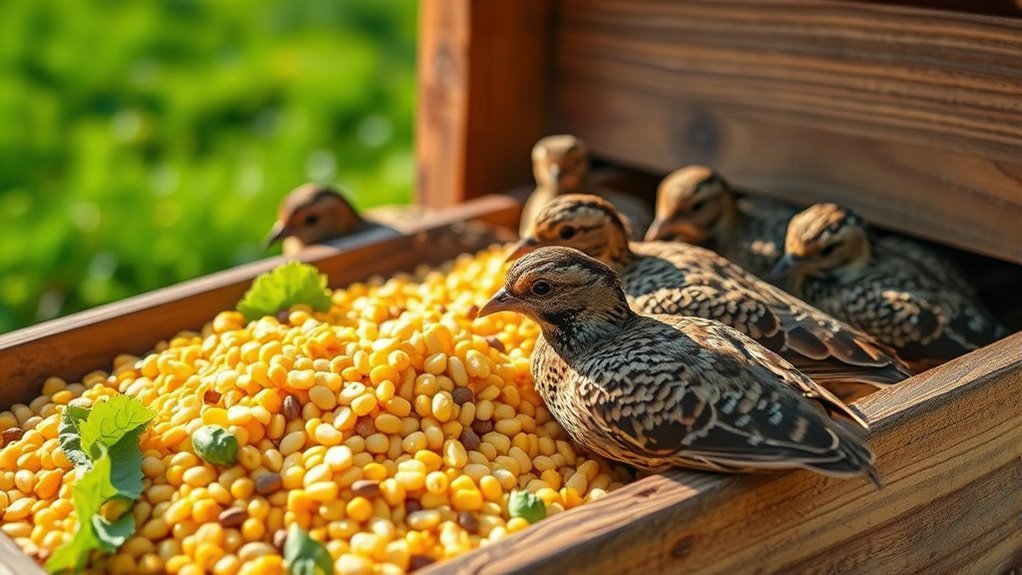
If you want to keep your quail laying consistently, choosing the right commercial feed is essential. Look for quail feed with 17-20% protein and added calcium, like oyster shell, to support healthy laying eggs. Many people use chicken layer feed labeled for laying poultry, as it provides balanced nutrients tailored for egg production.
Popular options include Purina Game Bird Layer Mini Pellets and Big F Feeds Allway Kernels 20%, both formulated to promote strong shells and overall health.
| Brand | Protein Content | Special Features |
|---|---|---|
| Purina Game Bird | 18% | Mini pellets, oyster shell added |
| Big F Feeds Allway | 20% | Kernels, contains oyster shell |
| Generic Chicken Layer | 17-20% | Balanced for laying eggs |
Check availability locally or order online to keep your flock productive.
How to Add Calcium Supplements for Stronger Quail Eggshells
To strengthen your quail’s eggshells, you’ll need to add a reliable calcium supplement to their diet. Crushed oyster shells are a popular natural choice that provides essential calcium for strong eggshell formation. Offer calcium supplements separately from their regular feed to ensure your quail consume enough.
Make sure the crushed oyster is finely ground to help your birds ingest and absorb it easily. Monitor eggshell quality regularly—thin or weak shells often signal a calcium deficiency. Provide these supplements consistently, especially during peak laying periods, to maintain excellent eggshell strength.
Best Treats and Greens to Boost Quail Nutrition
You can boost your quail’s nutrition by offering safe greens like spinach, kale, and dandelion leaves. Adding nutritious treats such as chopped parsley, cilantro, or cooked peas will enrich their diet without causing harm.
Just remember to avoid iceberg lettuce and processed greens, since they provide little benefit and may upset digestion.
Safe Greens For Quail
Although quail can eat a variety of greens, choosing safe options like spinach, kale, dandelion, and collard greens will give your birds essential vitamins and minerals that support their health and egg production. These safe greens are rich in calcium, iron, and vitamin A, all indispensable for strong quail eggs and overall vitality.
Avoid feeding lettuce or iceberg lettuce, as they have little nutritional value and may cause digestive problems. Offer fresh, chopped greens in moderation to keep their diet balanced and prevent spoilage. You can also let your quail forage on pesticide-free greens to add variety and enrichment.
Including these greens in your quail’s balanced diet will help maintain their health and boost their egg-laying performance.
Nutritious Treat Options
When you include nutritious treats like fresh greens, mealworms, and chopped vegetables in your quail’s diet, you’ll see a noticeable boost in their health and egg production. These treats enrich their quail diet, supporting vigor and stronger egg production.
Here are some of the best options:
- Fresh greens such as spinach, kale, and dandelion greens for essential vitamins and minerals.
- Small portions of mealworms or cooked scrambled eggs to provide extra protein.
- Chopped vegetables like carrots, peas, and bell peppers to enhance overall nutrition.
- Millet or cracked grains to encourage natural foraging behavior and add variety.
Avoid processed, salty, or sugary snacks, as they can harm health and reduce egg production. Stick to these nutritious treats to keep your quail healthy and laying consistently.
Adjusting Quail Feed for Molt and Seasons
As the seasons change and your quail enter molt, you’ll need to adjust their feed to meet new nutritional demands. Increasing protein to 20-22% supports feather regrowth and keeps egg production steady.
Don’t forget to tweak lighting and add supplements like calcium to maintain overall health and laying quality.
Seasonal Nutritional Changes
How should you adjust your quail’s diet to meet their changing needs throughout the seasons? Seasonal changes affect egg production, so you need to adapt their feed carefully. Here’s how:
- Increase calcium supplementation, like crushed oyster shells, especially when natural foraging drops in colder months.
- Adjust protein levels to support feather regrowth during molting, but avoid sudden changes to prevent digestive issues.
- Provide supplemental lighting of 14-16 hours daily in winter to maintain consistent egg production despite shorter days.
- Focus on overall health and stress reduction in fall and winter when quail may pause laying due to reduced daylight.
Managing Molt Feeding
Although molting can temporarily slow egg production, you should boost your quail’s diet with higher protein—around 20-22%—to support feather regrowth and overall recovery. During this molt phase, switch to a high protein feed that provides essential nutrients and vitamins to reduce stress and encourage faster feather replacement.
Don’t forget to add crushed oyster shell to their diet; the extra calcium strengthens new feathers and helps maintain eggshell quality once they resume laying. As seasons shift, supplement their feed with fresh greens and natural treats to keep their nutrition balanced.
While reducing light exposure can help signal rest during molt, maintaining a consistent, nutrient-rich diet is key to ensuring your quail stay healthy and recover efficiently throughout this demanding period.
Adjusting Protein Levels
When you adjust protein levels in your quail’s feed, you help them cope better with molting and seasonal changes. Proper protein management supports feather regrowth and maintains egg production.
Here’s how to fine-tune their diet:
- During molting, reduce protein levels to 16-18% to promote healthy feather development and reduce stress.
- Avoid high protein feeds above 22% during molt, as they can hinder feather regrowth and upset digestion.
- In winter or low-light seasons, increase protein slightly to 18-20% to sustain energy and egg production.
- Gradually adjust protein levels over a week when shifting in or out of molt to prevent digestive issues.
Feeding Mistakes That Reduce Quail Egg Laying
If you want your quail to lay consistently, you need to avoid common feeding mistakes that disrupt their nutrition and health. Overfeeding protein above 22% can cause reduced egg production and harm their well-being. Also, don’t neglect calcium sources like oyster shells, or you’ll face thin shells and poor egg quality.
Abruptly switching feed types stresses your birds, interrupting their quail laying cycle. Feeding starter feed past 8 weeks leads to nutritional imbalances that cut laying performance. Finally, offering too many treats or table scraps dilutes essential nutrients, undermining consistent egg production.
Focus on balanced feeding to keep your quail healthy and laying regularly. Avoid these pitfalls to ensure your flock produces eggs reliably and with good quality.
Why Consistent Feeding Supports Healthy Quail Egg Laying
Because consistent feeding provides a balanced diet with the right protein and calcium levels, you’ll see healthier quail and better egg production. Maintaining consistent feeding routines ensures your quail get the nutrition they need without interruption.
Here’s why consistent feeding supports healthy quail egg laying:
- It delivers 17-20% protein and adequate calcium essential for ideal egg production.
- It prevents nutritional deficiencies that cause decreased laying or thin shells.
- It reduces stress by providing steady access to quality feed, supporting reproductive health.
- It sustains hormone levels necessary for continuous egg production and stable laying cycles.
Avoid abrupt changes or irregular feeding, as they disrupt nutrition and diminish overall egg yield. Consistent feeding is key to maximizing your quail’s egg production and health.
Frequently Asked Questions
How Many Quail Eggs per Day?
You can expect your healthy adult quail to lay about one egg per day. Keep in mind, factors like age, breed, diet, and light exposure affect production, so some days might yield fewer eggs.
How Do I Encourage My Quail to Lay Eggs?
You encourage your quail to lay eggs by providing 16-20% protein feed, enough calcium, 14-16 hours of light daily, a low-stress environment, clean water, and occasional treats like greens or mealworms to boost their health.
Ensuring their living space is comfortable and secure also helps maintain their laying routine. Regularly cleaning their habitat prevents disease and promotes overall well-being, which can positively influence egg production.
How Long Does It Take for Quail to Lay Eggs?
Quail usually start laying eggs around 6 to 8 weeks old. You’ll notice most reach full laying capacity by 8 to 10 weeks, especially if you provide proper care, nutrition, and a comfortable environment.
What Should You Not Feed Quail?
You shouldn’t feed quail large amounts of sunflower seeds, processed human foods high in salt or sugar, moldy feed, avocado, or plants treated with pesticides.
These can cause nutritional imbalances, poisoning, or toxicity in your birds.
Conclusion
To keep your quail consistently clucking and creating, carefully consider their essential calcium and protein needs. Combine commercial feeds with crunchy calcium supplements and colorful, nutrient-rich treats to boost both bird health and beautiful, bountiful eggs.
Avoid avoidable feeding failures by adjusting diets during molts and seasons, ensuring steady, strong support. Remember, regular, reliable rations result in radiant, robust quail egg laying—so feed with focus and foster flourishing flocks every day!
Providing the right balance of nutrients is key to optimal quail egg production. Proper attention to diet helps maintain healthy birds and maximizes egg yield. Feeding quail for laying eggs requires consistency, quality feed, and thoughtful supplementation.