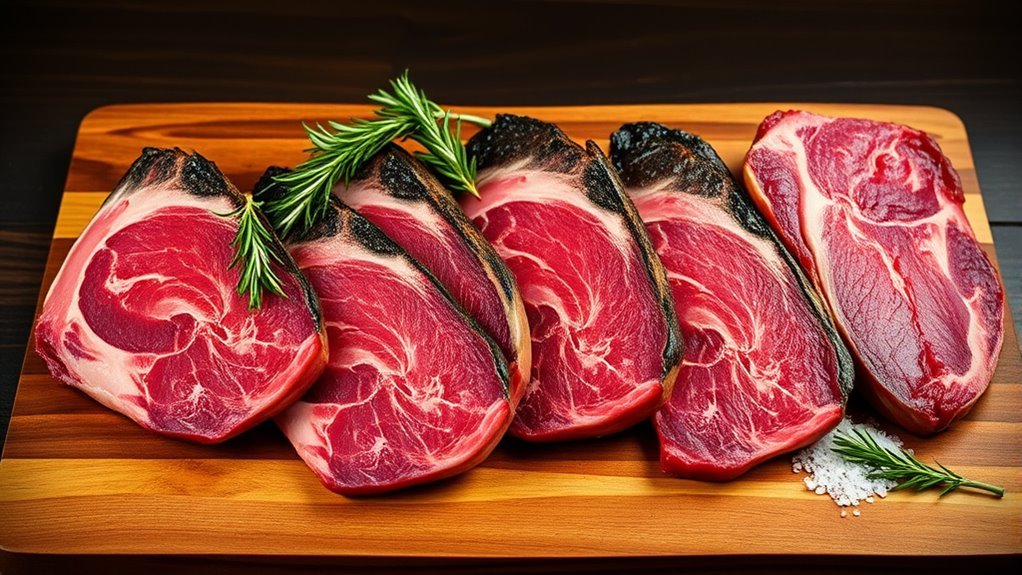
Which Beef Cuts Are the Most Tender?
You’ll find the most tender beef cuts come from muscles that do the least work, like the filet mignon (tenderloin), ribeye cap, and flat iron. These cuts have less connective tissue and more marbling, which keeps the meat soft and juicy.
Genetics and aging also boost tenderness, while cooking methods preserve it.
If you want to master choosing and preparing the best tender cuts, there’s plenty more to uncover about what makes steak so soft and delicious. Understanding the science behind tenderness can help you select the perfect beef cuts for any meal.
Key Factors That Determine Beef Tenderness

When you choose a beef cut, understanding the muscle’s role during the animal’s life can help you predict its tenderness. Muscles that do less work have less connective tissue, making them naturally softer. On the other hand, muscles that bear weight or get frequent exercise contain more collagen-rich connective tissue, which can make the meat tougher.
Marbling—the intramuscular fat—also plays a key role by lubricating muscle fibers as you cook, boosting tenderness and juiciness. Cuts with good marbling will usually feel more tender and flavorful. Additionally, aging processes like dry-aging or wet-aging break down muscle fibers and connective tissue, further improving tenderness.
Which Beef Muscles Are the Most Tender

Understanding the role different muscles play in an animal’s daily movement helps you identify which cuts offer the most tenderness. The most tender beef muscles, like the psoas major that forms the tenderloin, experience minimal exercise, making them naturally soft. Muscles along the spine, such as those in the tenderloin and ribeye, are less active, contributing to their superior tenderness.
You’ll also find muscles like the infraspinatus and teres major produce tender beef cuts because they’re used less during movement. Tenderness relates directly to the amount of connective tissue—less connective tissue means more tender meat. While breed, aging, and handling affect tenderness, focusing on these specific muscles helps you choose the best beef cuts for a tender, enjoyable meal every time.
Top 7 Most Tender Beef Cuts

You’ll find the top seven most tender beef cuts ranked by decades of scientific testing, including your favorites like Filet Mignon and Ribeye. Each cut has unique traits that balance tenderness, flavor, and juiciness, making your steak choice easier.
Notice how Ribeye stands out with its dual muscle components, showing up twice on the list for good reason.
Scientific Tenderness Rankings
Which beef cuts truly stand out for their tenderness? Scientific tenderness rankings, based on 60 years of research, provide a clear answer. These rankings rely on objective shear force measurements and sensory evaluations by trained tasters, giving you data-driven insight into the most tender beef cuts.
Here are the top 7 tender beef cuts:
- Filet Mignon: The most tender, with minimal muscle activity
- Ribeye Cap & Ribeye: Both appear separately due to multiple muscles
- Flat Iron, Denver, Vegas Strip, Petite Tender: Also top contenders
Characteristics Of Top Cuts
Although all cuts of beef offer unique flavors, the top seven most tender cuts stand out because they come from muscles that see little exercise and contain low amounts of connective tissue.
When you choose cuts like Filet Mignon, Ribeye Cap, or Petite Tender, you’re selecting tenderness perfected by nature. Filet Mignon, from the psoas major muscle, is the most tender cut due to its minimal use.
Ribeye and Ribeye Cap combine tenderness with rich marbling, enhancing flavor and juiciness. Even cuts like Flat Iron and Denver surprise you with their tender texture despite coming from more active muscles, thanks to their unique muscle structure and fat distribution.
These cuts melt in your mouth, making every bite effortlessly enjoyable.
Ribeye’s Unique Duality
Because the ribeye includes multiple muscles with distinct tenderness profiles, it appears twice on the list of top tender beef cuts. This duality makes the ribeye a standout choice for anyone who loves rich flavor and melt-in-your-mouth texture.
The main muscle, multifidus dorsi, offers a tender, juicy bite packed with bold beefy taste. Meanwhile, the ribeye cap, or spinalis dorsi, delivers an even more tender, buttery experience that many consider the most prized part of the cut.
Here’s what sets ribeye’s duality apart:
- Multifidus dorsi: tender, flavorful, ideal for classic steak
- Spinalis dorsi (ribeye cap): exceptionally tender, rich, melt-in-your-mouth
- Combined in one cut: two distinct textures and flavors for a unique eating experience
This ribeye duality guarantees satisfaction in every bite.
How Cattle Breed and Genetics Influence Tenderness
When you choose beef, the cattle breed and its genetics play a crucial role in determining how tender the meat will be. Breed genetics influence tenderness by shaping muscle fiber type, connective tissue, and fat distribution. For example, Wagyu cattle are genetically predisposed to high marbling, which enhances tenderness markedly.
Double-muscle breeds like Belgian Blue and Piedmontese carry a myostatin gene mutation that not only increases muscle mass but also boosts tenderness through altered muscle structure. These genetic traits create natural variation in tenderness, so even similar cuts from different breeds can feel and taste different.
Understanding how breed genetics affect tenderness helps you pick beef cuts that suit your preference for softness and texture, ensuring a better eating experience every time.
How Marbling and Fat Affect Tenderness and Flavor
If you want beef that melts in your mouth, paying close attention to marbling is key. Marbling refers to the intramuscular fat that melts during cooking, lubricating muscle fibers and boosting tenderness. When marbling is well-distributed, it enhances both flavor and juiciness, giving you a richer, softer bite.
However, too much fat can make the texture greasy rather than tender. Cuts like Wagyu steaks showcase extensive marbling, creating that luxurious mouthfeel you crave.
Here’s what marbling and fat do for your steak:
- Improve tenderness by softening muscle fibers as fat melts
- Enhance flavor by carrying savory, umami compounds throughout
- Increase juiciness, making each bite more succulent and enjoyable
Understanding marbling helps you pick the most tender, flavorful beef every time.
Tenderness Comparison of Tenderloin, Ribeye, and Sirloin Steaks
Although all three cuts—tenderloin, ribeye, and sirloin—offer great flavor, they differ especially in tenderness. You’ll find the tenderloin is the most tender due to its fine muscle fibers and minimal activity. Ribeye follows closely, thanks to its high marbling, which keeps it juicy and soft.
Sirloin is slightly less tender but still offers a good balance of flavor and texture.
| Cut | Tenderness Score (out of 10) |
|---|---|
| Tenderloin | 10 |
| Ribeye | 8 |
| Sirloin | 8 |
When choosing your steak, remember that tenderloin and ribeye are your best bets if tenderness is your priority.
How Cooking Methods Affect Steak Tenderness
You’ll want to match your cooking method to the cut for the best tenderness—hot and fast works great for tender cuts, while low and slow suits tougher ones.
Controlling the temperature carefully helps keep the steak juicy and soft without overcooking. Mastering these techniques makes all the difference in how tender your steak turns out.
Hot And Fast
Hot and fast cooking methods, such as searing or grilling, work best for tender cuts like tenderloin, ribeye, and sirloin because they lock in moisture and keep the meat soft. When you cook a tender steak hot and fast, the high heat quickly forms a flavorful crust, while the inside stays juicy and tender.
You want to aim for medium-rare or rare to avoid breaking down collagen, which can make the steak tough. Typically, 2-4 minutes per side is ideal.
To master hot and fast cooking, remember:
- Use high heat to sear the steak’s surface
- Cook tender cuts briefly to preserve tenderness
- Avoid overcooking, which dries out the meat
This method ensures your steak stays deliciously tender every time.
Low And Slow
While quick, high-heat methods suit tender cuts, tougher beef benefits from a gentler approach. Slow cooking breaks down collagen and connective tissues, turning cuts like brisket, short ribs, and shoulder tender and flavorful. Cooking at low temperatures (275°F–325°F) for hours lets enzymes soften muscle fibers, while collagen melts into gelatin, enriching texture.
Aim for an internal temperature of 190°F to 200°F for full collagen conversion.
| Cut | Best Cooking Method | Internal Temp (°F) |
|---|---|---|
| Brisket | Braising/Slow Roast | 190-200 |
| Short Ribs | Braising | 190-200 |
| Shoulder | Slow Roast | 190-200 |
| Chuck | Braising | 190-200 |
| Oxtail | Slow Cooking | 190-200 |
Embrace slow cooking to transform tough cuts into tender delights.
Temperature Control Importance
Because temperature directly affects muscle fibers and moisture, regulating it is key to achieving steak tenderness. Cooking your steak to medium-rare (130-135°F) ensures the muscle fibers don’t tighten too much, preserving juiciness and softness. High heat searing locks in flavors quickly, perfect for tender cuts like filet mignon or ribeye.
For tougher cuts, slow and low methods break down connective tissues, making the meat tender over time. Don’t forget to rest your steak for 5-10 minutes after cooking to let juices redistribute.
- Sear tender cuts fast at high heat for flavor and tenderness
- Cook tougher cuts slowly to soften connective tissues
- Aim for medium-rare temperature regulation to avoid dryness and toughness
Mastering temperature control guarantees a tender, juicy steak every time.
Best Tender Beef Cuts for Roasting and Grilling
When you want a tender and flavorful roast or grilled beef, choosing the right cut makes all the difference. For tender beef, filet mignon, ribeye roast, and top sirloin petite roast top the list. Filet mignon, from the tenderloin, scores a perfect 10/10 for tenderness and shines with quick, high-heat methods like searing.
Ribeye roast boasts rich marbling, keeping it juicy and tender when roasted medium-rare. Top sirloin petite roast offers a lean but tender option that works well on the grill or in the oven. While less common, shoulder petite tender and tri-tip can also deliver tenderness and flavor when cooked low and slow or with reverse searing.
These steak cuts guarantee a satisfying, tender beef experience every time.
How to Choose Tender Steaks at the Butcher or Store
When you’re at the butcher or store, ask which cuts are known for tenderness, like filet mignon or ribeye. Don’t hesitate to inquire about aging methods, as they can make a big difference in softness.
Also, look for good marbling and fresh packaging dates to guarantee you’re picking the best steak.
Identifying Tender Cuts
How can you tell which beef cuts will deliver the most tenderness? Focus on muscles that don’t get much exercise, like tenderloin and filet mignon, as these cuts of beef have less connective tissue and stay soft. When shopping, look for labels like “tenderloin,” “filet mignon,” or “chateaubriand” — these promise superior tenderness.
Also, consider marbling and aging; fine marbling adds juiciness, while dry or wet aging lets enzymes soften the meat further.
- Cuts from minimally worked muscles are naturally tender
- Fine marbling indicates softness and flavor
- Aging (dry or wet) enhances tenderness through enzymes
Avoid tough, lean cuts like eye round if tenderness is your goal.
Butcher Communication Tips
Knowing which beef cuts are naturally tender sets you up for success, but working closely with your butcher can make all the difference in choosing the perfect steak. When you talk to your butcher, ask specifically for cuts from less-used muscles like tenderloin or ribeye to guarantee tenderness. Don’t hesitate to inquire if the steak has been dry-aged or wet-aged, as aging improves tenderness considerably.
Check the packaging for freshness; minimal liquid means the meat is well-handled. Request thicker cuts to maintain juiciness and control during cooking. Ultimately, clearly communicate your preference for tender cuts and ask your butcher for recommendations based on muscle type and aging.
This open dialogue helps you pick the best tender beef cuts every time.
Maximizing Tenderness When Cooking Steak
Although cooking steak to perfection can be challenging, you can maximize tenderness by using high-heat methods like searing or grilling to lock in juices, especially with cuts like filet mignon and ribeye. Choosing the right cooking methods guarantees you don’t overcook the steak, which toughens muscle fibers.
Maximize steak tenderness by using high-heat searing or grilling to lock in juices and avoid overcooking.
Aim for medium-rare (130-135°F) and always let your steak rest 5-10 minutes to redistribute juices and maintain tenderness. For thicker cuts, try reverse searing or sous vide before a final high-heat sear to get an even, tender interior.
You can also enhance tenderness by marinating or dry-aging your steak ahead of time.
- Sear or grill at high heat to seal juices
- Rest steak after cooking for ideal tenderness
- Use sous vide or reverse sear for thick cuts
Frequently Asked Questions
What Are the Top 5 Most Tender Cuts of Beef?
You’ll find the top five most tender beef cuts are filet mignon, ribeye, tenderloin, sirloin, and porterhouse.
Choose these cuts when you want a soft, juicy, and flavorful steak experience every time.
Which Cut of Beef Makes the Most Tender Roast?
You’ll want the Chateaubriand tenderloin roast for the most tender beef. It’s incredibly soft, thanks to minimal connective tissue.
Slow roasting or sous vide will keep it juicy and melt-in-your-mouth perfect every time.
What Is the Softest Cut of Meat in Beef?
Imagine biting into a perfectly cooked filet mignon—you’ll find it’s the softest cut of beef. You’ll love its buttery texture and fine grain, making it melt in your mouth with every tender bite.
This cut is prized for its tenderness and subtle flavor, often considered the ultimate choice for special occasions. Its delicate texture sets it apart from other beef cuts, offering a luxurious dining experience.
Which Is the Toughest Cut of Beef?
The toughest cut of beef is the shank or round because they come from heavily used muscles.
You’ll need slow, moist cooking methods like braising to break down the collagen and make them tender enough to enjoy.
Conclusion
When it comes to beef tenderness, you hold the key to a melt-in-your-mouth experience. By choosing cuts from the right muscles, considering marbling, and picking the best cooking methods, you can turn any steak into a juicy masterpiece.
Remember, tenderness isn’t just about the cut—it’s a delicious dance between genetics, fat, and heat. So next time you shop or cook, treat your taste buds to the velvet touch of truly tender beef!
Understanding which beef cuts are the most tender helps you make smarter choices. Selecting cuts like filet mignon, ribeye, or tenderloin ensures a superior texture and flavor every time.