Why Do Stainless Steel Pans Turn Brown Over Time?
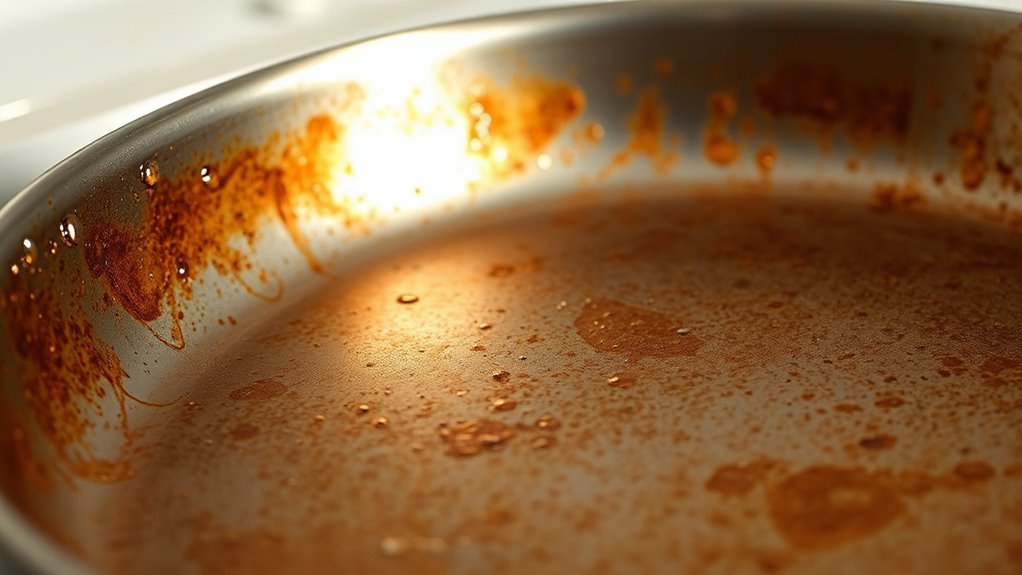
Your stainless steel pan turns brown over time mainly because high heat causes oils and food residues to polymerize and carbonize on the surface. This process, combined with oxidation of chromium in the steel, leads to the formation of a colored oxide layer.
This layer results in discoloration and heat tint that make your pan appear brown.
Burnt oil buildup and repeated exposure to elevated temperatures accelerate this effect. Over time, these factors cause a visible change in the pan’s appearance.
Understanding how heat, residue, and oxidation contribute to this process is key.
If you want to learn effective ways to clean and prevent browning, keep exploring these details. Proper care can help maintain your pan’s shine and performance.
Why Stainless Steel Pans Turn Brown Over Time

Although stainless steel pans are known for their durability, they often turn brown over time due to high heat causing oils and food residues to polymerize and carbonize on the surface. This discoloration happens because repeated exposure to elevated temperatures accelerates the formation of a thin oxide layer on the pan’s surface.
Specifically, the chromium in stainless steel oxidizes, creating a layer that refracts light and produces that brown or rainbow-colored tint you see. You can reduce this effect by controlling the cooking temperature and using oils with higher smoke points, which helps minimize residue buildup.
Regular cleaning also plays a key role in preventing excessive discoloration, keeping your stainless steel pans looking newer and performing better for longer.
How Heat and Cooking Oils Cause Browning on Stainless Steel Pans

When you cook with stainless steel pans, the heat and type of cooking oil you use play a big role in how the pan’s surface changes color. Applying high heat can cause cooking oils to exceed their smoke point, leading to chemical reactions that leave brown stains on the stainless steel. Oils like canola, grapeseed, or flaxseed, which have high smoke points, may still darken the pan if overheated repeatedly.
High heat also speeds up oxidation of chromium in the stainless steel, contributing to permanent discoloration. Over time, heat and oil polymerization build a stubborn layer, deepening the pan’s browned appearance. To minimize browning, control your cooking temperature and choose oils wisely, preventing excessive heat that accelerates these changes on your stainless steel cookware.
How Oxidation Affects Stainless Steel Pan Discoloration

When you heat your stainless steel pan, chromium in the metal forms a thin oxide layer that changes color based on temperature. This natural oxidation creates the brown or rainbow hues you see, and higher heat makes these colors more intense.
Understanding this process helps you manage discoloration without worrying about damage to your pan.
Oxidation Process Explained
Since you often heat stainless steel pans to high temperatures, you’ll notice they gradually develop a brownish tint due to oxidation. This happens because when stainless steel gets really hot, the chromium in the alloy reacts with oxygen, forming a thin layer of chromium oxide on the surface.
This oxide layer changes how light hits the pan, creating colors ranging from light gold to deep brown or even blue. The exact shade depends on how hot the pan gets. Don’t worry—this oxidation process is a natural chemical reaction and doesn’t harm your pan’s structure or performance.
Instead, it’s simply a visible sign that your stainless steel pan has been exposed to high heat over time, causing the surface to change color through oxidation.
Chromium’s Protective Role
The chromium in your stainless steel pan plays a key role in protecting it from corrosion by forming a thin, stable oxide layer on the surface. This layer acts as a shield against rust and damage, thanks to chromium’s ability to bond with oxygen through oxidation.
However, when you expose your pan to high heat, this protective chromium oxide layer undergoes further oxidation. That’s when you start noticing brown or even rainbow-colored discoloration appearing on the pan’s surface.
This natural chemical reaction, often called heat tint, doesn’t harm your pan’s structure but does affect its appearance. To keep your pan looking its best, you’ll want to control cooking temperatures and avoid prolonged exposure to excessive heat, which minimizes chromium oxidation and the resulting browning over time.
Heat-Induced Color Changes
If you heat your stainless steel pan above 600°F (315°C), you’ll notice a thin oxide layer forming on its surface that causes brown or rainbow-colored discoloration. This happens because oxidation occurs when chromium in the stainless steel reacts with oxygen at high temperatures. The resulting oxide layer creates a visible heat tint, often seen as a brown or multicolored hue.
Although this color change might seem concerning, it’s purely cosmetic and doesn’t affect your pan’s structural integrity or cooking performance. However, repeated exposure to high heat accelerates oxidation, deepening the discoloration over time.
Why Residue and Burnt Oil Build Up on Stainless Steel Pans
When you cook at high heat, oils can burn and leave stubborn residue on your stainless steel pan. This buildup not only discolors the surface but also makes cleaning tougher over time.
Knowing how to prevent and properly clean these residues will keep your pan looking great and performing well.
Causes Of Residue Formation
Because you often cook at high temperatures, residue and burnt oil build up on stainless steel pans as oils polymerize and food chars onto the surface. When oils exceed their smoke point, they break down and form a sticky, carbonized film that clings tightly to the stainless steel. Using too little or too much oil speeds up this residue formation, especially if you don’t clean the pan promptly.
Mineral deposits from hard water also contribute to buildup if left untreated. Additionally, scratches or surface damage caused by metal utensils or abrasive scrubbing create tiny crevices where residue can lodge, making it harder to remove. Understanding these causes helps you prevent stubborn stains and keep your stainless steel pans cleaner longer.
Impact Of Burnt Oils
Residue buildup on stainless steel pans often stems from burnt oils, especially during high-heat cooking. When oils heat beyond their smoke points, they polymerize and carbonize, leaving stubborn films that cause discoloration. If you frequently cook with oils like extra virgin olive oil at high temperatures, burnt oils will form more quickly.
Over time, these residues harden, making your pans look brown and stained. Here’s what you’ll face with burnt oil buildup:
- Dark, sticky films that resist scrubbing
- Gradual browning that dulls your pan’s shine
- Hard-to-remove carbonized layers
- Increased discoloration with repeated heating
- Frustration from persistent stains despite cleaning
Understanding burnt oils’ impact helps you recognize why your stainless steel pans turn brown over time.
Prevention And Cleaning
Although high heat can enhance cooking speed, it often causes oils and food particles to bond stubbornly to your stainless steel pan, leading to buildup and discoloration. To prevent this, use medium or low heat when cooking, which limits burnt oil films and keeps your pan looking clean longer.
After cooking, clean your stainless steel pans promptly—waiting allows residues to harden, making them tougher to remove. For effective cleaning, avoid abrasive scrubbers that scratch the surface; instead, use gentle methods with vinegar, baking soda, or specialized stainless steel cleaners. These solutions break down residue without damaging your pan.
Regular cleaning not only restores your pan’s shine but also prevents stubborn buildup, extending its lifespan and maintaining its performance.
Easy Cleaning Methods to Remove Brown Stains From Stainless Steel Pans
When your stainless steel pans start turning brown, you can easily restore their shine using simple cleaning methods. Start by mixing equal parts vinegar and water in a spray bottle, then spray the browned areas. For stubborn stains, boil this vinegar-water mix in the pan for a few minutes.
Next, apply a stainless steel cleaner or a Bar Keepers Friend paste to gently scrub away discoloration. Use a non-abrasive scrubber or soft cloth to buff out any remaining stains. Finally, rinse thoroughly with hot water and dry with a clean towel to bring back the pan’s gleam.
Try these easy steps for effective stainless steel cleaning:
- Spray vinegar-water solution on stains
- Boil vinegar mixture for tough spots
- Apply stainless steel cleaner or paste
- Buff with a soft cloth or scrubber
- Rinse well and dry completely
How to Prevent Stainless Steel Pans From Turning Brown While Cooking
If you want to keep your stainless steel pans looking their best, controlling the cooking temperature is key to preventing brown discoloration. High heat causes oxidation called heat tint, so avoid overheating. Preheat on medium heat and use oils with high smoke points to minimize browning.
Also, steer clear of cooking acidic foods too long at high temperatures as acidity worsens discoloration.
| Best Practice | Why It Helps |
|---|---|
| Medium heat preheating | Prevents uneven heating |
| Use high smoke point oil | Avoids oil breakdown and browning |
| Avoid high heat | Limits heat tint formation |
| Limit acidic cooking | Reduces oxidation and stains |
Following these steps keeps your stainless steel pans cleaner and free from unsightly heat tint.
Simple Tips to Keep Your Stainless Steel Pans Looking New
Controlling heat and using the right oils go a long way in preventing brown discoloration on your stainless steel pans, but maintaining their shine requires regular care. To keep your pans looking new, focus on consistent cleaning and mindful use.
- Clean regularly with a vinegar-water solution to prevent stains.
- Avoid overheating to stop chromium oxidation and discoloration.
- Use Bar Keepers Friend or a stainless steel cleaner to tackle stubborn marks.
- Preheat on medium heat before adding oil to reduce thermal shock.
- After cleaning, wipe with a soft cloth and a bit of olive oil to preserve luster.
Frequently Asked Questions
Is It Normal for a Stainless Steel Pan to Turn Brown?
Yes, it’s normal for your stainless steel pan to turn brown over time. This discoloration happens from heat exposure but doesn’t affect cooking performance.
You can clean it with vinegar or special cleaners to restore its shine.
How Do I Get the Brown off My Stainless Steel Pan?
Oh, your pan’s just trying to be a chocolate cake! Boil equal parts vinegar and water, scrub with Bar Keepers Friend paste, rinse, and dry.
You’ll have your shiny pan back, minus the dessert look!
When Should You Throw Away a Stainless Steel Pan?
You should throw away your stainless steel pan if it’s deeply discolored, pitted, scratched, warped, has loose handles, persistent rust, or heats unevenly despite cleaning.
These issues compromise safety and cooking performance.
How to Stop Stainless Steel From Tarnishing?
To keep your stainless steel looking its best, avoid overheating by using medium heat. Clean gently with vinegar or Bar Keepers Friend, and polish regularly.
These subtle habits help maintain its graceful, untarnished charm.
Conclusion
Stainless steel pans turning brown over time is like a battle scar from all the delicious meals you’ve crafted. Heat, oils, and oxidation team up to leave their mark, but you’re not powerless.
With simple cleaning tricks and smart cooking habits, you can keep your pans shining like new. Treat your cookware right, and it’ll reward you by cooking beautifully for years.
By understanding why stainless steel pans turn brown and using effective cleaning methods, you can restore their shine and maintain their performance. Proper care of stainless steel cookware ensures a gleaming kitchen companion for all your culinary adventures.