Why Was Peter Pan Played by a Woman?
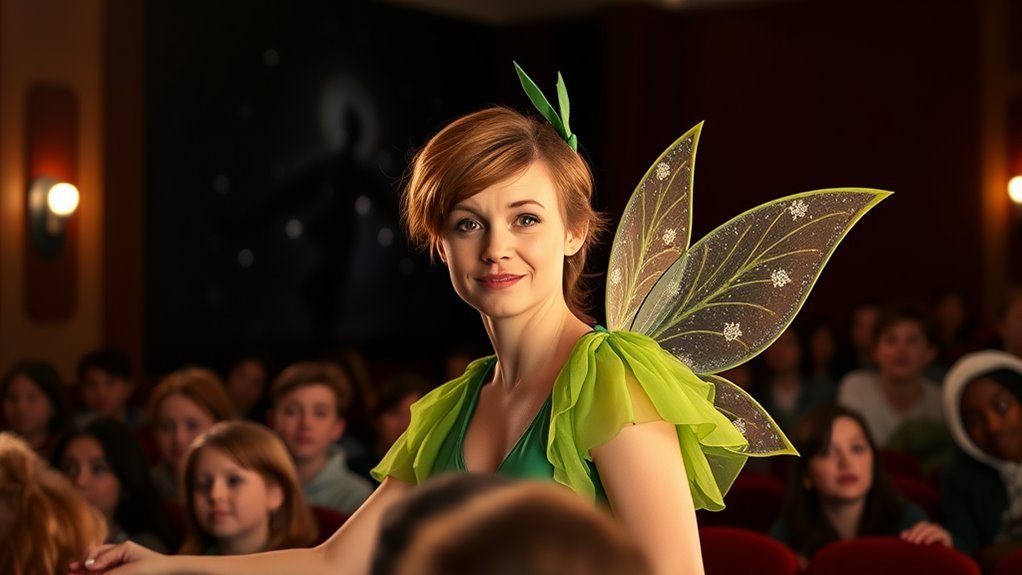
You’ll find Peter Pan traditionally played by women because of a mix of theatrical history, legal restrictions, and practical benefits. Women can handle the role’s physical demands better than boys, especially with flying scenes and long performances. Plus, child labor laws limit boys’ stage time.
Casting women keeps the character’s youthful spirit alive while respecting theatrical traditions like trousers roles. If you keep going, you’ll discover how iconic performers shaped this timeless and whimsical casting choice.
Why Women Were Originally Cast As Peter Pan

Why did women originally play Peter Pan? Back in the early 1900s, casting women as Peter Pan became a practical solution. Women could handle the demanding role better than young boys, who faced strict labor laws limiting their stage hours.
You’d find it tough to keep a boy under 14 on stage past 9 p.m., but women didn’t have those restrictions. This meant performances ran smoother and longer. Plus, women brought consistency to the role, avoiding the physical and scheduling challenges that came with casting children.
Broadway producer Charles Frohman even suggested this approach to bypass legal hurdles. So, when you think of Peter Pan, remember women helped shape the character, blending tradition with practicality in theater.
How English Labor Laws Influenced Peter Pan Casting

The practical reasons behind women playing Peter Pan become clearer when you consider English labor laws at the time. Labor laws restricted boys under 14 from performing after 9 p.m., complicating casting for evening shows.
By casting adult women, producers avoided these restrictions, ensuring consistent performances without legal issues. This legal backdrop heavily influenced casting decisions and established the tradition of women in the role.
| Performer Type | Age Restriction | Evening Performance Allowed? |
|---|---|---|
| Boys under 14 | Yes | No |
| Adult Women | No | Yes |
| Boys over 14 | No | Yes |
Understanding these labor laws helps you see why casting women was the practical choice for smooth, compliant productions of Peter Pan.
Why Casting Women Makes Practical Sense On Stage

Although casting young boys might seem fitting for Peter Pan’s character, producers have long relied on women to deliver consistent, energetic performances. You’ll find that women handle the demanding flying and stage combat scenes with greater reliability than child actors, who face physical and emotional strain.
Choosing women also helps you avoid strict child labor laws that limit working hours and conditions. On stage, women can maintain Peter Pan’s youthful look and vibrant energy throughout the entire run, making the character believable and lively.
This practical approach simplifies casting logistics and ensures the agility and stamina needed for such a physically intense role. Ultimately, casting women on stage keeps the show running smoothly while preserving the essence of Peter Pan’s character.
What Trousers Roles Mean For Peter Pan Casting
You might wonder how Peter Pan’s casting fits into a broader theatrical tradition of women playing male roles, known as trousers roles. These roles have long challenged gender norms while showcasing an actor’s versatility. Casting women as Peter Pan isn’t just an artistic choice; it also helps navigate legal limits on child actors’ working hours and simplifies stage management.
Since the early 1900s, Peter Pan has been a classic trousers role, blending practical needs with symbolic gender-bending. When you see a woman cast in this role, it reflects both a rich theatrical history and a smart solution for production challenges. Trousers roles like Peter Pan highlight how casting decisions can serve functional purposes while adding creative depth to theater.
Mary Martin’s Iconic Peter Pan Role And Its Impact
When you watch Mary Martin’s 1955 NBC telecast as Peter Pan, you experience a performance that redefined the role and left a lasting mark on theatrical history. Mary Martin’s portrayal became iconic, shaping how audiences view Peter Pan as a symbol of innocence and imagination. She believed this role reflected her true self, making it her most important performance.
Thanks to her, the tradition of women playing Peter Pan gained widespread popularity, influencing countless productions that followed. The televised version turned into a beloved holiday event, treasured by generations. By embodying Peter Pan, Mary Martin didn’t just act; she transformed the character into a cultural icon, securing her legacy and forever impacting how Peter Pan is perceived in theater and popular culture.
How Female Actors Bring Peter Pan’s Youth To Life
How exactly do female actors capture the youthful spirit of Peter Pan so convincingly? When you watch Mary Martin playing Peter Pan, you see a natural innocence and boundless energy that bring the character to life. Female performers embody a child’s curiosity and playfulness with authenticity, qualities essential to Peter’s timeless appeal.
You’ll notice that women often navigate the physical demands of flying and stage movements with impressive control and endurance, making Peter’s agility believable. By playing Peter Pan, actresses avoid the physical limitations young boys face, allowing a more flexible and expressive portrayal of boyish traits.
This tradition keeps Peter’s youthful essence fresh and relatable, ensuring every generation connects with the magic of Neverland.
Challenges Women Face Casting Peter Pan
When you take on the role of Peter Pan, you face intense physical demands—from flying scenes to energetic movements—that test your stamina and strength. You have to balance maintaining a youthful, playful energy while managing the discomfort of costumes and makeup.
It’s a tough act to keep up the spirit of a child while handling all the physical challenges on stage.
Physical Demands On Actresses
Although the role of Peter Pan is thrilling, you’ll find it demands remarkable physical strength and stamina, especially during flying scenes and energetic choreography. As an actress, you face intense physical demands, requiring agility, flexibility, and endurance to perform complex stunts and maintain high energy throughout. These demands push you to train rigorously, building the stamina needed to handle long performances without losing vitality.
The costumes and harnesses add another layer of challenge, often causing skin irritations like callouses and rashes, which can be uncomfortable and distracting. Despite these hurdles, actresses who take on Peter Pan must balance these physical strains with the need to embody the character’s youthful spirit, making the role both physically and emotionally demanding.
Balancing Youthful Energy
Handling the physical demands of Peter Pan is only part of the challenge; you also have to sustain the character’s youthful energy and innocence throughout each performance. To pull this off, you need rigorous physical conditioning to keep up with the role’s stamina requirements. Flying scenes and energetic movements can cause fatigue, callouses, and rashes, but your commitment to maintaining a playful spirit never wavers.
Balancing authentic childlike enthusiasm with theatrical skill means you must constantly engage in physical routines that keep your energy high and your presence convincing. This combination of endurance and vitality is essential, as audiences expect the character to embody a lively, spirited youth from start to finish, making the role uniquely demanding for any actress.
How Modern Productions Continue The Female Peter Pan Tradition
You’ll notice that modern productions still cast women as Peter Pan, keeping alive a rich theatrical tradition. This choice highlights the unique energy and innocence female actors bring to the role.
Upholding Historical Casting Traditions
Since the early 1900s, productions have consistently cast women as Peter Pan, a choice shaped by practical and legal reasons that still resonate today. You’ll find that this tradition began partly due to labor laws restricting child performers, making adult women the ideal fit for the role. Mary Martin’s iconic 1955 NBC television adaptation firmly established this practice, influencing countless productions afterward.
When you watch modern performances, you’re witnessing a deliberate effort to honor this theatrical history. By casting women, directors preserve the character’s timeless, youthful essence while respecting the tradition set over a century ago. So, when you see a woman playing Peter Pan today, you’re not just seeing an actor—you’re experiencing a legacy that blends practicality with artistic heritage.
Female Actors’ Unique Appeal
Although the tradition of casting women as Peter Pan dates back over a century, modern productions continue this practice because female actors capture the character’s youthful spirit with remarkable innocence and agility. When you see a female Peter Pan, you’re witnessing:
- A nod to theatrical history and tradition.
- The physical agility female actors bring to the role.
- The avoidance of child labor law complications.
- The nostalgic and whimsical aura audiences expect.
Female actors also offer theatrical versatility, making Peter Pan’s playful and eternal youth believable. Contemporary stars like Allison Williams and Cathy Rigby have kept this unique appeal alive, proving that a woman’s portrayal enriches the story.
Frequently Asked Questions
What Is Peter Pan Syndrome in Females?
Peter Pan Syndrome in females means you might avoid responsibility, fear growing up, and struggle with emotional maturity. You’ll often depend on others and resist change, making it hard to commit or embrace adult independence fully.
Who Was the First Female to Play Peter Pan?
The first female to play Peter Pan was Maude Adams in 1905 on Broadway.
You’ll find her portrayal set the stage for women taking on this iconic role in theater ever since.
Why Are the Lost Boys Only Boys?
You see, the Lost Boys are only boys to highlight childhood innocence and the desire to stay young forever, emphasizing the magical world Peter Pan protects—a place untouched by adult responsibilities and grown-up worries.
Why Is Tiger Lily Controversial in Peter Pan?
You can’t judge a book by its cover, but Tiger Lily’s portrayal often leans on harmful stereotypes, making her controversial.
If you want respect, you’ve got to rethink or drop such misrepresentations in Peter Pan productions.
Conclusion
You might find it surprising that Peter Pan, a boy who never grows up, is often played by a woman. While labor laws and practical stage needs initially pushed for female actors, their ability to capture Peter’s youthful spirit creates a timeless tradition.
This contrast—between a boy’s role and a woman’s portrayal—makes the character even more magical. So, next time you watch Peter Pan, remember: the casting choice is as much a part of the story as the flying itself. The reason why Peter Pan was played by a woman adds an extra layer to the beloved tale.